 Society

High margin debt, weak liquidity put pressure on stock market recovery
1.
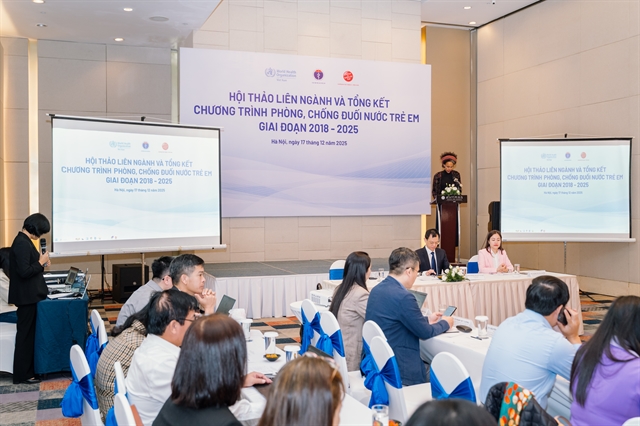 |
| A view of the conference held in Hà Nội on December 17. — Photos courtesy of the organisers |
HÀ NỘI — Drowning continues to claim the lives of more children in Việt Nam than any other cause, with the national child drowning rate estimated to be ten times higher than that of developed countries, underscoring a persistent and preventable public health crisis.
To review activities carried out during the 2018–2025 period, the Department of Maternal and Child Health, together with the World Health Organization (WHO), in coordination with the US-based Campaign for Tobacco-Free Kids (CTFK), organised an intersectoral workshop and a final review of the Child Drowning Prevention Project for the 2018–2025 period.
Under the direction of the Ministry of Health, with the participation of the Department of Maternal and Child Health, multiple government ministries and agencies and support from the WHO and Bloomberg Philanthropies through CTFK and partners, the project has delivered strong results over seven years of implementation.
Since 2018, more than 63,000 Vietnamese children have been taught safe swimming skills, over 1,500 physical education teachers have been certified to teach swimming and more than 30,000 parents, caregivers and preschool teachers have received guidance on preventing child drowning.
In intervention localities, the child drowning rate fell by 16 per cent compared with pre-project levels, contributing to a decline in child deaths caused by drowning.
At the opening of the workshop on Wednesday, Deputy Minister of Health Associate Professor Dr Nguyễn Tri Thức commended the efforts of ministries, sectors, provinces, cities and schools involved in implementing the programme, noting the significant outcomes achieved.
Implementation has been carried out in a coordinated, intersectoral manner, spanning ministries and sectors, from central to local levels and from schools to communities, alongside strengthened public communication efforts.
Clear scientific evidence and independent evaluations have shown that the programme is both highly effective and cost-efficient.
These results provide a foundation for integrating the programme into national initiatives, to reduce child drowning deaths by 10 per cent by 2025 and 20 per cent by 2030 in line with Decision No. 1248/QĐ-TTg.
Despite progress, Việt Nam continues to rank among the countries with the highest rates of child injury-related mortality worldwide, with around 1,800 children dying from drowning each year.
Drowning remains a pressing challenge, particularly given the country’s dense network of rivers, lakes and canals, and represents profound losses for families, communities and society.
Deputy health minister Thức emphasised that synthesising results and practical lessons from the ten provinces implementing the programme offers valuable insights for discussion and for shaping intersectoral strategies, reflecting a strong commitment to protecting children.
Meheret Melles-Brewer of the WHO in Việt Nam noted that the risk of drowning is increasing as rising temperatures, more frequent extreme weather events, and seasonal flooding disproportionately affect vulnerable children in rural and coastal areas.
Linking drowning prevention efforts with broader climate change adaptation measures, such as resilient infrastructure, early warning systems and community preparedness, will help Việt Nam create safer environments and better protect children’s lives.
According to Dr Nguyễn Ngọc Anh, Director of the Centre for Policy Research and Development, every US dollar invested in swimming intervention programmes for children can generate a return of up to US$20, based on cost-effectiveness and return-on-investment analysis.
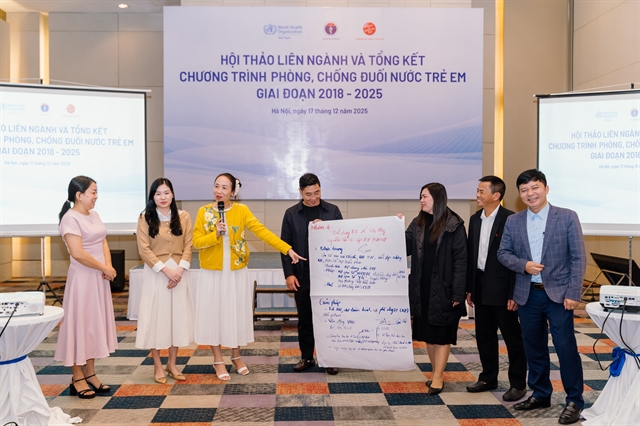 |
| Participants share their opinions and experiences in preventing child drowning. |
This represents a high return, estimated at around twenty times the initial cost.
On average, each swimming lesson for 20 children costs only about VNĐ 50,000 (US$0.75), while the estimated economic burden of child drowning is believed to exceed VNĐ 15 billion each year.
With a commitment to scaling up successful interventions nationwide, Đoàn Thị Thu Huyền, Country Director of the Campaign for Tobacco-Free Kids (CTFK) in Việt Nam, presented four recommendations to strengthen child drowning prevention efforts.
In terms of resources and financial investment, programme implementation shows that the average cost of training one child in safe swimming is just over VNĐ720,000 (about US$27).
Combined with evidence of a 20-fold return on investment, these findings provide important reference points for local authorities when prioritising budget allocations and mobilising social resources, based on the programme’s standardised training process, to ensure cost-effective solutions.
Child drowning prevention should be integrated into national and local development targets and promoted as a key political priority. The organisation recommended including indicators such as the proportion of children who can swim safely and possess basic safety skills in socio-economic development index systems, creating stronger incentives for effective implementation.
At the same time, prevention efforts need to be standardised and closely monitored. Strengthening data collection and evaluation will help inform local interventions, while inspections and supervision of swimming facilities should be stepped up to ensure strict compliance with safety regulations. Well-measured programmes contribute to more effective management.
“Drowning can happen in an instant, but with the right awareness and timely action from each of us, it is entirely preventable,” Huyền said. “We hope that, with government attention and investment, strong intersectoral coordination and improved facilities and technical capacity for teaching safe swimming and safety skills, these efforts will continue to be expanded and strengthened. This is one of the most evidence-based and effective interventions to prevent child drowning.” — VNS
Society
 Society
 Society
 Society
 Society
 Society
 Society
 Society
 Society
 Society
 Society
.jpeg) Society
Society
 Society
 Society
.jpg) Society
Society