 Society
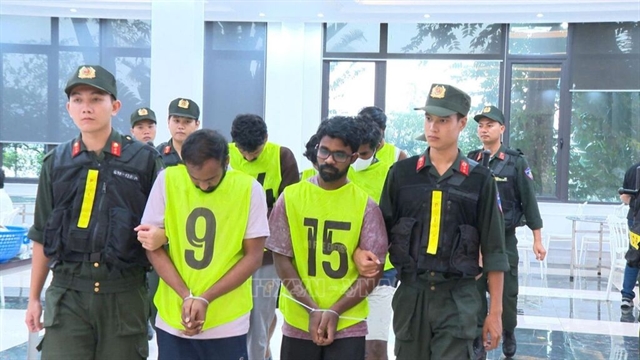
84 individuals investigated for transnational online frauds
1.
|
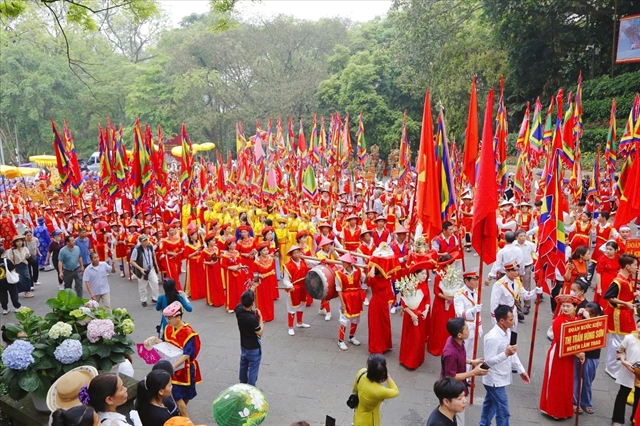
| Local residents and visitors from across the country attend the Hùng Kings’ Commemoration Festival. — ITN Photos |
By Trần Như
PHÚ THỌ — Following the merger of the former provinces of Phú Thọ, Vĩnh Phúc and Hòa Bình, the new Phú Thọ Province now has a larger and more diverse development space.
With varied terrain, rich ecosystems and deep cultural traditions, the province sees strong potential for developing cultural, spiritual, ecological and leisure tourism in a green and sustainable way.
Tourism has been identified as an important economic sector, contributing to socio-economic growth, job creation and improved living standards. It is also expected to strengthen regional links between the northern midlands and mountains and other parts of Việt Nam.
As the ancestral homeland of the Vietnamese people, Phú Thọ holds a unique position in terms of cultural heritage. Covering more than 9,361 square kilometres, the province is home to a dense system of tangible and intangible heritage.
At its centre is the Hùng Kings Temple Historic Site, a special national relic associated with the worship of the Hùng Kings, recognised by UNESCO as an intangible cultural heritage. The site has long been a sacred destination, especially during the annual Hùng Kings’ Commemoration Day, when people from across the country return to offer incense and pay tribute to the nation’s founders.
Beyond the Hùng Kings Temple, Phú Thọ has 2,778 historical and cultural relics spread across the province. Well-known sites such as the Lạc Long Quân Temple, the Âu Cơ National Mother Temple, the Tây Thiên-Tam Đảo complex, Thác Bờ Temple and other relics have become key stops on tourism routes.
Each year, more than 200 traditional festivals are held, helping to preserve cultural identity while attracting large numbers of visitors.
Intangible heritage also plays an important role.
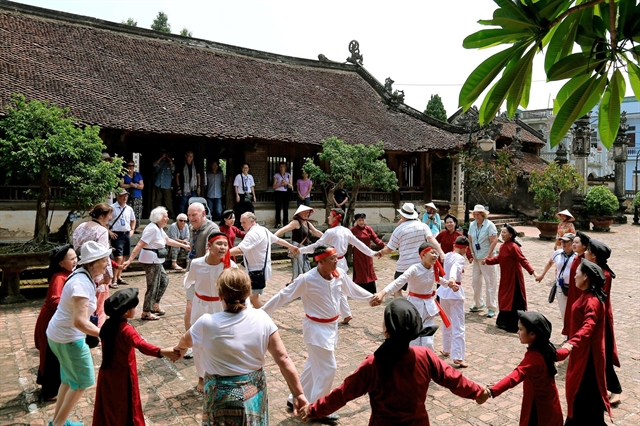
Alongside the Worship of the Hùng Kings, Phú Thọ Xoan singing has been recognised by UNESCO. In recent years, Xoan singing has been preserved and promoted through community activities and tourism programmes, giving visitors the chance to experience a distinctive form of folk art.
Many visitors say Phú Thọ offers a special atmosphere.
Trịnh Minh Hoàng, a tourist from Hà Nội, said his family returns to Phú Thọ every year so younger generations can better understand their roots.
“It is not far from Hà Nội, but the feeling here is very different – peaceful and sacred,” he said.
From Phú Thọ, tourists often combine their trips with visits to nearby destinations such as Đại Lải, Tam Đảo or Tây Thiên.
Hoàng Hải Long, an athlete who frequently competes in Phú Thọ, said his trips have become opportunities to explore places such as the Long Cốc tea hills, Thanh Sơn, Mai Châu, Tam Đảo and Xuân Sơn National Park.
“Each place has its own character and offers a different experience,” he said.
This diversity is seen as the foundation of Phú Thọ’s green tourism strategy.
|
| International visitors join local residents for Xoan singing. |
In recent years, transport and tourism infrastructure have improved, making the province easier to reach by air via Nội Bài International Airport, by rail and along the Hà Nội-Lào Cai Expressway and national highways.
Phú Thọ currently has 1,520 accommodation facilities with more than 20,000 rooms, including 185 hotels. Nine hotels meet four- to five-star standards. There are 94 travel companies operating in the province, including 15 capable of serving international markets.
In 2025, Phú Thọ is expected to welcome around 14.5 million visitors, including 4.5 million overnight guests. Tourism revenue is estimated at VNĐ14.8 trillion, with average annual growth of over 10 per cent. While these figures remain modest compared with major tourism centres, they reflect steady progress.
Tourism development has gone hand in hand with heritage conservation. Between 2021 and 2025, the province mobilised more than VNĐ1.1 trillion for restoring and preserving relics, with strong support from socialised funding. More than 250 relics have been repaired or upgraded to ensure both their preservation and safe use for tourism purposes.
By October 2025, Phú Thọ had 979 ranked relics, including six special national relics, 176 national-level relics and 797 provincial-level relics. Six national treasures and many valuable artefacts are being preserved and displayed at the Hùng Vương Museum and heritage sites across the province.
Phú Thọ continues to prioritise green and sustainable tourism, linking economic development with environmental protection and cultural preservation. The province is also promoting digital transformation in tourism, improving service quality and investing in its tourism workforce.
With clear direction and strong cultural foundations, Phú Thọ is gradually strengthening its position as an attractive destination, combining the values of the Land of Origins with sustainable tourism development in a new phase. — VNS
Society
 Society
 Society
 Society
 Society
 Society
.jpeg) Society
Society
 Society
 Society
.jpg) Society
Society
 Society
 Society
 Society
 Society
 Society