 Society
Simplifying procedures, expanding scope of Law on International Agreements
1.
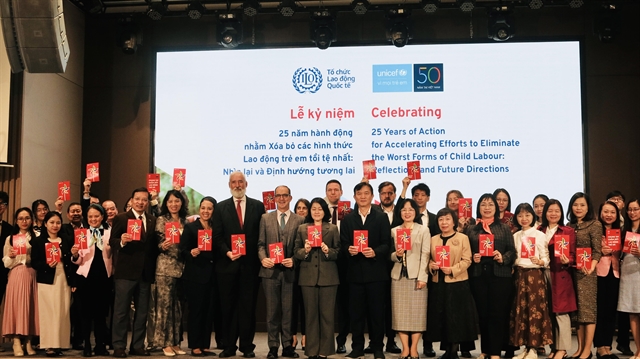 |
| Participants at the event in Hà Nội on Wednesday marking the 25th anniversary of Việt Nam’s ratification of ILO Convention No. 182 on the Worst Forms of Child Labour.— VNS Photo Nguyễn Hằng |
HÀ NỘI — Over the past 25 years, Việt Nam has made significant progress in preventing and eliminating child labour, including its worst forms, driven by sustained legal reforms, national programmes and stronger inter-agency coordination.
By strengthening its legal framework, rolling out national action plans and enhancing cooperation across sectors and levels of government, the country has reinforced its child protection system, expanded access to education and improved the monitoring and supervision of children’s participation in economic activities.
As a Pathfinder Country of Alliance 8.7, Việt Nam continues to demonstrate leadership and responsibility in global efforts to end child labour.
According to national surveys conducted by the General Statistics Office with support from the International Labour Organization (ILO), the proportion of children engaged in economic activities fell sharply from 9.1 per cent in 2018 to 3.5 per cent in 2023.
The data were released at an event in Hà Nội on Wednesday, marking the 25th anniversary of Việt Nam’s ratification of ILO Convention No.182 on the Worst Forms of Child Labour.
Speaking to Việt Nam News on the sidelines of the event, Nguyễn Ngọc Anh, Child Protection Specialist at UNICEF Việt Nam, said that over the past quarter of a century, Việt Nam had demonstrated a strong commitment through comprehensive strategies and solutions to prevent and reduce child labour, as well as to strengthen child protection more broadly.
He said that progress had been particularly striking. In 2012, 9.6 per cent of children aged 5–17 were engaged in child labour. This figure fell to 5.4 per cent in 2018 and dropped further to 1.3 per cent by 2023.
“Looking at this trend, we can see that the decline in child labour in Việt Nam has been remarkable,” he said. “Compared with the global average rate of reduction, Việt Nam’s results are, in my assessment, extremely impressive.”
These gains were the result of coordinated and comprehensive measures, ranging from strong political commitments to improve laws and policies, national programmes and family support initiatives aimed at poverty reduction and livelihood improvement, to expanded access to education and efforts to keep children in school, he said.
Challenges, solutions
Despite the progress, around 94,300 children are still engaged in hazardous work, and nearly 12 out of every 100 children in child labour face health-related risks.
“There is still a long road ahead so that Việt Nam is to fully eliminate child labour,” Anh said. “Even though the overall rate is now very low, the remaining cases tend to be among the most vulnerable and hardest-to-reach population groups.”
He also offered recommendations to address the situation. First, targets for preventing and reducing child labour need to be fully integrated into national and local socio-economic development programmes.
The Government and development partners should further prioritise employment and livelihood programmes to help families withstand economic shocks such as job losses, income insecurity or livelihood disruptions caused by natural disasters, climate change, migration, globalisation and digital transformation.
Second, education must remain the core pillar of prevention efforts. Higher levels of parental education are closely associated with lower rates of child labour, while poverty often perpetuates a vicious cycle across generations.
“Only education can help families escape poverty,” Anh said, adding that this also benefits the national economy by developing a skilled, qualified workforce capable of contributing to Việt Nam’s long-term goal of becoming a high-income, prosperous and developed country by 2045.
Third, all efforts to prevent and reduce child labour must be embedded within a comprehensive child protection system. Such a system should be capable of preventing and responding to the full range of risks children face, including abuse, violence and exploitation, of which child labour is a key component.
Currently, Việt Nam’s child protection system remains relatively young and requires time, investment and sustained efforts to be strengthened and consolidated. This includes expanding human resources, creating dedicated positions within Government agencies and service providers and developing more professional, specialised services to support children.
Early prevention and intervention measures are also critical to support children at risk of entering child labour or dropping out of school, helping them remain in education and avoid intergenerational cycles of early labour and school dropout.
“These are some of the most fundamental solutions,” Anh said. “From the perspective of a UN agency specialising in children’s issues, this is what we recommend.”
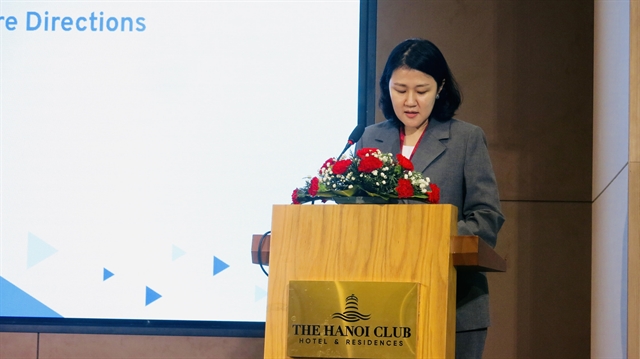 |
| Sinwon Park, Country Director of the ILO Country Office for Việt Nam delivers her speech at the event.— VNS Photo Nguyễn Hằng |
Shared responsibility
“Protecting children is a shared responsibility of families, communities, State agencies, workers, employers and businesses,” said Nguyễn Thị Nga, Deputy Director of the Administration of Maternal and Children's Affairs under the Ministry of Health.
“No single actor can end child labour alone,” she said.
It requires collective action, from strengthening social safety nets for vulnerable families to enforcing the law and heightening responsibility among businesses. This collaboration is the only way to build a solid foundation for the long-term, healthy development of future generations.
In the context of digital transformation, new risks such as online child exploitation are emerging alongside persistent vulnerabilities including poverty, migration and informal employment.
This calls for child protection systems that are capable of responding effectively both online and offline, grounded in prevention, education and robust law enforcement.
To realise these shared goals and promote high-quality economic growth, Việt Nam must continue to prioritise the protection of children’s fundamental rights through integrated approaches, including education and social protection programmes.
“Eliminating child labour is not only about protecting children’s rights but also about strengthening Việt Nam’s future workforce and supporting inclusive economic growth,” said Sinwon Park, Country Director of the ILO Country Office for Việt Nam.
When children stay in school and develop skills and when adults have decent and productive work, the benefits extend to families, enterprises and the economy as a whole. Ending child labour is a strategic investment in the quality and sustainability of Việt Nam’s economic future, she said. — VNS
Society
 Society
 Society
 Society
 Society
 Society
 Society
 Society
 Society
 Society
 Society
 Society
 Society
 Society
 Society