 Society
Lotte, Phát Đạt combine strengths in Thu Thiem project
1.
|
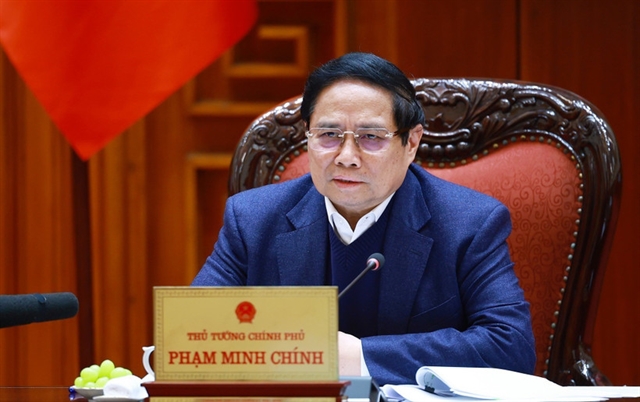
| PM Phạm Minh Chính chairs the meeting. VNA/VNS Photo |
BẮC NINH — Prime Minister Phạm Minh Chính on March 7 inspected the progress of the Gia Bình International Airport project in the northern province of Bắc Ninh and a road connecting the airport with Hà Nội capital city.
The airport project is being developed in the communes of Gia Bình, Lương Tài, Nhân Thắng and Lâm Thao, covering a total land area of approximately 1,885 hectares. It has a total investment of about 196.3 trillion VNĐ (US$7.48 billion), including more than 141.2 trillion VNĐ for the first phase.
According to the master plan, it aims to become one of the world’s top ten five-star airports. By 2030, it is expected to serve thirty million passengers and handle 1.6 million tonnes of cargo annually. By 2050, the capacity is projected to reach fifty million passengers and 2.5 million tonnes of cargo per year. In the immediate term, key facilities are scheduled for completion during the 2025–2027 period to serve the APEC Economic Leaders’ Week in 2027.
Visiting and presenting gifts to construction teams at the construction sites of the VIP terminal and the air traffic control tower of Gia Bình International Airport, PM Chính commended the efforts of the Ministry of Public Security, relevant ministries and agencies, Bắc Ninh Province, as well as investors and contractors in implementing the project.
So far, land clearance has been carried out for more than 1,259 hectares, equivalent to nearly sixty-seven per cent of the required area. Several key components of the project, including the VIP terminal, taxiways, the air traffic control tower and internal road systems, are being implemented with encouraging progress.
The PM requested investors and contractors to further accelerate construction while ensuring the highest standards of quality and technical requirements. He also stressed the importance of synchronously planning the surrounding area to develop an aviation economic ecosystem, including logistics and airport-related services.
On the same day, PM Chính inspected the construction of the resettlement area serving Gia Bình International Airport. The project covers more than 341 hectares and is expected to accommodate nearly 52,000 residents, with a total investment of over VNĐ21 trillion. He directed that the resettlement area be built as a modern, green, clean and well-planned urban space with complete infrastructure, including roads, electricity, water supply, telecommunications networks, as well as schools, healthcare facilities, cultural institutions and public green spaces, ensuring better living conditions for relocated residents.
He also examined the construction on the road linking the airport with Hà Nội. The road is over 41km long with a total investment of approximately VNĐ83 trillion VNĐ. Designed to modern expressway standards, the road will connect with key transport corridors such as the Hà Nội – Lạng Sơn Expressway, the Hà Nội – Thái Nguyên Expressway and Hà Nội's Ring Road 3.
Concluding the working session with ministries and local authorities, the Government leader stressed that Gia Bình International Airport should be developed as a dual-use facility, serving both socio-economic development and national defence and security purposes. He also emphasised the goal of building the airport as a smart, modern and civilised aviation hub, integrated with an international-standard airport city and aviation economic ecosystem.
According to the Prime Minister, the development of the airport and its associated infrastructure will open up new development space for Bắc Ninh, Hà Nội and neighbouring localities such as Hải Phòng and Quảng Ninh, while strengthening regional connectivity in the Red River Delta and expanding international trade links.
He requested ministries, sectors and localities to urgently implement assigned tasks, strengthen coordination in planning, land clearance and infrastructure development, and ensure that the projects are completed on schedule, initially to serve the APEC Economic Leaders’ Week in 2027 and, in the long term, to become a new growth driver for the region. — VNA/VNS
Society
 Society
 Society
 Society
 Society
 Society
 Society
 Society
 Society
 Society
 Society
 Society
 Society
 Society
 Society