 Society
HCM City plans Tết support for 370,000 disadvantaged workers
1.
 |
| Prof. Dr. Trần Văn Thuấn, Deputy Minister of Health, speaks at the working session. Photos https://suckhoedoisong.vn |
HÀ NỘI - Strengthening grassroots healthcare is the foundation, digital transformation is the driving force, and regular health check-ups for the entire population are the fundamental step. The application of artificial intelligence and big data in medical examination, diagnosis, and treatment will help people, whether in rural or urban areas, access modern, equal, and timely healthcare services.
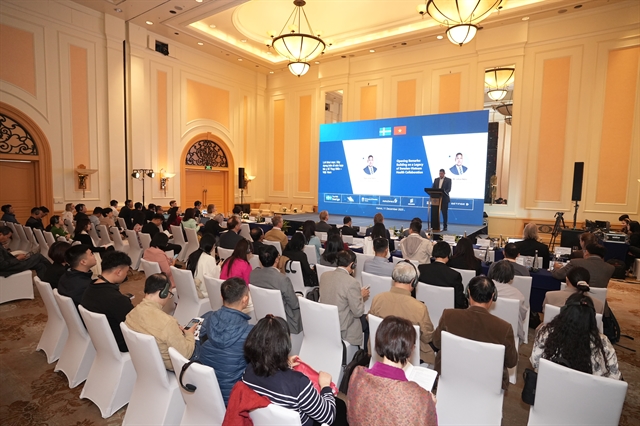
Prof. Dr. Trần Văn Thuấn, Deputy Minister of Health and Chairman of the National Medical Council, made this statement during a working session with leaders of the Departments of Health of Bắc Ninh and Hưng Yên provinces, along with relevant units, on the application of information technology and digital transformation.
On the partners’ side, representatives included international organisations such as the Embassy of Sweden in Việt Nam, the Swedish Trade and Investment Council, and AstraZeneca Vietnam Co., Ltd.
At the meeting, leaders of the Departments of Health of Bắc Ninh and Hưng Yên reported on the initial results of the Electronic Medical Records Programme and the Smart Healthcare Project. These initiatives were guided by the Ministry of Health to concretise the spirit of Politburo's Resolution No. 57-NQ/TW dated December 22, 2024 on “breakthroughs in the development of science, technology, innovation, and national digital transformation.”
For the two provincial Departments of Health, implementing the Electronic Medical Records Program and the Smart Healthcare Project will play an important role in forming a provincial-level smart healthcare ecosystem. Its pillars include electronic health records for all citizens, remote medical examination and consultation systems, early epidemic warning, and the application of artificial intelligence and big data in medical diagnosis, management, and forecasting.
 |
| A view of the working session. |
“Especially in the current period, the health sector is focusing on effectively implementing Resolution No. 72-NQ/TW of the Politburo on breakthrough solutions to strengthen protection, care, and improvement of people’s health, with an emphasis on enhancing the capacity of grassroots healthcare, developing human resources, and strengthening preventive medicine,” Deputy Minister Thuấn said.
He stressed the need to accelerate digital transformation, apply artificial intelligence and big data in managing electronic health records and remote medical examination and treatment. Political and social organisations, the business community, young physicians, and the public are encouraged to participate in building a “smart healthcare ecosystem” to continuously improve the quality of community health care.
Prof. Dr. Thuấn expressed his hope that the Swedish Trade and Investment Council and AstraZeneca Vietnam Co., Ltd. would continue to accompany the Departments of Health of Hưng Yên and Bắc Ninh provinces in the programme “Building Smart Healthcare Provinces and Cities.”
Through this cooperation, more results can be achieved in applying AI to medical imaging diagnostics, such as chest X-ray systems that help doctors detect pulmonary tuberculosis and lung nodules at risk of cancer early, shorten film reading time, and support clinical decision-making.
The Deputy Minister assigned relevant departments of the Ministry of Health, along with the Departments of Health of Bắc Ninh and Hưng Yên, to continue promoting progress, removing obstacles, and expanding cooperation with Swedish partners in the process of digital health transformation.
This will help Việt Nam’s health sector make a strong leap forward in the new era, aiming at the goal of putting people at the center, science and technology as the driving force, grassroots healthcare as the foundation, and health care for the population in a proactive, equitable, and comprehensive manner. VNS
Society
 Society
 Society
 Society
 Society
 Society
 Society
 Society
 Society
 Society
 Society
 Society
 Society
 Society
 Society