 Environment

Hà Nội's old streets and crafts available at Temple of Literature
1.
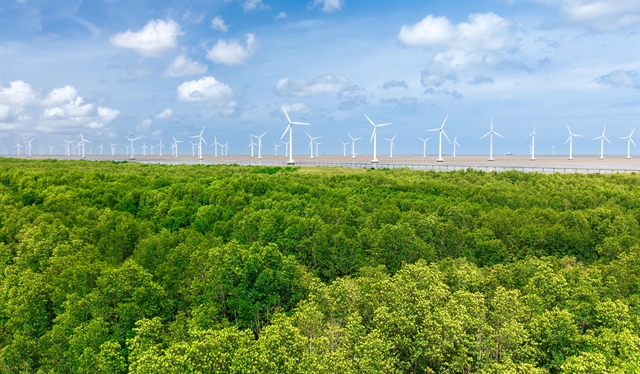 |
| Developing a circular economy to foster green growth. — Photo courtesy of the GEF/ADB Project |
Ngọc Anh*
As natural resources dwindle, climate impacts intensify and global integration accelerates, shifting from a linear extract – manufacture – consume – discard model to a circular economy has become inevitable. For Việt Nam, circularity is not only an environmental choice but a strategic requirement to ensure sustainable development and strengthen national competitiveness.
Việt Nam’s Law on Environmental Protection 2020 defines the circular economy as an economic model in which design, production, consumption and service activities aim to reduce resource extraction, extend product lifecycles, minimise waste and mitigate environmental impacts.
Across the country, multiple circular initiatives have been piloted, delivering visible results.
Policy momentum
Việt Nam has taken early steps to institutionalise circularity.
The Law on Environmental Protection 2020 (Article 142) and the Prime Minister’s Decision No. 687/QD-TTg (2022) laid the groundwork for circular development.
Most notably, Decision No. 222/QD-TTg issued on February 23 approved the National Action Plan for Circular Economy to 2035, aiming to build a sustainable production – consumption system, leverage natural resource values, maximise reused materials, limit waste generation, promote circular economy models in production and business, create motivation for innovation and productivity improvement, develop best practices, foster green culture and lifestyle and develop new green jobs and value chains in the circular economy.
This strong policy direction signals the Government’s commitment and provides clear guidance for businesses and local authorities to adopt circular models.
Việt Nam also benefits from traditional circular practices. The Garden – Pond – Livestock (VAC) agricultural model and long-standing recycling craft villages offer practical examples of resource recovery. In the northern highlands of Hà Giang (now under Tuyên Quang Province), households reuse old timber and bamboo for homestay construction, reducing both costs and construction waste.
A flagship example is the eco-industrial park initiative in Vĩnh Yên (now under Phú Thọ Province), supported by the United Nations Industrial Development Organisation (UNIDO).
Ten participating enterprises reported nearly US$1 million in annual savings through material-energy reuse. Meanwhile, public awareness in urban areas has shifted toward greener consumption, from the use of bamboo straws and cloth bags to shared e-mobility services.
Major barriers
Despite promising progress, Việt Nam’s circular transition faces challenges.
The legal framework, though established, lacks detailed and synchronised guidance. Essential mechanisms such as extended producer responsibility (EPR), incentive-based taxation and mandatory source separation are still under finalisation.
As a result, many circular initiatives cannot scale up. In Huế, plastic recycling projects struggle due to limited waste segregation. In Tuyên Quang, unclear regulations on agricultural by-products hinder cooperatives attempting to grow mushrooms from rice straw.
Technological and infrastructure gaps pose additional obstacles. In mountainous communes such as Xín Mần (Tuyên Quang), outdated waste-treatment systems lead to open burning of agricultural residues, contributing to air pollution.
Financial and human resources are also limited. Small and medium-sized enterprises (SMEs) – the backbone of Việt Nam’s economy – often lack access to capital for investing in circular technology upgrades. Circular economy specialists are few, and expertise in material-flow analysis and circular supply chain management remains scarce.
According to Dr Nguyễn Trung Thắng, National Deputy Director of the GEF/ADB Project Mainstreaming Climate Resilience and Environmental Protection for Green Secondary City Development under the Ministry of Agriculture and Environment, Việt Nam has strong foundations from traditional models like VAC and clear policy direction. However, the lack of specific regulations, advanced standards and technologies remains a major barrier.
“To move further, Việt Nam must invest systematically in research and specialised capacity-building,” he said.
Solutions
To turn the circular economy into a driver of green growth, Việt Nam needs a coordinated set of actions:
Firstly, strengthen the legal framework: improve the system of standards and norms, provide circular economy guidance in sectors, expedite EPR implementation, implement waste segregation at source.
Secondly, invest in technology and infrastructure: promote research and technology transfer for advanced recycling, develop modern waste-treatment centres, learning from the EU’s 90 per cent construction-waste recycling rate.
Thirdly, raise public awareness: expand education and communication programmes on reuse, develop and apply sharing models.
Finally, support businesses: improve access to green finance and innovation funds, train a skilled workforce specialised in circular economy practices.
Việt Nam’s transition to a circular economy is vital for meeting its net-zero by 2050 commitment and enhancing competitiveness in global value chains. With strong political will and collaboration among policymakers, businesses and communities, the circular economy will evolve beyond a policy concept to become a cornerstone of green growth and sustainable development through 2030 and beyond. — VNS
Key circular economy policies at a glance 2020: Circular economy included for the first time in the Law on Environmental Protection (Article 142)2022: Government’s Decree 08/2022/ND-CP, Prime Minister’s Decision No. 687/QD-TTg approving the Circular Economy Development Scheme2025: Prime Minister’s Decision No. 222/QD-TTg approving the National Action Plan for Circular Economy to 2035
*Ngọc Anh is a specialist of the Institute of Strategy and Policy on Agriculture and Environment
Environment
 Environment
 Environment
 Environment
 Environment
 Environment
 Environment
 Environment
 Environment
 Environment
 Environment
 Environment
 Environment
 Environment
 Environment