 Politics & Law
Việt Nam, Denmark issue joint statement on establishment of Comprehensive Strategic Partnership
1.

|
| A local resident completes an administrative procedure at Bắc Ninh Provincial Public Administration Service Centre. — Photos courtesy of Bắc Ninh Province |
BẮC NINH — Public service operations, personnel work, land management, construction and social housing development – key issues affecting people’s livelihoods – were among the main topics discussed at the year-end session of the 19th-tenure Bắc Ninh Provincial People’s Council for the 2021-2026 term.
Following the nationwide administrative restructuring, many wards and communes have faced shortages of civil servants in key fields such as land, construction, accounting and finance, information technology, education and healthcare.
Several localities have not assigned sufficient staff based on allocated quotas, while the qualifications of several officials still fall short of requirements, affecting the quality and progress of administrative work.
During the personnel restructuring at the commune level, a number of capable and experienced officials were reassigned to other Party and mass organisations. This has, to a certain extent, affected the quality and effectiveness of specialised agencies, particularly those now taking on additional duties that previously fell under district-level authorities.
At the same time, many former office buildings have become redundant, and several assets have not been used effectively. Meanwhile, a number of agencies reported inadequate working facilities or deteriorating offices, requiring additional equipment and resources.
|
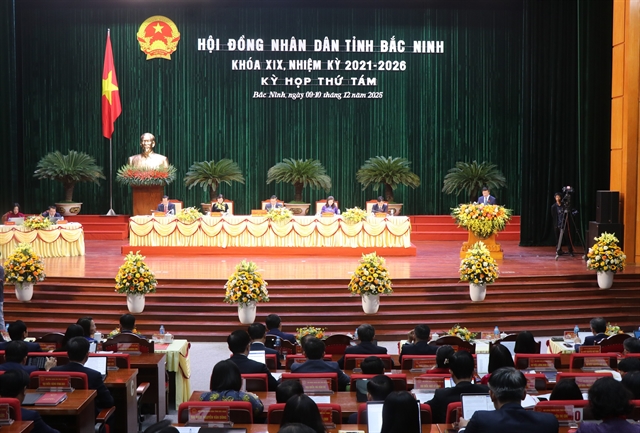
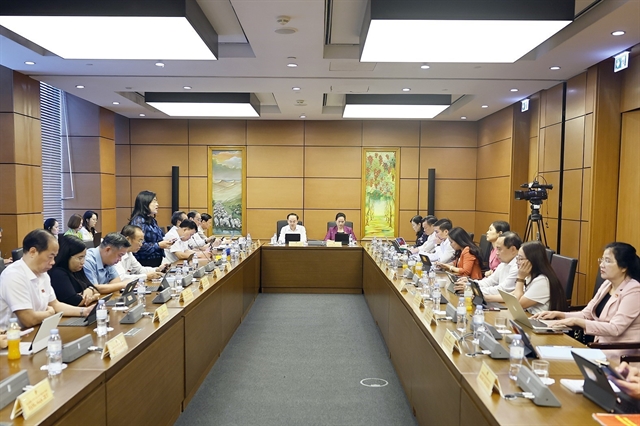
| The Bắc Ninh Provincial People’s Council for the 2021-2026 term convenes its year-end session on December 9-10. |
To address staffing challenges, the Bắc Ninh Department of Home Affairs has guided ward and commune-level authorities to proactively review and assign personnel based on qualifications and capacity.
Training courses were also organised for local officials and civil servants, focusing on home affairs, justice, agriculture and environment, finance and planning, culture and social affairs, office administration, construction and trade, industry and public administration.
The province has also reassigned civil servants and public employees from provincial departments to the commune level, balancing staff numbers between different levels of local authorities.
These measures have helped address professional staffing shortages under the newly reorganised two-tier local government model, and improved the efficiency of administrative services at the commune and ward levels.
The Department of Home Affairs plans to continue working with agencies and local authorities to carry out staff reassignment and secondment, while also developing and approving job position schemes to allocate staffing quotas for each agency.
The department will also advise on recruitment to increase the number of public employees as needed, and strengthen training and capacity-building to improve the quality of the workforce in line with new requirements.
Regarding the handling of redundant public buildings and land assets, the Bắc Ninh Department of Finance stated that for facilities still needed for use, commune-level People’s Committees will prepare documents for transfer, allocation or conversion of functions.
Commune-level authorities will hand facilities that no longer have usage needs over to the provincial Land Fund Development Centre for management and disposal in accordance with regulations.
Properties already transferred to the centre will be managed and utilised while awaiting planning adjustments, and assigned to qualified local housing management organisations.
For redundant buildings located on sites with approved planning adjustments, commune-level authorities are responsible for coordinating with the Land Fund Development Centre to propose and implement projects in line with legal regulations.
Provincial departments and sectors in Bắc Ninh will also carry out solutions, strengthen coordination to ensure effective management and improve the quality of services for citizens and businesses as the two-tier local government model is further refined. — VNS
Politics & Law
 Politics & Law
 Politics & Law
 Politics & Law
 Politics & Law
 Politics & Law
 Politics & Law
 Politics & Law
 Politics & Law
 Politics & Law
 Politics & Law
 Politics & Law
 Politics & Law
 Politics & Law
 Politics & Law