 Politics & Law

Coca-Cola Hong Kong Launches "Coca-Cola Recycling Academy"
1.
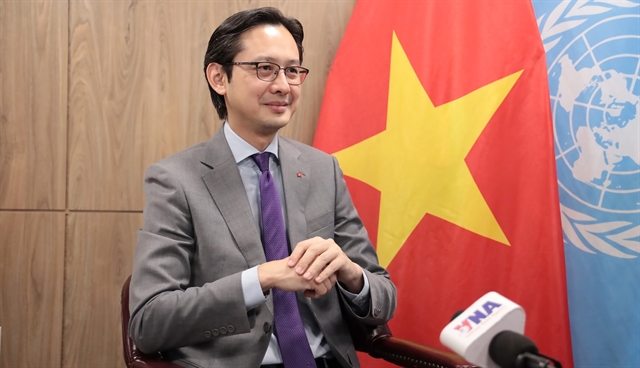 |
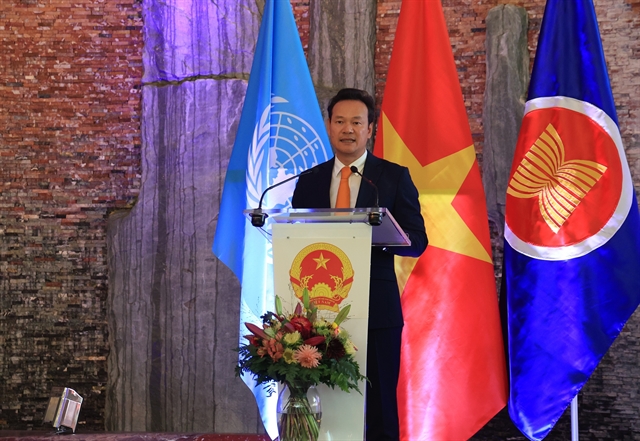
| Ambassador Đỗ Hùng Việt, head of Việt Nam's Permanent Mission to the United Nations. — VNA/VNS Photo Lê Hoàng |
Against a backdrop of mounting global instability, 2025 marked continued and notable achievements in Việt Nam’s multilateral diplomacy, particularly its contributions to the United Nations. Ambassador Đỗ Hùng Việt, head of Việt Nam's Permanent Mission to the UN, spoke with the Vietnam News Agency about the journey.
In a year of profound turbulence and divisions, how do you assess the interwoven opportunities and challenges confronting the UN’s key objectives?
2025 has been a year of considerable volatility and challenge. Strategic competition among major powers, the rise of unilateralism, and power politics have seriously eroded the fundamental principles of international law. Numerous conflict hotspots continued to persist and escalate, from Ukraine and Gaza to Sudan and Myanmar, while the arms race, including that involving nuclear weapons, intensified.
At the same time, non-traditional security challenges such as climate change, natural disasters, humanitarian crises and food security threats continued to grow, exerting far-reaching impacts on all countries, particularly developing ones.
These shared difficulties also posed serious challenges for the UN, dispersing attention and diverting resources away from the organisation’s collective activities, especially in key areas such as sustainable development, climate change, disaster response, and peacekeeping operations.
The UN also faced deeper divisions, most clearly reflected in recent developments at the General Assembly. Whereas in previous sessions the majority of General Assembly resolutions were adopted by consensus, in 2025 as many as 75 per cent of resolutions were adopted by vote. Some were even passed with support from only around one-third of the total membership, which clearly makes it difficult to ensure broad-based backing and effective implementation.
Nevertheless, within this largely grey picture, there have also been notable bright spots and opportunities. First, we have witnessed encouraging progress by the UN in building and promoting global legal frameworks to address common challenges. A notable example is the fact that 72 countries signed the Convention against Cybercrime at the opening-for-signature ceremony held in Hà Nội in October 2025.
The Agreement on the Conservation and Sustainable Use of Marine Biological Diversity of Areas beyond National Jurisdiction is expected to enter into force in early 2026, once the required number of ratifications has been reached. Another example is the Global Pandemic Agreement adopted by the World Health Assembly of the World Health Organisation.
Second, even with declining resources and commitments from major powers, small and developing countries increasingly view the UN as an irreplaceable centre for coordinating international cooperation efforts, promoting sustainable development and responding to shared challenges.
Third, difficulties and crises invariably create opportunities for innovation and reform – and this is precisely what the UN is undertaking at present. The UN80 initiative proposed by the UN Secretary-General represents the most comprehensive reform effort to date. It is not only an opportunity for the UN to renew itself and strengthen its role, but also to promote reforms towards greater democracy, transparency and effectiveness, thereby better meeting the needs and interests of member states, especially developing countries.
 |
| Maldives' Foreign Minister Abdulla Khaleel signs the UN Convention against Cybercrime in Hà Nội on October 25, 2025. VNA/VNS Photo Phương Hoa |
What are the most notable achievements of Việt Nam at the UN over the past year, and how have these results contributed to enhancing Việt Nam's standing and image in the eyes of the international community?
In 2025, we continued to effectively implement the Party and State’s foreign policy at UN forums. We participated in hundreds of meetings at various levels, with a proactive and positive spirit, making substantive contributions and sharing common responsibilities.
Through this process, Việt Nam continued to gradually affirm its role, credibility and distinctive identity within the world’s largest multilateral organisation. Overall, five major highlights may be identified in Việt Nam's engagement at the UN in 2025.
First, the close attention and direct participation of the Party and State’s senior leaders in major UN activities conveyed strong messages from Việt Nam on upholding the value of peace, strengthening multilateral cooperation, addressing common challenges, and promoting sustainable development.
Second, Việt Nam successfully hosted the opening-for-signature ceremony of the Convention against Cybercrime – a historic milestone, as it marked the first time the name of Hà Nội has been attached to a global international treaty: the “Hanoi Convention”. The fact that 72 countries signed the Convention within just two days of the ceremony left a profound impression and stood out as a particular highlight of multilateral cooperation in 2025.
Third, Việt Nam was among the few countries to receive the UN Secretary-General António Guterres for a second visit within a single term of office. In his exchanges with Việt Nam's senior leaders, the UN leader affirmed that Việt Nam was an excellent partner of the UN, a pillar of today’s multipolar world, and expressed his belief that Việt Nam deserves a stronger voice, representation and role within the global governance system.
Fourth, Việt Nam was re-elected to the UN Human Rights Council with the highest number of votes among candidates from the Asia–Pacific region. This result reflects the international community’s confidence in Việt Nam's positive contributions during the 2023–2025 term, as well as recognition of its efforts and achievements in protecting and promoting human rights.
In 2025, Việt Nam also continued to successfully perform its role as Chair of the 35th Meeting of States Parties to the United Nations Convention on the Law of the Sea, and as a member of the Executive Board of UN Women, along with participation in many other UN bodies and mechanisms.
Fifth, Việt Nam began preparations for and implementation of its role as President-designate of the 2026 Review Conference of the Treaty on the Non-Proliferation of Nuclear Weapons (NPT), through a series of consultations with countries across different regions. These initial steps have already left a positive impression of Việt Nam's capacity for leadership and coordination in a major process of great significance to international peace and security.
 |
| Vietnamese President Lương Cường (right) hosts the official welcome ceremony for United Nations Secretary-General António Guterres in Hà Nội on October 24, 2025. VNA/VNS Photo Lâm Khánh |
In the draft documents of the upcoming 14th National Congress of the Communist Party of Việt Nam, foreign affairs and international integration have, for the first time, been placed on an equal footing with national defence and security. After 40 years of growth and integration, what lessons demonstrate that foreign affairs and international integration have indeed become such a key task?
This development reflects a significant evolution in the Party’s theoretical thinking regarding the position and role of external relations. This is an affirmation of the strategic “three-legged stool” comprising national defence, national security and foreign affairs – three inseparable pillars in safeguarding national interests and protecting the Fatherland.
The shift also entails very high expectations from the Party and the State for foreign affairs and international integration: not only to work alongside defence and security in safeguarding the country early and from afar, but also to serve as a channel for attracting resources and knowledge for national development, while enhancing Việt Nam's standing and voice on the international stage.
At the UN, Việt Nam has been and will continue to comprehensively implement this orientation. First and foremost, this involves contributing to the creation of a peaceful and stable environment for development by leveraging and promoting the UN’s central role in upholding and advancing the fundamental principles of international law and the UN Charter, thereby contributing to the sustainable maintenance of international peace and security.
Việt Nam will also intensify its participation and make more proactive contributions to the process of shaping rules and building multilateral institutions. Whereas in the past Việt Nam mainly complied with established rules, it now needs to engage more deeply and more strongly in the formation of new norms and frameworks, especially in areas of critical importance to the country’s future development such as science and technology, cybersecurity, and global governance of artificial intelligence.
At the same time, Việt Nam should effectively harness the UN’s role as a hub for global knowledge and experience, thereby attracting, filtering and applying international intellectual resources directly to national development. With this approach, Việt Nam's foreign affairs and multilateral cooperation at the UN will continue to become increasingly substantive, delivering concrete and long-term benefits for the nation and the people.
Could you outline Việt Nam's key priorities at the UN in 2026 – a year of particular significance as the country seeks to further advance its foreign policy and deep integration with the world?
The year 2026 will be the first year of implementing the Resolution of the 14th National Party Congress, which defines foreign affairs and international integration as a key and regular task. It will also be a pivotal year in preparation for the 50th anniversary of Việt Nam's accession to the UN in 2027. In this context, we have identified several key priorities.
First, we will focus on supporting the participation of Party and State leaders in major high-level UN activities in 2026, notably the General Debate of the 81st session of the UN General Assembly, as well as major processes such as the UN Water Conference, the AI Summit, and the Conference on Sustainable Development Goal 16 on peace, justice and strong institutions. These are all important events, and Việt Nam has been actively contributing from the preparatory stage.
Another key priority is Việt Nam's role as President of the NPT Review Conference in April-May 2026. This is a major responsibility, as it will be the first time Việt Nam has chaired one of the most important mechanisms in nuclear non-proliferation, disarmament, and nuclear security and safety. The international community also places high expectations on Việt Nam to help promote dialogue, build trust and generate positive momentum, reaffirming and strengthening collective commitments to nuclear disarmament, non-proliferation, and the peaceful use of nuclear energy.
Also in 2026, Việt Nam will continue to participate in and play an active role in the multilateral mechanisms and organisations of which it is a member, including the UN Human Rights Council and the Executive Board of UN Women, as well as many other multilateral forums.
Việt Nam will also actively campaign as a candidate for election as a Judge of the International Tribunal for the Law of the Sea, thereby continuing to affirm its image as an active, responsible member making substantive contributions to the UN’s work and to the collective efforts of the international community. VNS
Politics & Law
 Politics & Law
 Politics & Law
 Politics & Law
 Politics & Law
 Politics & Law
 Politics & Law
 Politics & Law
 Politics & Law
 Politics & Law
 Politics & Law
 Politics & Law
 Politics & Law
 Politics & Law
 Politics & Law