 Politics & Law

AIMCONNECT 2026 Held in Singapore, Bringing Global Automotive Leaders Together to Explore the Future of AI, Trust and Connected Mobility
1.

|
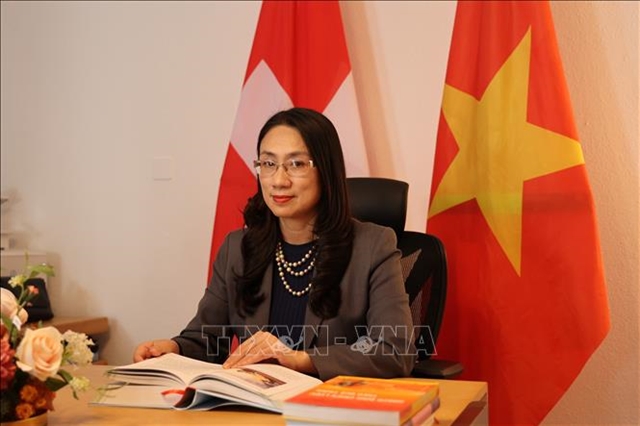
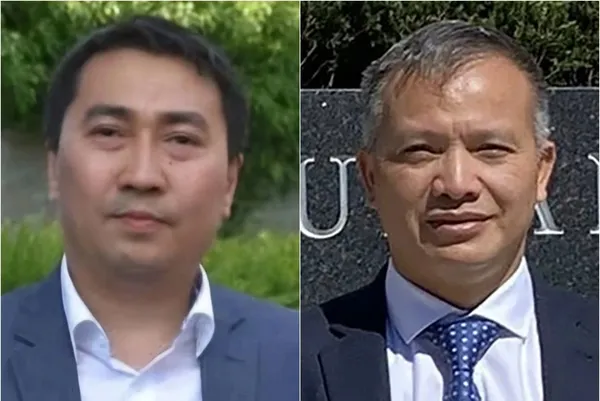
| Dr Nguyễn Thái Chinh at a meeting in Berlin, Germany. — VNA/VNS Photo Thu Hằng |
BERLIN — The collection of public feedback, including from overseas Vietnamese (OVs), on the draft documents for the 14th National Party Congress reflects the consistent view that Vietnamese expatriates are an inseparable part of the nation, according to Dr Nguyễn Thái Chinh, a specialist in earth science and satellite geodesy and a member of the Vietnam-Germany Innovation Network (VGI).
In an interview granted to a Vietnam News Agency correspondent in Berlin, he said the move not only demonstrates the Party's and the State’s deep concern for more than six million Vietnamese living and working in over 130 countries and territories, but also affirms their respect, trust, and expectations of overseas intellectuals, workers, and communities in contributing their knowledge and resources to national development.
This is particularly important, he added, at a time when the country is entering a new era of development that requires the mobilisation and effective use of all available resources.
Chinh noted that the expansion of consultation channels, including participation in conferences, online submissions via government portals, feedback through overseas Vietnamese associations, and via diplomatic missions, reflects a spirit of openness, willingness to listen, and democracy in the Party's and the State’s policy-making process.
He described this as a sound and timely policy to draw on the knowledge and international experience of OVs in national development, while helping consolidate great national unity, avoid discrimination between domestic and overseas communities, and strengthen expatriates’ political confidence in the Party and the State.
According to Chinh, OVs have long expressed a desire to make comprehensive, long-term, and practical contributions to the homeland, focusing on areas such as scientific and technological innovation, digital transformation, and the development of a knowledge-based economy; human resources training; investment and business cooperation; startup support and technology transfer; and participation in global supply chains.
In recent years, the Vietnamese Students’ Association in Berlin-Brandenburg, representing young intellectuals, has made practical contributions in education, networking, and scientific and technological cooperation through seminars and specialist forums.
By working with organisations such as the German Academic Exchange Service (DAAD) and the German Agency for International Cooperation (GIZ), young Vietnamese experts have contributed their knowledge and efforts to Vietnam’s development and actively promoted Germany-Việt Nam cooperation projects, bringing tangible benefits.
A notable example is the first joint scientific project between the Hanoi University of Mining and Geology (HUMG) and the GFZ German Research Centre for Geosciences – Europe’s leading Earth-science institute – to establish a high-frequency Global Navigation Satellite System (GNSS) station on the HUMG campus.
Chinh said OVs, particularly intellectuals, hope that their views will continue to be heard, respected, and supported.
They also expect transparent, stable, and long-term mechanisms and policies to encourage investment and contribution, together with stronger channels connecting expatriates with the homeland.
Meanwhile, Professor Nguyễn Xuân Thính of TU Dortmund University, who is also Acting President of the Union of Vietnamese Associations in Germany and Chairman of the VGI, welcomed the Party’s decision to early publish the draft Congress documents.
This, he said, creates conditions for OVs, especially intellectuals both at home and abroad, to study, discuss, and contribute ideas.
The move not only highlights the Party’s openness, transparency, and democratic spirit in consulting the people, but also demonstrates its appreciation for the intellect and contributions of Vietnamese communities worldwide, while helping improve the quality and practicality of development policies in the years ahead. — VNA/VNS
Politics & Law
 Politics & Law
 Politics & Law
 Politics & Law
 Politics & Law
 Politics & Law
 Politics & Law
 Politics & Law
 Politics & Law
 Politics & Law
 Politics & Law
 Politics & Law
 Politics & Law
 Politics & Law
 Politics & Law