 Politics & Law

AITO Looks Ahead to Europe, Building a Thriving Automotive Ecosystem
1.

|
| Deputy Minister of Public Security Phạm Thế Tùng speaks at the seminar. VNA/VNS Photo |
HÀ NỘI — Deputy Minister of Public Security Phạm Thế Tùng has highlighted the importance of strengthening international cooperation in combating cybercrime, stressing that global coordination and joint action are vital as the world enters the digital era driven by rapid technological advances.
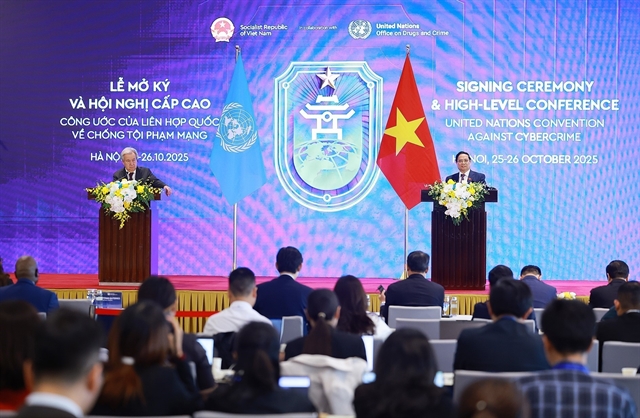
Addressing a seminar on international cooperation in combating online fraud, held as part of activities of the signing ceremony of the UN Convention against Cybercrime (the Hanoi Convention) in Hà Nội on Saturday, the Deputy Minister said Việt Nam had strengthened coordination with other countries in fighting transnational online fraud and achieved positive results.
"The Ministry of Public Security of Việt Nam acknowledges that no nation can tackle cybersecurity and cybercrime challenges alone, particularly as technology-driven crimes such as online fraud are becoming more sophisticated and widespread," Tùng said.

|
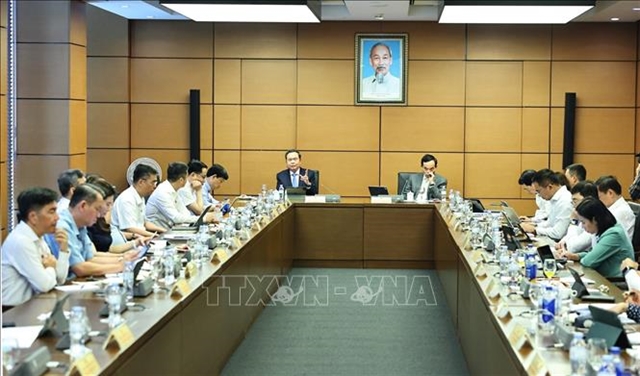
| A view of the meeting. |
He noted that perpetrators were increasingly exploiting emerging technologies and scientific advances to craft targeted scams that steal victims’ assets. They were forming transnational criminal networks, basing operations in jurisdictions with legal loopholes to target people in many countries worldwide.
Tung said online fraud had become increasingly complex and widespread in Việt Nam in recent years, causing significant losses to people across sectors such as finance, job brokerage, and e-commerce.
Delegates discussed current efforts to combat online fraud, shared practical experiences, and proposed solutions to enhance the effectiveness of cybercrime prevention in the coming time.
They also highlighted several challenges, noting that criminals were increasingly exploiting OTT applications, social media platforms, cross-border internet services, and emerging technologies, such as AI and deepfake, to approach victims and carry out online scams; and take advantage of electronic payment methods, intermediary gateways, international transfers, and cryptocurrencies to launder and conceal illicit financial flows.
Coordination between law enforcement agencies and transnational service providers or enterprises remains inadequate, hindering the progress of investigations and case resolution, according to the delegates.
Criminals also use foreign territories to conduct illegal activities, while international cooperation in verifying and investigating such crimes remains limited and ineffective. Moreover, differences in legal systems and investigative procedures of each country pose challenges to information sharing and joint actions.
In his remarks, US Ambassador to Việt Nam Marc E. Knapper stressed that this was a timely moment to discuss the issue. He noted that while scams were once largely individual acts, they had now evolved into organised fraud centres and international networks, causing serious economic and security consequences.
This further proved no country could tackle the problem alone, he said, underscoring the need for stronger international and intergovernmental cooperation. The ambassador underlined the importance of raising public awareness of risks of online scams, especially among vulnerable groups such as the elderly and children.
In 2024, Việt Nam's Ministry of Public Security detected more than 6,000 cases related to online fraud, with total losses exceeding VNĐ12 trillion (US$456,18 million). Police agencies and local authorities have investigated and prosecuted numerous cases and suspects for fraud and the use of telecommunications and internet networks to appropriate property.
Online fraud is widespread across Việt Nam, accounting for a large share of criminal cases. Offenders constantly change tactics, operate professionally, and often operate from neighbouring countries or border areas, making investigations and arrests more difficult.
Through its efforts to prevent and combat online fraud, the ministry has identified main types of scams, such as impersonating law enforcement or judicial agencies to convince victims that they are involved in legal cases; posing as utility or tax officials to demand payments or trick victims into installing malware; romance and investment scams; and schemes involving the spread of malicious software.
Deputy Minister Tùng said that in response to the growing complexity of online fraud, the ministry had implemented comprehensive measures for prevention, detection, investigation, and prosecution, ensuring unified coordination from the central to local levels.
The ministry had proposed amendments to laws on cybersecurity, telecommunications management, and digital financial services to close legal loopholes exploited by online scammers. It had also strengthened monitoring, investigation, and prosecution of major, transnational, and high-tech fraud cases, while working closely with cross-border service providers to detect and block websites and accounts linked to online scams.
Vietnamese authorities had also stepped up public awareness campaigns to prevent online scams. Recently, the ministry collaborated with Google and TikTok to launch anti-fraud initiatives and established the Digital Trust Alliance, bringing together online platforms, service providers, and influencers to promote awareness and build widespread public engagement, Tùng noted. — VNA/VNS
Politics & Law
 Politics & Law
 Politics & Law
 Politics & Law
 Politics & Law
 Politics & Law
 Politics & Law
 Politics & Law
 Politics & Law
 Politics & Law
 Politics & Law
 Politics & Law
 Politics & Law
 Politics & Law
 Politics & Law




