 Opinion

Vietnamese Prime Minister meets Cambodian National Assembly President
1.
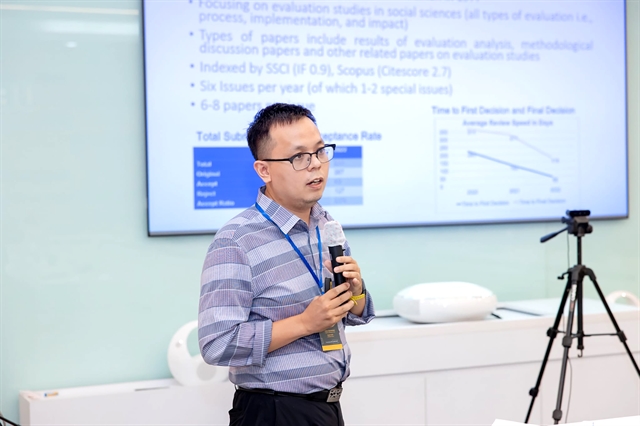 |
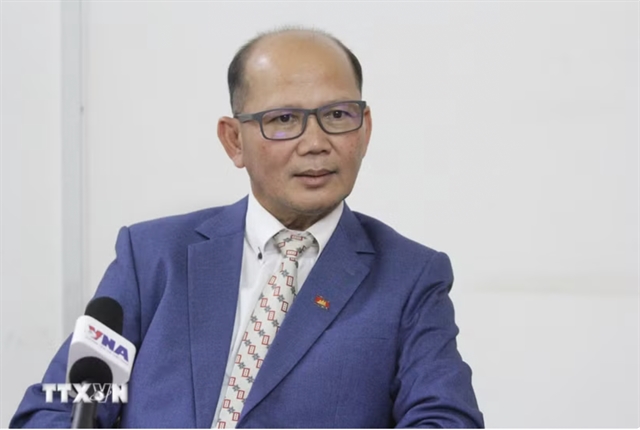
| Dr. Phạm Hiệp, Director of the Institute for Educational Research and Knowledge Transfer at Thành Đô University. — Photo courtesy of Thành Đô University |
A university degree has long been seen as a gateway to stable employment. Yet for many graduates today, that promise is far from guaranteed. A growing number find themselves unemployed or working outside their field, highlighting a persistent disconnect between higher education and labour market needs. Voice of Vietnam spoke with Dr Phạm Hiệp, Director of the Institute for Educational Research and Knowledge Transfer at Thành Đô University, about the roots of the problem and what can be done.
Around 30 per cent of graduates work outside their field, and hundreds of thousands remain unemployed or underemployed each year. What are the main causes?
“We need to look at this in the context of mass higher education. When more people attend university, not all graduates will inevitably transition smoothly into jobs that match their training. This is not unique to Việt Nam, it is a global trend.
From an economic standpoint, a certain level of mismatch or unemployment is natural and even necessary to drive competition and improvement. The real concern is whether the rate is rising over time. If it is, then policymakers need to intervene.
That said, the primary issue lies with the labour market. If there are not enough jobs being created, graduates will struggle regardless of how well they are trained. Universities play a role, but they are not the main cause.”
Why does the gap between training and market demand continue to exist?
“Universities cannot realistically meet every demand of the labour market within a four-year curriculum. Academic programmes follow certain standards while market needs vary widely and change rapidly, even across companies in the same sector.
What we are seeing now is a pace of change that education systems cannot easily keep up with. Over the past few years, global disruptions, from the pandemic to technological advances like AI, have reshaped industries. Meanwhile, universities must design programmes years in advance, so there is always a lag.
Another major issue is the lack of standardised information. Việt Nam does not yet have a comprehensive system of occupational frameworks or regularly updated job descriptions. Without clear signals from the labour market, universities and students alike are left navigating in the dark.”
What adjustments should universities prioritise to better align with real-world demands?
“Many effective models are already available, such as integrating work experience into study programmes or adopting project-based learning. The challenge is not a lack of ideas but a lack of consistent and meaningful implementation.
Universities need to move beyond formalities and genuinely redesign their programmes with employability in mind. At the same time, better labour market data is essential. Looking only at employment outcomes one year after graduation can be misleading, career paths often take time to stabilise.
This is a shared responsibility. The government, employers, universities and workers all have roles to play. Stronger policy support is especially important to encourage deeper collaboration between education providers and industry.”
Cooperation between universities and businesses is often seen as symbolic rather than substantive. How can this be improved?
“It starts with policy incentives. For instance, companies could be required or encouraged through tax benefits to invest more in training, research and young talent.
Universities have made efforts, hosting job fairs, workshops and inviting business leaders to engage with students, but these activities often lack depth. The core issue is sustainability. Without sufficient funding and autonomy, universities find it difficult to build long-term, meaningful partnerships with businesses.”
In a more demanding job market, what skills should students focus on developing?
“Beyond academic knowledge, there are three essential skills every student should have: English proficiency, technological competence and the ability to learn continuously.
These are transferable skills that apply across all industries. They enable graduates to adapt as jobs evolve. At the same time, employers should recognise that fresh graduates need time to develop. Expecting them to be fully job-ready from day one is unrealistic.”
Practical experience is often emphasised. How can students better prepare themselves while still in university?
“Internships are key, and they should start early, ideally from the second semester. But more importantly, they must be meaningful. Students need to be immersed in real work environments, not just given superficial tasks.
There also needs to be proper mentorship. Those guiding students during internships should be trained to support learning, not just assign work.
Finally, lecturers themselves should stay connected to industry. When teachers understand current market realities, they can bring that knowledge back into the classroom, making education more relevant and dynamic.” — VNS
Opinion
 Opinion
 Opinion
 Opinion
 Opinion
 Opinion
 Opinion
 Opinion
 Opinion
 Opinion
 Opinion
 Opinion
 Opinion
 Opinion
 Opinion