 Environment


HCM City proposes up to $38,000 for night tourism products
1.

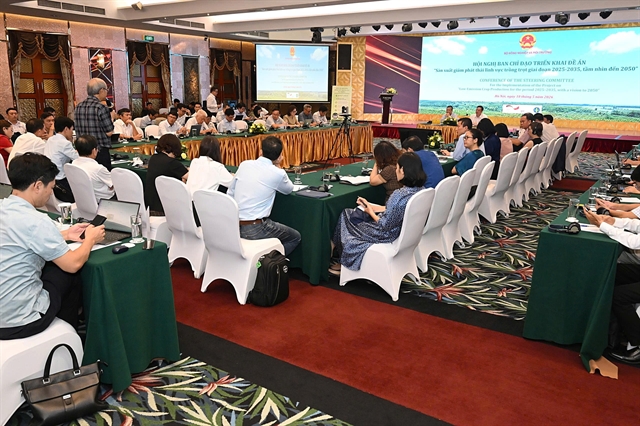 |
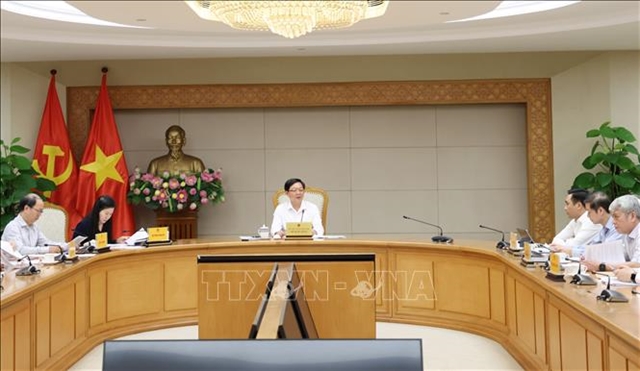
| The Steering Committee's conference for the implementation of the project on low-emission crop production in 2025–30 period, with a vision to 2050, was held on May 18 in Hà Nội. — VNS Photo Trần Như |
Trần Như
HÀ NỘI — Cutting greenhouse gas emissions from agriculture is no longer just an environmental responsibility but a necessary step for Viet Nam’s farming sector to maintain its competitiveness in global markets, the deputy agriculture minister said on Monday, as the country accelerates efforts to green its food production.
Deputy Minister of Agriculture and Environment Hoàng Trung made the remarks at the opening meeting of the national steering committee overseeing the Government’s plan to reduce emissions from crop production between 2025 and 2035.
Deputy Director of the Ministry's Plant Production and Protection Department, Nguyễn Thị Thu Hương, said 22 provinces and cities have already drawn up their own action plans under the initiative.
She said key priorities include developing low-emission farming practices, improving the efficiency of fertiliser, pesticide and irrigation use and establishing a nationwide system to measure, report and verify emissions, known as MRV.
Hương added that the period from 2026 to 2030 will be critical in laying the foundations for a low-emission agricultural sector and strengthening the position of Vietnamese farm exports in international markets.
For rice production, farmers will be encouraged to adopt alternate wetting and drying irrigation techniques along with improved straw management and more efficient fertiliser use. These measures support the Government’s programme to convert one million hectares of Mekong Delta farmland into high-quality, low-emission rice cultivation.
In the Central Highlands and the northern province of Sơn La, coffee growers will be encouraged to shift towards circular farming practices, including water conservation, greater use of organic fertilisers, reuse of agricultural waste and improved soil restoration.
In fruit-growing regions, producers of durian, dragon fruit, mango and passion fruit will be expected to improve water management, handle by-products more responsibly and meet increasingly stringent green standards required by international buyers.
Vice President of the Fertiliser Association of Vietnam, Nguyễn Trí Ngọc, said the plan is both sound and timely.
He added that two years into the Mekong Delta rice programme, results have been encouraging despite practical challenges on the ground, with lessons learned expected to guide future efforts across the sector.
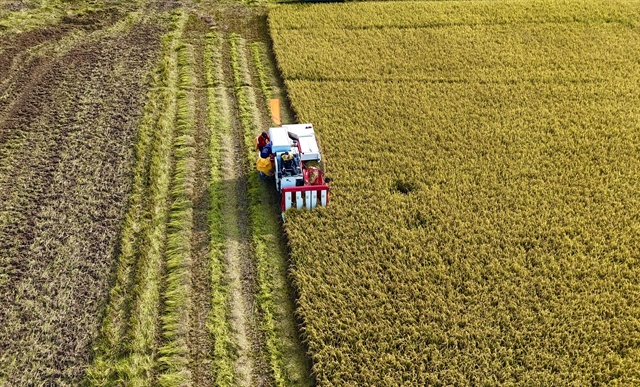 |
| Farmers harvest rice in a high-quality, low-emission rice field in the southern province of An Giang. — VNS/VNS Photo |
Phan Tiến Thành, a business representative, said the initiative would only succeed if government agencies, local authorities, enterprises and farmers pulled in the same direction.
He pledged a long-term commitment to Viet Nam’s low-emission rice sector and said he believed the country had what it takes to become a global pioneer in the field.
Deputy Minister Hoàng Trung said the ministry would spend 2026 putting in place technical standards and MRV frameworks for rice, coffee and other major crops and would issue national regulations on greenhouse gas accounting in the crop sector to give the programme a uniform legal footing nationwide.
Training agricultural extension officers, cooperatives and farmers, he said, was a non-negotiable part of making it work in practice.
In the near term, the ministry will build awareness among farmers, businesses and local officials and begin rolling out a low-emission label for key agricultural products.
Over time, the senior official said, the goal is to develop clear low-emission farming standards, build large-scale production zones linked to supply chains and create the data infrastructure needed to eventually connect to carbon markets and carbon credit trading.
Funding will not come from the State budget alone. The ministry leader said it would also seek support from businesses, international organisations and climate funds to finance the programme and bring in technology.
Participants at the conference urged the ministry to extend emission-reduction programmes to the coffee sector nationwide and to expand the low-emission rice model into northern Viet Nam.
Delegates said rolling out green farming programmes across multiple crops and regions simultaneously would give the agricultural transition real momentum.
Advanced farming methods, including smarter water and nutrient management, reduced reliance on chemical inputs, greater use of organic fertiliser and improved crop waste management, could significantly cut production costs while improving soil quality, raising the standard of farm products and increasing incomes for farmers, participants said.
The conference also endorsed plans to develop a low-emission label for major export commodities, including rice, coffee and vegetables, a step officials described as central to building Viet Nam’s reputation as a source of green, responsibly produced food on the global stage. — VNS
Environment
 Environment
 Environment
 Environment
 Environment
 Environment
 Environment
 Environment
 Environment
 Environment
 Environment
 Environment
 Environment
 Environment
 Environment