 Politics & Law
Vietnamese Prime Minister meets Cambodian National Assembly President
1.
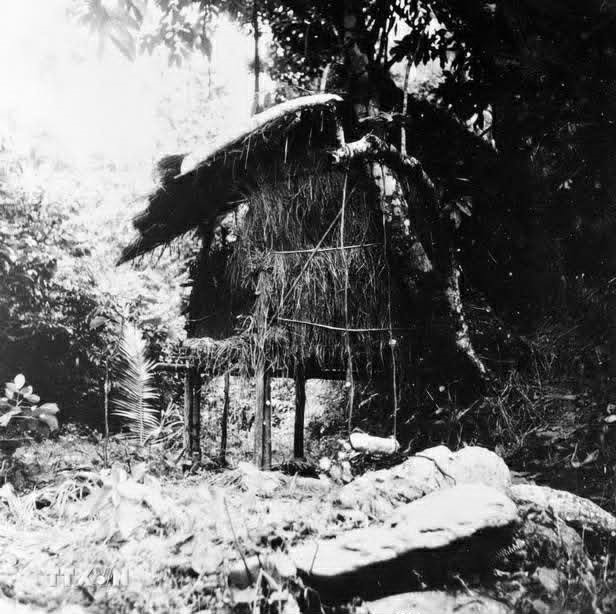 |
| Just four months after returning to the country, President Hồ Chí Minh convenes the eighth plenary meeting of the first-term Party Central Committee at Khuổi Nặm hut, where he decides to place the task of national liberation first and to establish the Việt Minh Front. — VNA/VNS Photo |
CAO BẰNG — History still echoes through the mountain paths of Pác Bó, where growing numbers of visitors are returning to the modest hut that helped shape Việt Nam’s struggle for independence.
During these historic days in May, the narrow stone path winding along the mountainside towards Khuổi Nặm hut at the Pác Bó Special National Relic Site in Trường Hà Commune has been busier than usual.
Upon arriving at the hut, many visitors fall silent before the simple space where decisions that changed the fate of the Vietnamese nation were once made.
Vi Thị Hồng Thoa, a guide at the Pác Bó Special National Relic Site, said that from May 10 to 19, 1941, the eighth plenary meeting of the Party Central Committee’s first tenure was held at Khuổi Nặm hut under the chairmanship of leader Nguyễn Ái Quốc.
Participants included comrades Trường Chinh, Hoàng Văn Thụ and Phùng Chí Kiên, along with delegates from the Party committees of Tonkin and Annam and Party organisations operating overseas.
As the revolutionary movement entered a new stage of development, delegates adopted strategic decisions of historic significance, placing the task of national liberation above all else.
The meeting decided to temporarily set aside the slogan of land reform in order to focus fully on the mission of national salvation, marking a particularly important strategic shift in the Vietnamese revolution.
It also resolved to establish the Việt Nam Independence League, known as the Việt Minh, to unite patriotic forces under the banner of national independence. The decision marked a major development in the Party’s thinking on building a broad national coalition under Hồ Chí Minh’s leadership.
At the same time, the meeting identified the building of revolutionary forces and the development of armed struggle in preparation for an uprising as the central task of the revolution. This laid the groundwork for the General Uprising that later brought the revolutionary government to power.
According to Lieutenant Colonel Vũ Văn Long from the Faculty of Communist Party History at the Political Academy under the Ministry of National Defence, the Eighth Central Committee meeting in May 1941 not only completed the strategic reorientation of the Vietnamese revolution, but also laid the ideological and organisational foundations for the success of the August Revolution in 1945.
The direct role of Nguyễn Ái Quốc in chairing, guiding and concluding the meeting confirmed his stature as an outstanding leader who steered the Vietnamese revolution through a historic turning point towards national independence, according to a presentation delivered at the scholarly conference marking 85 years since Hồ Chí Minh’s return to the country, an event that paved the way for the great victories of the Vietnamese revolution.
Following the Eighth Central Committee meeting, the revolutionary struggle for national liberation entered a new stage of development. Under the direct leadership of the Central Committee and leader Nguyễn Ái Quốc, Cao Bằng became a revolutionary base, while the Việt Minh front expanded across the country.
From this border region, Nguyễn Ái Quốc published the newspaper Việt Nam Độc lập to educate and mobilise people to join patriotic organisations and the Việt Minh in the struggle for national liberation.
The Việt Minh movement spread from Hà Quảng, Hòa An and Nguyên Bình to the provinces of Bắc Kạn, Thái Nguyên, Tuyên Quang, Hà Giang and Lạng Sơn before extending to the lowland provinces and gradually developing into a nationwide liberation movement.
From there, the first self-defence units were formed, while clandestine training classes for cadres were held in caves and small huts deep in the mountains. Many local people from Cao Bằng were trained to become pioneering revolutionary cadres who later expanded the Việt Minh movement into the lowlands and helped build armed forces and revolutionary bases.
Under the direction of leader Nguyễn Ái Quốc, guerrilla units were established and later developed into armed forces, culminating in the founding of the Việt Nam Propaganda Liberation Army on December 22, 1944.
Thanks to the strategic decisions adopted at the Eighth Central Committee meeting, the Party gradually prepared the conditions for an armed uprising by building political forces, developing revolutionary bases, organising armed units and expanding the national salvation movement across the country.
Under the Party’s leadership and Hồ Chí Minh’s guidance, the nation rose up in the August General Uprising of 1945.
The success of the August Revolution demonstrated the effectiveness of the strategic vision shaped at the Eighth Central Committee meeting in Pác Bó, together with the long-term preparation of forces, organisation and national unity.
Journalist Hoàng Hồng Xiêm from Cao Bằng Newspaper and Radio-Television said that today, thousands of visitors returning to Pác Bó come not only to honour history, but also to reaffirm the great lesson asserted by the Party and leader Nguyễn Ái Quốc at the Eighth Central Committee meeting: that in any circumstance, national interests must be placed above all else, while the strength of the people must be united and an independent, self-reliant spirit maintained in order to develop the country. — VNS
Politics & Law
 Politics & Law
 Politics & Law
 Politics & Law
 Politics & Law
 Politics & Law
 Politics & Law
 Politics & Law
 Politics & Law
 Politics & Law
 Politics & Law
 Politics & Law
 Politics & Law
 Politics & Law
 Politics & Law