 Politics & Law
Vietnamese Prime Minister meets Cambodian National Assembly President
1.
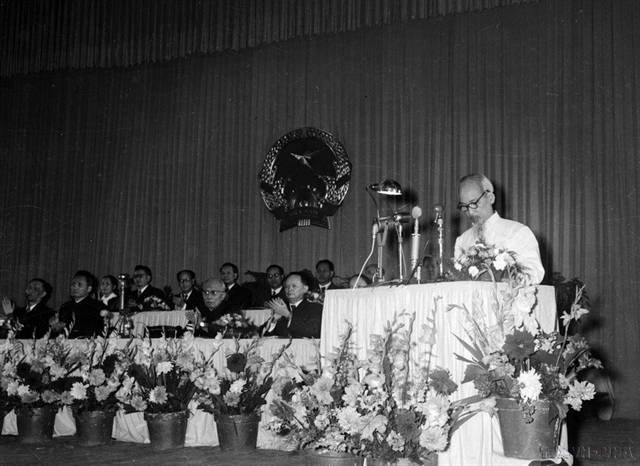 |
| President Hồ Chí Minh reports to the National Assembly on the revised Constitution at the 11th session of the first-tenure National Assembly, held from December 18 to 31, 1959. — VNA/VNS File Photos |
HÀ NỘI — As Việt Nam marks the 136th birth anniversary of President Hồ Chí Minh, renewed attention is being paid not only to his role in securing national independence, but also to his efforts to institutionalise popular sovereignty through the National Assembly (NA), which he viewed as the highest expression of the people’s will.
At the inaugural meeting of the Provisional Government on September 3, 1945, just one day after proclaiming independence, he proposed organising a nationwide general election based on universal suffrage. The decision underscored his belief that the new State had to derive its legitimacy from the people.
Dr Lê Đình Năm of the Academy of Journalism and Communication said the general election of January 6, 1946, was not merely a procedural event but a political milestone. It represented a right won through revolutionary struggle and affirmed the people’s role as masters of the nation.
He said that in President Hồ Chí Minh’s thinking, national liberation had to go hand in hand with empowering citizens to determine their own destiny, describing the general election as the clearest expression of that principle.
The 1946 Constitution subsequently enshrined the National Assembly as the body vested with constitutional and legislative powers and entrusted with deciding the country’s most important affairs. Yet, as many researchers emphasise, President Hồ Chí Minh believed the NA's strength lay not only in its legal authority but also in its close connection with the people.
Colonel, Associate Professor and Dr Nguyễn Hữu Lập, Dean of the Faculty of Hồ Chí Minh Studies at the Political Academy under the Ministry of National Defence, said President Hồ Chí Minh consistently defined the National Assembly as the highest representative body of the people.
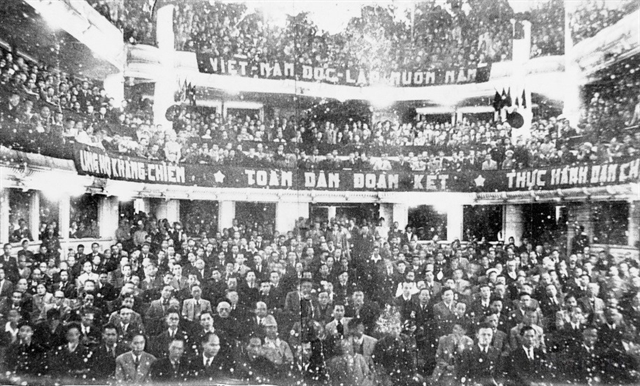 |
| The opening session of the first sitting of the first-tenure National Assembly at the Hà Nội Opera House on March 2, 1946. |
Lập said President Hồ Chí Minh did not view the National Assembly as merely an institution of power, arguing that its real strength lay in reflecting the people’s voice, safeguarding their interests and serving their happiness, and that without such a connection it would lose its essence.
Deputies as servants of the people
Ensuring that the NA truly represented the people required, in President Hồ Chí Minh’s view, a strong emphasis on the quality and ethics of its deputies.
Hoàng Thị Lan Nhung, Director General of the Department of Information and Library under the NA Office, said that even during his years abroad as Nguyễn Ái Quốc searching for a path to national salvation, President Hồ Chí Minh had already recognised that independence would remain incomplete if the people were not masters of their own State.
Nhung said this awareness shaped President Hồ Chí Minh’s determination to build a democratic institution in which all power belongs to the people, adding that the NA was conceived as the highest embodiment of that power.
President Hồ Chí Minh repeatedly stressed that deputies must be both capable and virtuous, and absolutely loyal to the interests of the Fatherland and the people. Those elected, he said, must serve as public servants rather than officials seeking privilege or personal gain.
Professor and Dr Mạch Quang Thắng, former senior lecturer at the Hồ Chí Minh National Academy of Politics, observed that in Hồ Chí Minh’s thought, deputies play a dual role. They bring the legitimate concerns and aspirations of voters into parliamentary deliberations and convey the Assembly’s decisions back to the people.
Thắng said the quality of deputies determined the quality of the NA and, more broadly, the quality of democracy itself, stressing that representation must be substantive rather than merely symbolic.
President Hồ Chí Minh also set demanding ethical standards for deputies: to be industrious, thrifty, honest and upright; to be wholly devoted to the public good; and to remain modest and close to the people. They were required to combat corruption, wastefulness and bureaucracy, practices that could undermine public trust and erode the moral authority of State institutions.
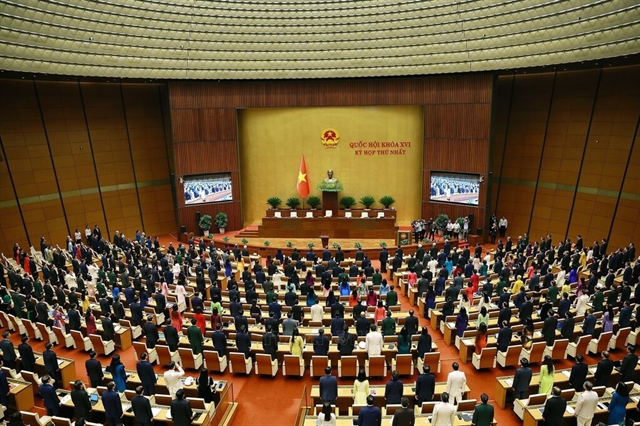 |
| Opening session of the first sitting of the 16th-tenure National Assembly. |
Dr Ngô Xuân Dương of the Hồ Chí Minh National Academy of Politics said that, in the context of a nation newly freed from colonial and feudal rule, President Hồ Chí Minh’s affirmation that the people are the holders of power carried profound revolutionary significance.
Dương said it marked a fundamental transformation, like the State, from serving a ruling minority to serving the overwhelming majority of citizens, adding that a truly people-centred NA could not exist without deputies who listen to the people, understand them and accept public supervision.
Enduring relevance in a new context
President Hồ Chí Minh once advised that deputies must maintain regular contact with voters and faithfully convey their concerns to the NA and the Government. Without learning from the people, he warned, it would be impossible to formulate sound and practical policies.
His guiding principle was clear: “Whatever benefits the people, we must do our utmost to achieve; whatever harms the people, we must do our utmost to avoid.”
Today, as Việt Nam advances the building of a socialist rule-of-law State and promotes reforms aimed at making the NA more professional and modern, that principle remains highly relevant.
Growing demands for transparency, accountability and effective oversight have placed greater expectations on both the institution and its deputies. Beyond political steadfastness, representatives are expected to demonstrate professional competence, legal knowledge and parliamentary skills while preserving the spirit of public service that President Hồ Chí Minh regarded as the foundation of public office.
More than seven decades after the first general election, his influence on the NA remains evident, not only in its constitutional role but also in the enduring emphasis on integrity, responsibility and closeness to the people. — VNS
Politics & Law
 Politics & Law
 Politics & Law
 Politics & Law
 Politics & Law
 Politics & Law
 Politics & Law
 Politics & Law
 Politics & Law
 Politics & Law
 Politics & Law
 Politics & Law
 Politics & Law
 Politics & Law
 Politics & Law