 Opinion
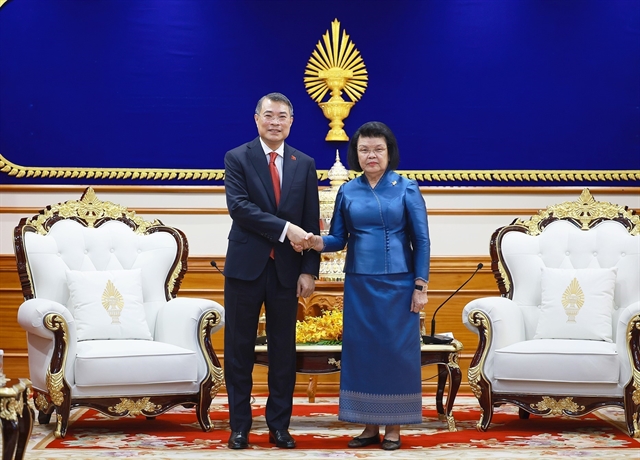
Vietnamese Prime Minister meets Cambodian National Assembly President
1.
|
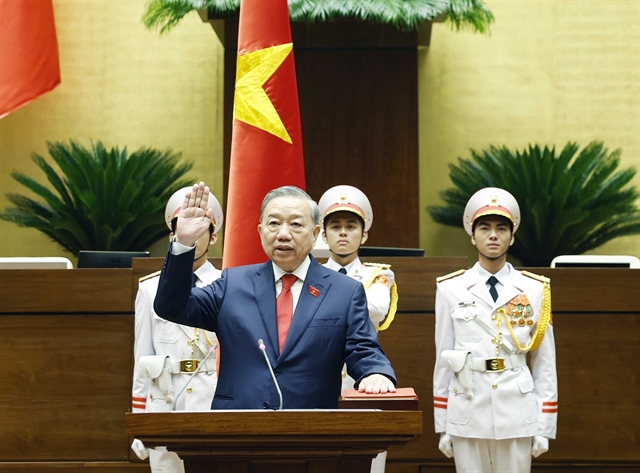
| Party General Secretary Tô Lâm takes the oath of office on Tuesday after being elected State President by the National Assembly. — VNA/VNS Photo |
HÀ NỘI — The National Assembly (NA) on Tuesday elected the top leadership positions, completing a key phase of personnel consolidation at the opening session of its new term. Lawmakers voted to appoint the State President, the Prime Minister and the Chief Justice of the Supreme People’s Court, a move that NA deputies described as setting the institutional direction for the next five years and beyond.
Speaking on the sidelines of the session, Trịnh Xuân An, NA deputy of Đồng Nai Province, said the process went beyond routine organisation, framing it as a pivotal political step.
“The positions elected will shape the framework that steers the country over the next five years and beyond,” he said.
An said the appointments help complete the constitutional structure of state power while ensuring continuity in governance, particularly following the Communist Party’s 14th National Congress. He added that the selection process had been carefully prepared under Party procedures and carried out by the NA in line with legal and constitutional requirements.
“The emphasis is on ensuring a State apparatus capable of responding quickly to policy demands, from economic development to national defence and the implementation of major Party resolutions. In the current context, the priority is to have an apparatus to carry out urgent tasks without delays, while maintaining continuity across the state system, especially at the top level from the start of the term,” An said.
While the leadership has been newly elected, he noted that the broader State apparatus reflects continuity, drawing on the experience and institutional foundations of the previous term. At the same time, the inclusion of new officials is intended to introduce more flexible thinking and adaptability. The result, he added, is meant to balance stability with the potential for policy innovation.
The lawmaker also said expectations among voters remain high, particularly for a leadership that can translate policy into action.
“There is a strong expectation for decisiveness in action, creativity in thinking and, above all, policies that are workable,” An said. He added that the NA is expected to reinforce its role in shaping and guiding policy, working alongside the government on socio-economic development while strengthening oversight and decision-making on key national issues.
Another NA deputy, Trịnh Thị Tú Anh of Lâm Đồng Province, described the leadership vote as a significant milestone, reflecting public trust and expectations of a new phase of development. She said the leadership combines experience with what she described as a more assertive reform mindset, adding that the high level of consensus in the vote sends a signal of political stability.
Việt Nam is entering a new phase of development, with challenges spanning economic restructuring and national security. In that context, lawmakers and voters are looking to the new leadership for, as Anh put it, flexible and effective governance.
Trần Hoàng Ngân, an NA deputy of HCM City, said the personnel process had been carefully prepared by the NA and relevant agencies, following established procedures and receiving strong support from lawmakers.
“The expectation is that they will take on these responsibilities and lead the country into the new era of nation's rise,” Ngân said. VNS
Opinion
 Opinion
 Opinion
 Opinion
 Opinion
 Opinion
 Opinion
 Opinion
 Opinion
 Opinion
 Opinion
 Opinion
 Opinion
 Opinion
 Opinion