 Life & Style

Ping An Digital Bank Completes HKMA’s Second GenA.I. Sandbox Cohort
1.
|
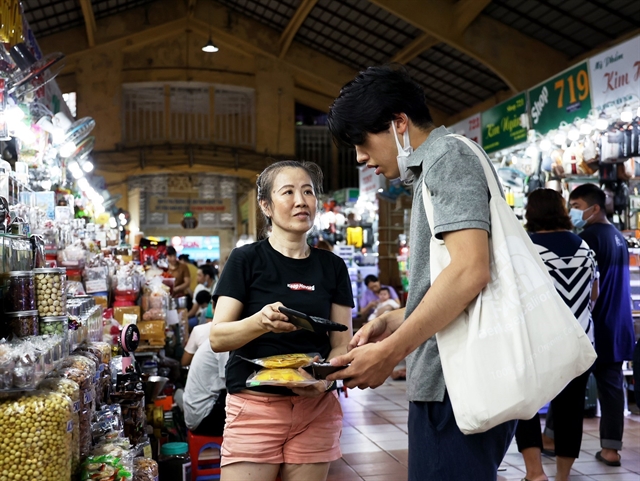
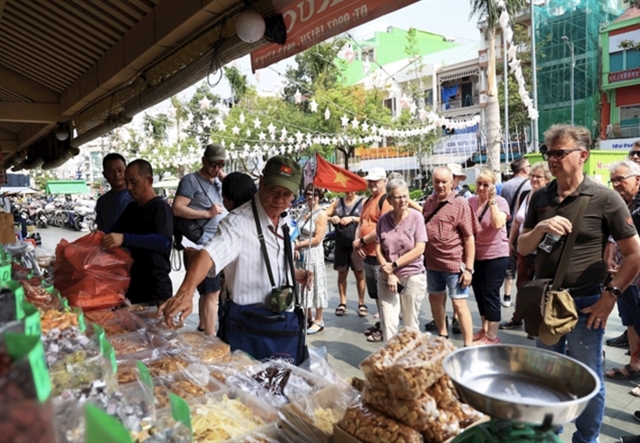
| A tourist shops at Bến Thành Market in HCM City’s District 1.— VNA/VNS Photo |
HCM CITY — HCM City ranked 16th among the world's 50 leading shopping destinations for 2026, creating opportunities to increase tourist spending and encourage longer stays.
Shopping experience key to retaining visitors
The ranking was recently released by travel magazine Travel And Tour World. HCM City, which ranked 16th, was placed ahead of well-known tourism cities such as Amsterdam in the Netherlands, Kuala Lumpur in Malaysia and Mumbai in India.
The city was recognised for offering a vibrant shopping experience in Southeast Asia, where traditional markets, local brands and modern retail systems coexist.
The appeal of the city's shopping market is supported by strong domestic consumption growth. According to HCM City Statistics, total retail sales of goods and consumer service revenue in the first eight months of 2026 were estimated at VNĐ1.3 quadrillion, up 13.7 per cent year-on-year.
Retail sales of goods rose 17.2 per cent, while accommodation and food services increased 13.9 per cent, travel services 16 per cent and other services 9.6 per cent.
Trần Mai Vỹ, head of the Industry and Trade Services Division under the Bến Thành Ward Public Service Supply Centre, told Lao Động newspaper that the number of visitors to Bến Thành Market, particularly international tourists, remained stable at weekends thanks to convenient connections provided by the metro.
To maintain the market's appeal, the centre has instructed traders to improve commercial practices, strictly display prices and sell goods at the listed prices to build lasting trust among visitors.
“The 16th position in the world's leading shopping destinations ranking for 2026 is a major encouragement, but maintaining and promoting this new position is more important,” Vỹ said.
He added that the locality was developing a plan to expand Bến Thành night market activities for submission to the relevant authorities for approval, with the aim of stimulating consumer spending and extending visitors' time in the area.
Building a stronger shopping ecosystem
From the perspective of a HCM City travel company, Trần Thị Bảo Thu, director of Marketing and Communications at Vietluxtour, said shopping currently accounted for 25–30 per cent of the total tour budget of international visitors served by the company, ranking second only to accommodation and food.
“This figure shows that there is significant potential to increase revenue from value-added services,” she said.
To further strengthen HCM City's position as a shopping destination, Vietluxtour proposed developing a night-time shopping ecosystem linked with culture, as well as dedicated shopping, dining and entertainment streets incorporating street art.
The company also called for service quality to be standardised, a common identity system for qualified shopping destinations to be developed, and cashless payment and smart on-site VAT refund solutions to be expanded.
Looking at the city's shopping economy from the Travel And Tour World ranking, Dr Dương Đức Minh, deputy director of the HCM City Institute for Economic and Tourism Development Research, said the city had an opportunity to restructure its supply chains following the merger.
Raw materials from the Southeast, Mekong Delta and central regions could help raise the profile of local brands through design expertise, brand stories and digital technology, he said.
He cited fashion shopping streets such as Trần Huy Liệu and the area connecting to Trần Quang Diệu as examples of the city's diversity and strong supply capacity. Some domestically produced garments, for instance, are priced at US$20–25, or around VNĐ500,000–600,000, while offering good durability in terms of shape and materials.
|
| International tourists visit and shop at Bình Tây Market in HCM City. — VNA/VNS Photo |
According to Minh, HCM City's shopping economy is shifting from meeting basic needs towards selling experiences. The city has developed a number of shopping spaces in different growth centres, while OCOP products and locally made goods are increasingly being integrated into tourism supply chains and international distribution channels.
To achieve a breakthrough, Minh proposed upgrading supply chains into value-added chains covering the entire process from design to distribution, strengthening links among businesses within the ecosystem, promoting transparent marketing and pricing, and completing support policies.
He also stressed the need to connect local products with the growing trend of eco-luxury tourism to raise the profile of Vietnamese goods in line with the scale and status of the new megacity.
Three breakthroughs to enhance tourism quality
In line with the spirit of Resolution No. 26-NQ/TW on shifting the growth model from quantity towards quality, efficiency, sustainability and higher added value, the HCM City Department of Tourism has identified three strategic breakthrough areas to strengthen the city's position on the global tourism map.
The first is institutional reform. The city is developing a resolution for submission to the municipal People's Council to support new tourism models, while proactively studying controlled pilot schemes for 24-hour tourism, entertainment and commercial centres.
It is also working to complete mechanisms for VAT refunds at eligible shopping centres and retail destinations to stimulate tourist spending.
The second breakthrough focuses on infrastructure for high-spending visitors. The HCM City Department of Tourism has submitted proposals to the agency responsible for the city's master planning, calling for the integration of a number of major projects, including more high-end hotels, a conference centre with a minimum capacity of 5,000 people, an international exhibition centre with 60,000–80,000sq.m of indoor floor space, international cruise ports, marinas and luxury shopping centres offering prices and promotions in line with international standards.
The final element is data-driven governance. The city's tourism sector aims to complete a tourism database directly connected with the national digital platform by the end of 2028, while digitising 100 per cent of tourism resources and destinations to support policymaking, investment promotion and long-term market forecasting.
According to Lê Trương Hiền Hoà, in the final months of 2026, the HCM City Department of Tourism will continue working with businesses to participate in major international tourism fairs in Singapore, the US and the UK. It will also focus on two key markets – Northeast Asia and Europe – to proactively attract visitors for 2027.
To make HCM City a destination where international visitors not only stop by but also stay longer, shop and spend more, the tourism sector is working to raise average tourist spending.
The focus is on developing a high-end ecosystem combining shopping, entertainment and experiences; studying duty-free shopping models; simplifying VAT refund procedures; and improving service quality at shopping centres and retail outlets targeting international visitors.
At the same time, the city is promoting the night-time economy, large-scale arts and entertainment programmes, and distinctive tourism products such as cruises on the Saigon River, wellness tourism, Halal cuisine, MICE tourism and local cultural experiences.
The ultimate goal is to establish a tourism value chain capable of keeping visitors in the city for longer and increasing their spending, helping HCM City become a leading tourism, shopping and entertainment hub in the region. — VNS
Life & Style
 Life & Style
 Life & Style
 Life & Style
 Life & Style
 Life & Style
 Life & Style
 Life & Style
.jpeg) Life & Style
Life & Style
 Life & Style
 Life & Style
 Life & Style
 Life & Style
 Life & Style
 Life & Style
.jpeg)