 Life & Style
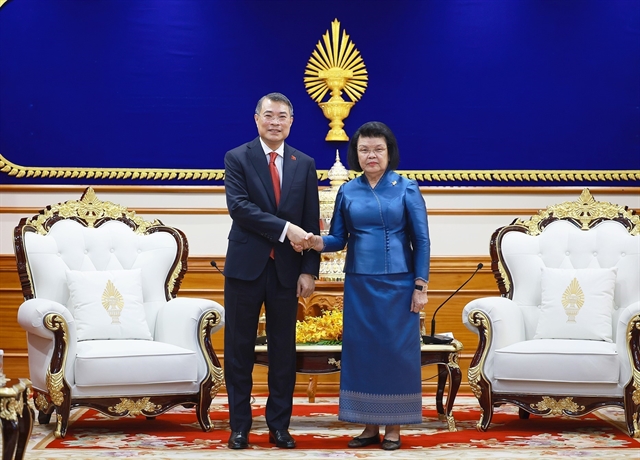
Vietnamese Prime Minister meets Cambodian National Assembly President
1.

|
| Products made from Cúc Phương yellow camellia have been recognised as nationally outstanding products. — Photos vov.vn |
NINH BÌNH — A narrow road winds through limestone hills in Gia Lâm Commune before opening into a quiet growing area on the edge of Cúc Phương National Park.
Here, rows of young yellow camellia plants are being carefully tended - a contrast to the wild specimens that once grew scattered under the forest canopy.
This is where a rare endemic species, Camellia cucphuongensis, is gradually being brought out of the forest and into a structured model of conservation, cultivation and product development. The shift reflects a broader push under Resolution No 57-NQ/TW to turn scientific research into practical value.
Instead of stopping at preserving genetic resources, the model focuses on what happens next - how to propagate the plant at scale, stabilise quality and connect it to production. The site is divided into distinct zones, from conservation and nurseries to processing workshops and a small tea-tasting space, forming a closed loop from research to market.
Vũ Văn Tâm, director of Vũ Gia Pharmaceutical Co., Ltd., said the company is currently maintaining 35 varieties of yellow camellia from across Việt Nam. Among roughly 60 recorded species, the Cúc Phương variety stands out as a rare endemic plant and has become the centre of a provincial-level research project.
According to Tâm, keeping a species alive in the wild is only part of the story.
“If there is no stable source of seedlings and no product coming out of it, conservation is very difficult to sustain in the long term,” he said.
From that thinking, the company has focused on refining propagation techniques using cuttings. The work goes into detail - selecting suitable mother plants, identifying the right season, testing growing media and applying rooting stimulants - before arriving at a standardised process for producing healthy seedlings.
The results have allowed the company to gradually build a controlled planting area instead of relying on scattered natural growth. For the first time, the species is being cultivated in a more predictable way, creating a foundation for scaling up production.
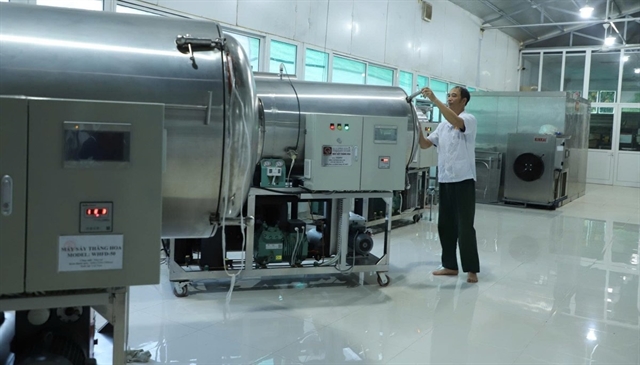
Processing is another step where technology is making a difference. The company has applied freeze-drying technology to yellow camellia flowers, helping retain their original shape and colour while preserving most of the bioactive compounds. Compared to conventional drying, the method produces a more consistent and higher-value product.
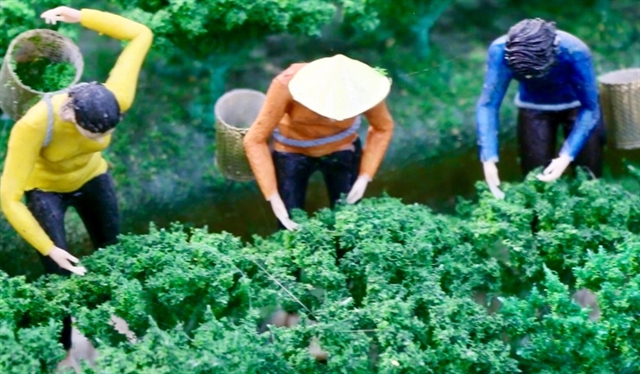
In the fields, cultivation practices are also shifting. A drip irrigation system delivers water and nutrients directly to each plant, while organic inputs and microbial preparations are used to maintain soil health. The growing area follows a multi-layered garden model, combining different plant types to create a more balanced ecosystem.
.jpg)
|
| Workers care for yellow camellia plants. |
The entire process - from planting to harvesting and preliminary processing - has been standardised to meet organic and GACP-WHO requirements, with processing facilities operating under HACCP standards.
On that foundation, a range of products has been developed, including dried flowers, tea bags, instant tea, matcha powder and extracts. Some have been recognised under the national OCOP programme, while the broader product line was named a National Typical Product in 2023.
The company is now looking beyond basic processing. New research is being prepared to further refine production techniques, alongside collaboration with the University of Medicine and Pharmacy in Hồ Chí Minh City to assess the health impacts of compounds extracted from the plant. The goal is to move towards functional foods and healthcare products backed by scientific evidence.
What is happening in Gia Lâm Commune reflects a wider shift across Ninh Bình Province, where innovation is gradually moving from concept to practice. According to Vũ Trọng Quế, director of the provincial Department of Science and Technology, the implementation of Resolution 57 has encouraged businesses and cooperatives to invest more actively in research, technology application and digital transformation.
A 2026 survey of 362 enterprises and cooperatives showed that half had engaged in innovation activities.
On average, revenue from new or improved products accounted for 24.1 per cent of total revenue - an indication that innovation is beginning to translate into tangible economic results.
|
| Vũ Gia Pharmaceutical Co., Ltd is the first in Việt Nam to apply freeze-drying technology to process yellow camellia. |
The province currently has 21 science and technology enterprises, along with a small but growing number of start-ups and high-tech firms. While still modest, these figures point to a gradual shift towards more knowledge-based production.
Back in the camellia fields, the changes are visible in simple ways - uniform rows of plants, irrigation lines running quietly underfoot, and flowers that are no longer just forest species but part of a carefully managed crop.
For a plant once known mainly in the wild, this transition marks a significant step. It suggests that when research is carried through to cultivation and production, even a niche genetic resource can find its place in the market - while still being preserved for the future. — VNS
Life & Style
 Life & Style
 Life & Style
 Life & Style
 Life & Style
 Life & Style
 Life & Style
 Life & Style
 Life & Style
 Life & Style
 Life & Style
.jpg) Life & Style
Life & Style
 Life & Style
 Life & Style
 Life & Style