 Life & Style
Divo Tùng Dương reunites with hit songwriter for 25th-anniversary concert
1.
|
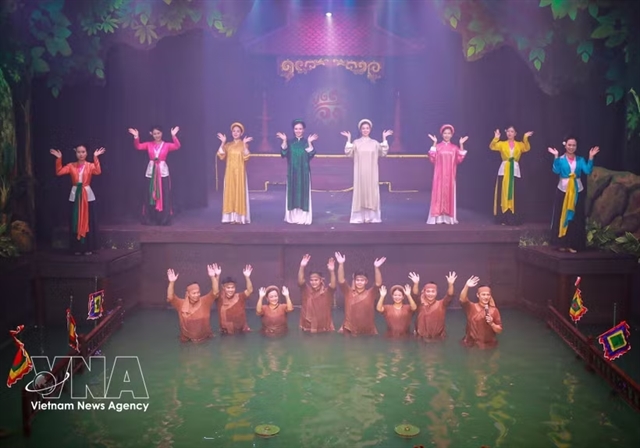
| Artists from the Việt Nam National Puppetry Theatre deliver emotionally compelling performances that recreate the rich historical legacy of Thăng LongHà Nội. VNA/VNS Photo |
HÀ NỘI — Leading artists and cultural experts have described Party General Secretary and State President Tô Lâm's recent directives on cultural development as reflecting a new development mindset, positioning culture as the nation's spiritual foundation, endogenous resource and motivation for national development in the new era.
They said the top leader's guidance at the second meeting of the Central Steering Committee for the Development of Vietnamese Culture not only reviewed the initial implementation of the Politburo's Resolution No. 80-NQ/TW but also identified four major gaps requiring urgent action and three strategic shifts to unlock the full potential of culture.
Trần Lệ Chiến, Vice President and Secretary General of the Việt Nam Classical Music Association (VCMA), said the Party General Secretary and President's view that culture is not only the spiritual foundation of society but also a source of national soft power and important impetus for sustainable development marked a fundamental shift in mindset.
According to Chiến, the real strength of culture lies not in the number of heritage assets a country possesses but in its ability to transform them into competitive cultural products, economic resources and international influence.
She said the top leader had candidly pointed out the gap between Việt Nam's rich cultural potential and its limited capacity to convert cultural resources into development value. In her view, the resolution should be implemented not only through action plans but also through a profound change in mindset.
Chiến paid particular attention to the leader's call for a shift from managing culture to creating conditions for cultural development. She argued that culture should no longer be viewed merely as a sector dependent on State funding but as a creative ecosystem where the State, artists, businesses, communities and the public all play active roles.
“Without proactively embracing this transformation, we risk not only missing the opportunity to develop cultural industries but also losing the chance to enhance the country's soft power,” she said.
She also highlighted the importance of building a modern cultural industry ecosystem that combines heritage preservation with innovation, enabling traditional values to thrive in contemporary life. Developing cultural sovereignty in the digital space, she added, is becoming increasingly strategic as digital platforms play a growing role in shaping public perceptions and promoting national identity globally.
To achieve this, it is necessary of build a cultural ecosystem with policymakers who understand culture, artists with the aspiration to create and dedicate themselves to their work, investors who recognise the latent value of culture, and a policy framework that is open enough to enable talent to thrive, Chiến said.
To ensure Resolution No. 80 delivers tangible results, Chiến called for reforms in cultural institutions, resource allocation and governance, while directing more investment towards creative works, young talent and cultural promotion. She stressed that talented and innovative people remain the decisive factor in cultural development.
Sharing a similar view, Assoc. Prof. Dr. Nguyễn Bình Định, former director of the Việt Nam National Institute of Music, said the top leader’s directives demonstrated the Party’s and State's strategic vision of culture as a driver of the country's development.
Định noted that cultural industries would offer significant economic potential, citing Sweden's ABBA and the Republic of Korea's K-pop industry as examples of how cultural industries can boost tourism, exports, national branding and soft power.
He also welcomed the Party and State leader's emphasis on supporting artists through training, creation and performance, notably the Government's newly issued Decree No. 261/2026/ND-CP on professional allowances and benefits for performing artists, saying the new policies have strengthened confidence among arts and cultural practitioners.
According to the experts, the top leader's directives have reinforced confidence that, with strong political commitment and comprehensive reforms, Resolution No. 80 will help culture assume its rightful role as one of the country's key pillars of the national development. VNA/VNS
Life & Style
 Life & Style
 Life & Style
 Life & Style
 Life & Style
 Life & Style
 Life & Style
 Life & Style
 Life & Style
 Life & Style
 Life & Style
 Life & Style
 Life & Style
 Life & Style
 Life & Style