 Life & Style

Vietnamese Prime Minister meets Cambodian National Assembly President
1.
|
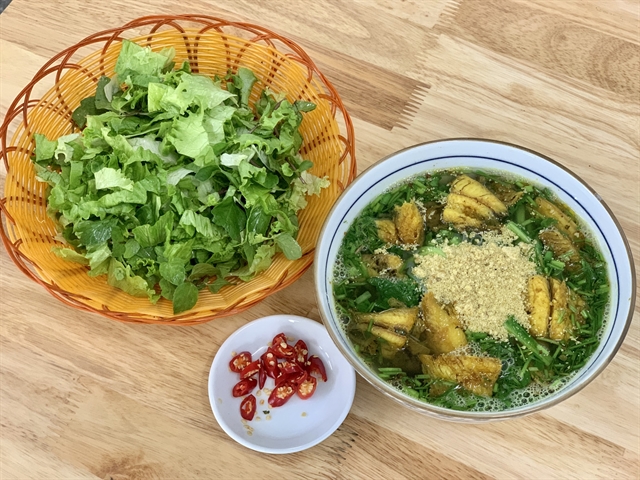
| Quỳnh Phụ fish soup appeals to diners with its freshness and simplicity. — Photo laodong.vn |
Among the many rustic dishes that define the culinary landscape of northern Việt Nam, Quỳnh Phụ fish soup from Hưng Yên Province stands apart, with a character that is both simple and deeply refined.
More than just a familiar breakfast dish, this fish soup embodies the memory, identity and pride of generations of people from the Red River Delta’s rice-growing heartland.
What gives the dish its enduring vitality lies not only in its ingredients, but in the meticulous care invested in every stage of preparation. From plump, juicy climbing perch to translucent rice noodles made from local grains, and a clear, fragrant broth infused with ginger and dill, each element comes together to form a culinary composition that reflects the soul of northern rural life.
A taste of home
Over time, the dish has evolved from a local specialty into a recognisable culinary brand. While it remains rooted in Quỳnh Phụ’s roadside eateries, it has also travelled to larger cities, such as Hà Nội and Hải Phòng, where it continues to attract diners. For people from Hưng Yên, a hot bowl of fish soup serves as a subtle marker of shared origin — a taste that immediately evokes home.
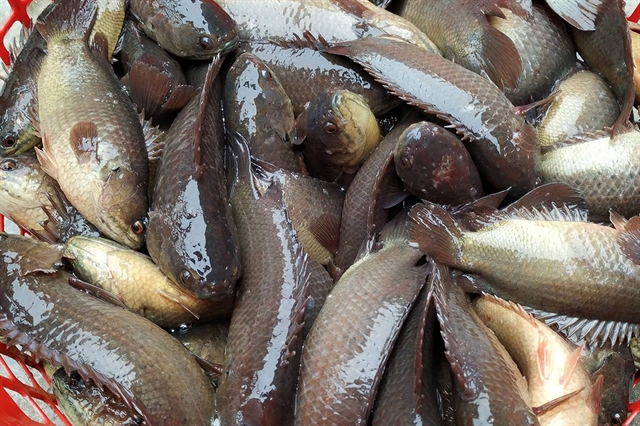
At the heart of the dish is the fish, which is both a defining ingredient and the focus of an intricate culinary technique. Traditionally, cooks favour field-raised climbing perch, a species closely associated with the flooded rice paddies of Hưng Yên.
The fish, harvested around the tenth lunar month, when rice plants flower, are especially prized for their firm texture and naturally rich flavour. Although declining wild stocks have led to substitutions, such as grass carp or snakehead fish, climbing perch remains the benchmark for authenticity.
|
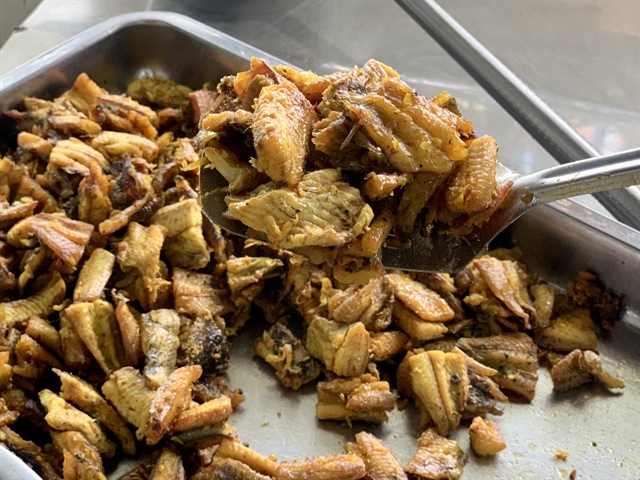
| The fish are simmered until firm before being braised. — Photo laodong.vn |
Preparation begins with careful cleaning. The fish are scaled, but their fins are kept intact to facilitate later deboning. After being gutted, with the roe preserved when present, the fish are rinsed with salt and lime juice to remove slime and eliminate any lingering odour. This seemingly simple step is crucial to preserving freshness and ensuring clarity of flavour.
The fish are then poached in vigorously boiling water with slices of aged ginger, crushed shallots and a pinch of salt. They are added only once the water reaches a rolling boil, allowing the flesh to firm up immediately, thereby locking in its natural sweetness and minimising any fishy notes. After a brief simmer of just a few minutes, the fish are removed and plunged into iced water to halt the cooking process and firm their texture further.
Deboning requires near-perfect precision. Each fish is carefully handled by hand, with the flesh gently separated from the bones. Every small bone is removed to ensure a clean, delicate final product.
The heads and skeletons are reserved rather than discarded, as they form the base for the broth. Some smaller bones, still clinging to bits of meat, are finely minced and combined with herbs and seasoning to create small fried fish balls, adding another layer of texture to the dish.
The fish flesh is then marinated thoroughly with fish sauce, ground turmeric, annatto oil, salt, pepper and minced shallots. This mixture is left to rest for at least an hour, allowing the flavours to penetrate deeply.
|
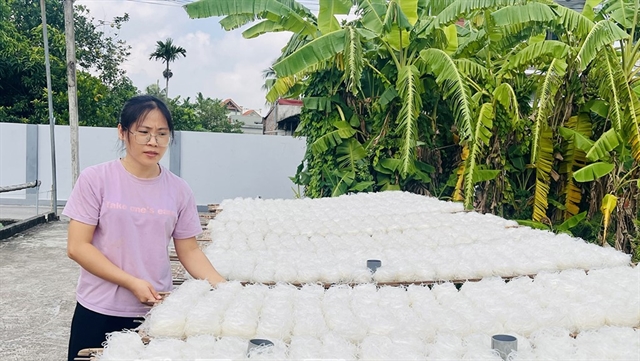
| Rice noodles, the main ingredient in Quỳnh Phụ fish soup. — Photo baohungyen.vn |
A broth built on patience
Unlike many regional fish dishes that rely on deep-frying for crispness, Quỳnh Phụ fish soup employs a distinctive slow-braising technique. The marinated fish is gently simmered over low heat until the liquid reduces completely. The result is fish that is firm and richly seasoned, with a lightly caramelised exterior, while remaining tender within. This method creates a depth of flavour that is both subtle and persistent, setting the dish apart from others.
Parallel to this process is the preparation of the broth, a defining component that determines the dish’s clarity and balance. Fish bones and heads are simmered together with pork bones to produce a naturally sweet base. Ginger and charred shallots are added to enhance aroma and remove any residual fishiness. Throughout the simmering process, the broth is carefully skimmed rather than stirred, preserving its clarity.
Once ready, the broth is strained, then lightly coloured with sautéed shallots and tomatoes. It is seasoned simply with fish sauce, salt and seasoning powder, resulting in a clear, gently sweet liquid that carries the essence of fish without overwhelming the palate.
The dish itself reflects a deliberate layering of flavours and textures. Fresh celery greens are cleaned, cut into short lengths and lightly bruised to release their aroma. Dried rice noodles made from local rice are briefly blanched before being placed in the bowl. Known for their translucency and elasticity, these noodles soften in the hot broth while retaining their structure.
|
| Fish soup is made with climbing perch. — Photo tepbac |
On top of the noodles and greens are arranged pieces of braised fish, sometimes accompanied by roe. The hot broth is then ladled over them, followed by a garnish of spring onions, dill, pepper and chilli slices to taste.
The finished bowl must achieve a precise balance: fish that is firm but not dry, broth that is clear and lightly sweet, noodles that are soft yet intact and greens that remain vibrant. When combined, these elements create a dish that is visually modest but rich in depth, a quiet reflection of the countryside from which it originates.
Beyond its flavour, Quỳnh Phụ fish soup offers a sensory experience that resonates with memory. Whether enjoyed on a cool morning or in the heat of summer, the warmth of the broth, the gentle sweetness of fish, the fragrance of herbs and the subtle heat of ginger come together to evoke images of rice fields, canals and village life.
Today, even as Vietnamese cuisine continues to diversify, Quỳnh Phụ fish soup retains its distinct identity. It does not rely on elaborate presentation or industrial seasoning, but instead draws entirely from natural ingredients and traditional methods. This balance of simplicity and sophistication has allowed it to endure, becoming a culinary signature of Hưng Yên. — VNS
Life & Style
 Life & Style
 Life & Style
 Life & Style
 Life & Style
 Life & Style
 Life & Style
 Life & Style
 Life & Style
.jpg) Life & Style
Life & Style
.jpg) Life & Style
Life & Style
 Life & Style
 Life & Style
 Life & Style
 Life & Style