 Life & Style

Vietnamese Prime Minister meets Cambodian National Assembly President
1.

|
| The Sóc Bom Bo historical site in Đồng Nai City’s Bom Bo Commune is recognised as a national relic site. — VNA/VNS Photo K GửiH |
ĐỒNG NAI — Đồng Nai City has hosted a ceremony to receive recognition for the Sóc Bom Bo as a national relic site and for the traditional rice hand-pounding practice of the S’tiêng and M’nông ethnic groups as a national intangible cultural heritage.
The Sóc Bom Bo is now home to the S’tiêng Ethnic Cultural Conservation Area, established in 2012 to preserve and promote the traditional cultural values of the S’tiêng ethnic group and reflect local people’s contribution to national reunification during the resistance war.
The conservation area has more than 100 antiques, documents and photos about the history and culture of the S’tiêng people, including objects related to the resistance wars, such as rice pounders to prepare food for soldiers.
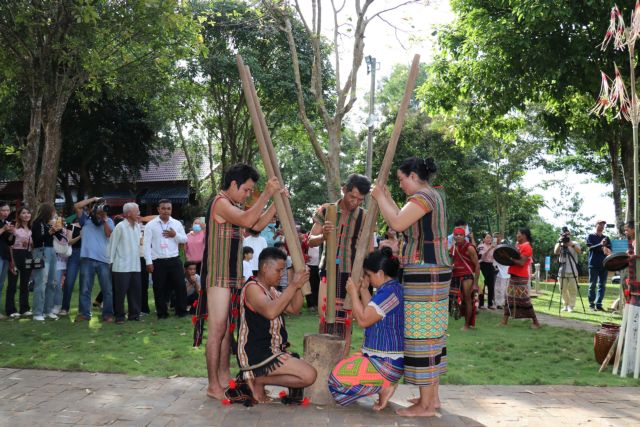
|
| The traditional rice hand-pounding practice of the S'tiêng and M’nông ethnic groups in the city is on the list of national intangible cultural heritage. — VNA/VNS Photo Nhật Bình |
According to the Đồng Nai Museum, the custom of hand-pounding rice with pestles among the S’tiêng and M’nông dates back to ancient times. It is associated with traditional agriculture and the community's daily life.
The practice highlights not only experiences in food production and processing passed down through generations, but also the contributions of ethnic minorities to the cause of national liberation.
The S’tiêng and M’nông, together with soldiers, pounded rice day and night to supply five tonnes of rice to serve the battlefield during the Phước Long - Đồng Xoài Campaign in 1965, contributing to the victory.
Today, the rice hand-pounding practice is still maintained at traditional festivals, community activities, and cultural activities that help educate the younger generation about community solidarity and diligence.
The national recognition of two heritages significantly honours traditional cultural values of ethnic minority groups and the city’s historical depth and cultural identity. It also affirms the responsibility of local administrative agencies and the community in preserving and promoting the national cultural heritage. — VNS
Life & Style
 Life & Style
 Life & Style
 Life & Style
 Life & Style
 Life & Style
.jpg) Life & Style
Life & Style
.jpg) Life & Style
Life & Style
 Life & Style
 Life & Style
 Life & Style
 Life & Style
 Life & Style
 Life & Style
 Life & Style