Life & Style

Top Vietnamese leader highlights new horizon for Việt Nam–Denmark cooperation
1.
|
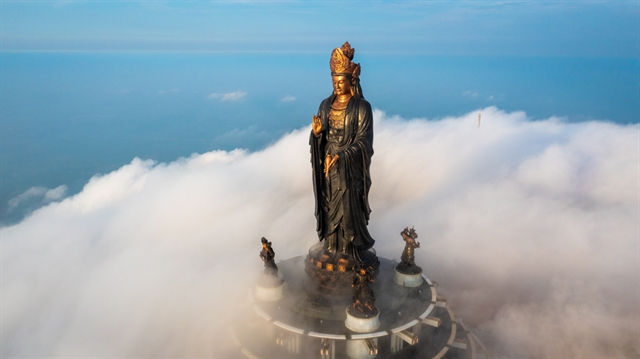
| Bà Đen Mountain, standing 986 metres high, features extremely diverse and complex terrain. Photo nhandan.vn |
TÂY NINH — Authorities in Tây Ninh Province have urged visitors climbing Bà Đen Mountain to follow official routes and safety regulations after several recent accidents involving hikers slipping or getting lost.
Visitors must follow the designated route so that authorities can easily provide assistance if an incident occurs; they must not enter unofficial trails or alternative routes on their own due to the high risk of getting lost and encountering dangerous terrain.
Following several cases of visitors slipping or losing their way while climbing the mountain, the Management Board of the Bà Đen Mountain National Tourist Area in Tây Ninh Province has repeatedly issued warnings and advisories urging visitors to comply with safety regulations and avoid areas with potentially dangerous technical infrastructure.
Trần Thái Nam, head of the management board, said rescue teams had recently assisted a visitor who slipped and fell while climbing the mountain near pole No. 98 along the Power Line Route to the summit of Bà Đen Mountain, resulting in multiple injuries and a broken collarbone.
Earlier, authorities received a report that a backpacker had been injured while attempting to reach the summit of the mountain on foot. Rescue teams were immediately deployed to reach the victim and provide first aid on site.
By 5pm the same day, the male victim, identified as H.D.K. (born in 2008 and residing in HCM City), had been safely brought down to the foot of the mountain before being transferred to a hospital for further monitoring and treatment.
Bà Đen Mountain, standing 986 metres high, features extremely diverse and complex terrain.
The Power Line Route stretches approximately 2.7–4 kilometres and passes 117 power poles.
According to the management board, the mountain’s steep terrain with many uneven stone steps always carries significant risks if climbers are not fully attentive.
Since the beginning of the year, several cases of visitors slipping or becoming lost have been recorded in the area. Notably, many trekking groups have encountered accidents or lost their bearings after entering dangerous routes or dense unofficial trails on their own.
The board has particularly warned about visitors losing focus, running or playing around while moving along steep sections.
In the damp forest and mountain conditions, the risk of slipping is very high. In addition, visitors who stray into areas containing technical infrastructure such as water supply pipelines, electricity systems or telecommunications networks face further danger.
To ensure visitor safety and facilitate timely support in case of emergencies, the management board has introduced strict regulations and recommendations.
Visitors are only permitted to climb via the Power Line Route and must register at the control checkpoint before departure. The permitted climbing hours are from 5am to 11am.
Following the designated route allows authorities to quickly locate and assist visitors if an incident occurs. Visitors must not enter unofficial trails or alternative routes because of the high risk of getting lost and encountering hazardous terrain.
One mandatory requirement is that climbers must wear hiking shoes with good grip to avoid slipping on the stone steps.
The use of trekking poles is also recommended to provide additional support and maintain balance during the journey, which typically takes three to five hours to reach the summit and two to three hours to descend.
Climbers should move cautiously, take slow and steady steps and always watch the path ahead.
Accurately assessing personal physical fitness is extremely important. Visitors should manage their energy carefully, rest at designated stops and avoid pushing themselves to exhaustion, which could lead to fatigue or loss of control. They must also strictly avoid entering areas containing technical infrastructure.
Every year, thousands of visitors attempt to conquer the summit of Bà Đen Mountain, often referred to as the “Roof of the Southeast Region”, on foot.
While it is considered an exciting and memorable experience for many young people, safety must always come first.
Each visitor and backpacker must equip themselves not only with sufficient physical fitness and proper gear, but also with a strong awareness of and strict compliance with regulations when undertaking the climb. — VNS
Life & Style
 Life & Style
 Life & Style
 Life & Style
 Life & Style
 Life & Style
 Life & Style
 Life & Style
 Life & Style
 Life & Style
 Life & Style
 Life & Style
 Life & Style
 Life & Style
 Life & Style