 Life & Style
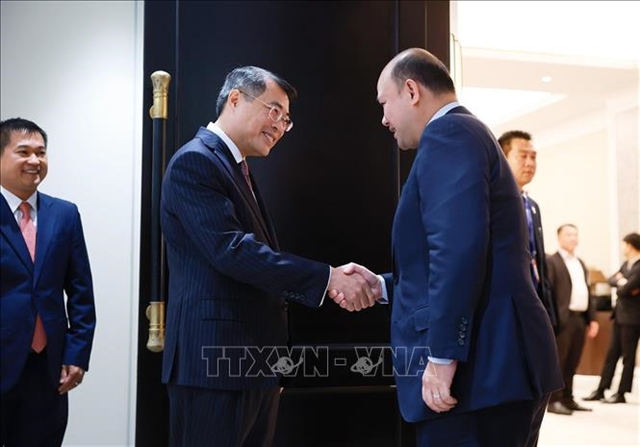
Vietnamese PM pays courtesy visits to Cambodian King, Queen Mother
1.
 |
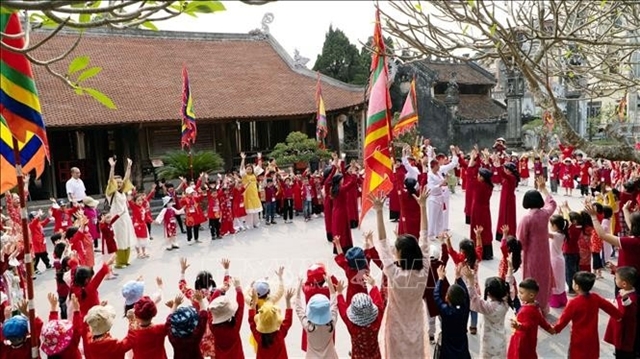
| "Khai bút” or pen-brush opening ceremony at Chu Văn An Temple in Chí Linh Ward, Hải Phòng City. — VNA/VNS Photo |
HÀ NỘI — Resolution No. 80-NQ/TW on the development of Vietnamese culture, issued by the Politburo, is being described by specialists as a landmark move that signals a new stage in the Party's thinking and action on building Vietnamese culture and its people, with far-reaching implications for the country’s political, economic and social life.
Many experts say the issuance of Resolution 80 represents a significant policy decision with profound impact, helping shape the stature and cultural identity of Việt Nam in the decades ahead.
Important boost
Vietnamese culture embodies the enduring values forged over thousands of years of nation building and defence. It is regarded as a vital internal resource that shapes the intellect, spirit, and resilience of the Vietnamese people.
On January 7, on behalf of the Politburo, Party General Secretary Tô Lâm signed and promulgated Resolution 80 on the development of Vietnamese culture. The document sets out a vision to 2045 of building and developing a socialist-oriented Vietnamese culture in which people are placed at the centre, serving as both the subject and the driving force of development.
As the country enters what leaders describe as a 'rising era,' with deeper international integration and intensifying competition not only in the economy and science and technology but also in culture and national soft power, the issuance of Resolution 80 is viewed as both timely and strategic.
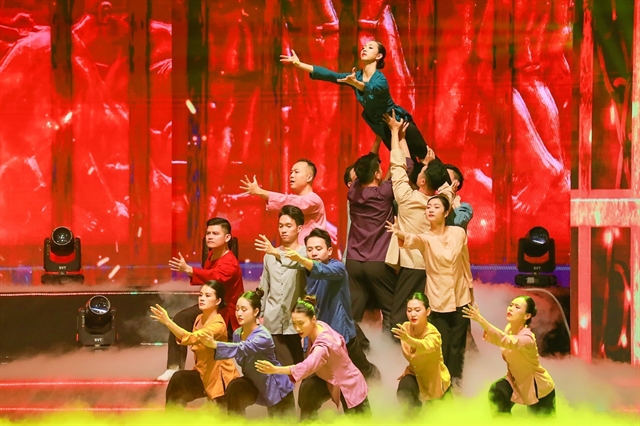 |
| An art performance celebrating the 96th anniversary of the founding of the Communist Party of Việt Nam (February 3, 1930 - February 3, 2026). — VNA/VNS Photo |
Artist Trịnh Thúy Mùi, Deputy Chairwoman of the Vietnam Union of Literature and Arts Associations and Chairwoman of the Vietnam Stage Artists' Association, described the resolution as an important boost that opens up new opportunities for literature, the arts, and the wider artistic community to strengthen creative capacity and contribute more meaningfully to the spiritual life of society.
She said the resolution reflects the Party's and the State's strong commitment and strategic focus on cultural development, underscoring the view that culture forms a sustainable foundation for national growth and serves as a lasting internal strength.
 |
| A ca trù (ceremonial) singing. The art form was recognised by UNESCO in 2009 as an intangible cultural heritage in need of urgent safeguarding. — VNA/VNS Photo |
According to her, technology offers significant opportunities for cultural development amidst rapid digital transformation. However, not all art forms can or should be fully transferred to the digital environment.
For traditional art forms, preserving their original essence and safeguarding core values are essential, as sustainable development must be grounded in preservation.
Another pressing concern, she noted, is the serious shortage of professionals in literary and artistic theory and criticism. For artistic creation to develop sustainably, there must be parallel interaction and critical engagement between creativity, practice, and theory. Without this pillar, development will lack depth and risk becoming spontaneous.
She therefore stressed the need to build a highly skilled cultural workforce, particularly among those involved in cultural management.
“If managers do not have a deep and accurate understanding of culture, it will be very difficult to achieve strong, sustainable, and long-lasting development in this unique yet crucial field,” she added.
Important role
 |
| Cooking competition on boats at the Bạch Hào Pagoda Festival in Hải Phòng City. — VNA/VNS Photo Diệu Thúy |
Resolution 80 affirms the role of culture as the country enters a phase of strong development, described repeatedly by the Party General Secretary as a period of the nation's rise, according to Professor Dr Lê Hồng Lý, Chairman of the Vietnam Folklore Arts Association.
He said the resolution builds on the Party’s previous work on culture while clearly and firmly reaffirming its particularly important role in the country’s overall development. This, he noted, is significant because culture is not only the spiritual foundation of society but also a pillar of sustainable growth.
A key highlight of the resolution, according to Lý, is the recognition by the Party and the State that culture is an essential component of the economy rather than merely a sphere serving spiritual life.
With the implementation of Resolution 80, culture is identified as a sector capable of generating added value and delivering tangible economic benefits, particularly through the development of cultural industries.
He said the resolution also creates favourable conditions for cultural values to be preserved, safeguarded, and developed at a higher level.
 |
| A traditional art performance in Hà Nội's Old Quarter. — VNA/VNS Photo |
Many other artists and cultural experts have also agreed that the resolution represents a significant decision with strategic vision, reflecting the Party's consistent and in-depth thinking on the role of culture in national development.
They said it not only opens up new space for cultural growth but also sets out specific and clear requirements for institutions, resources, personnel, and methods of cultural governance in the new era.
As Resolution 80 is put into practice, culture is expected to become a firm foundation and internal strength of the nation, permeating all areas of social life. This development extends beyond literature, the arts, heritage, and the cultural industry to the comprehensive development of the Vietnamese people. — VNS
 |
| Đông Hồ Painting has been included in UNESCO’s List of Intangible Cultural Heritage in Need of Urgent Safeguarding. — VNA/VNS Photo |
Life & Style
 Life & Style
 Life & Style
 Life & Style
 Life & Style
 Life & Style
 Life & Style
 Life & Style
 Life & Style
 Life & Style
 Life & Style
 Life & Style
 Life & Style
 Life & Style
 Life & Style