 Life & Style

Top leader hails friendship association's role in nurturing Việt Nam–Denmark ties
1.
|
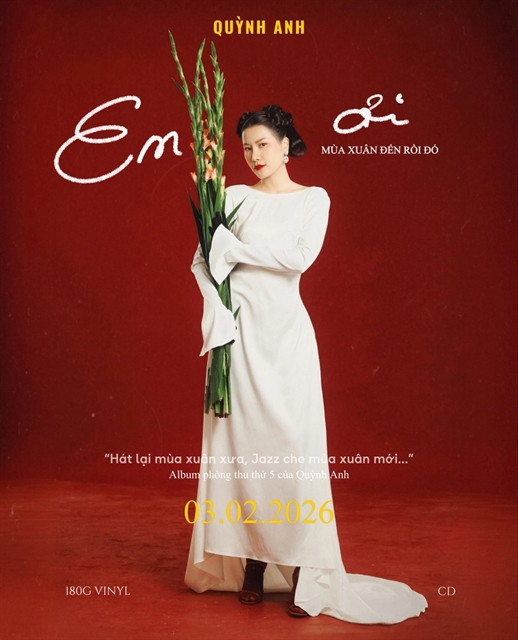
| Quỳnh Anh won second prize in the folk music category at the nationwide Sao Mai Singing Contest in 2019, but has since pursued a jazz-oriented musical path. — Photos courtesy of the artist |
HÀ NỘI — Singer Quỳnh Anh has officially unveiled Em Ơi Mùa Xuân Đến Rồi Đó (Dear You, Spring Has Come), a jazz-infused album that captures the gentle spirit of spring through a refined blend of Vietnamese folk music and contemporary jazz.
The album marks Quỳnh Anh’s fifth studio release and her third vinyl record, produced and released by bkproduction ahead of the Lunar New Year festival. She won second prize at the nationwide Sao Mai Singing Contest in 2019 and has since carved out a distinct artistic path rooted in jazz.
Hát lại mùa xuân xưa, jazz cho mùa xuân mới (Re-singing old springs, jazz for a new spring) is the guiding spirit behind Em Ơi Mùa Xuân Đến Rồi Đó, a jazz-flavoured Tết album that revisits familiar melodies while opening new emotional landscapes.
The album’s title is inspired by the opening line of Mùa Xuân Đến Rồi Đó (Spring Has Come), composed by Trần Chung and famously performed by Meritorious Artist Thu Phương. From that nostalgic echo, Quỳnh Anh sets out on a musical journey of seven tracks - each a soft whisper announcing the arrival of spring.
If the intro Mùa Xuân Đến Rồi Đó (Spring Has Come) and Nhớ Về Hà Nội (Remembering Hà Nội, Hoàng Hiệp) evoke the freshness of northern spring, other tracks such as Gửi Anh Một Khúc Dân Ca (Sending You a Folk Tune, composed by Dân Huyền based on the Southern Vietnamese Lý tứ đại folk melody), Mùa Xuân Nho Nhỏ (A Little Spring, poem by Thanh Hải, music by Trần Hoàn) and Đi Qua Vùng Cỏ Non (Passing Through Young Grasslands, Trần Long Ẩn) bring the warmth and vitality of southern spring.
Meanwhile, Anh Cho Em Mùa Xuân (You Give Me Spring), composed by Nguyễn Hiền from a poem by Kim Tuấn, reflects the longing of a child living far from home, yearning for his motherland of Hà Tĩnh. Nhớ Một Chiều Xuân (Remembering a Spring Afternoon, Nguyễn Văn Đông) tells the story of an unfinished love affair with a girl on the island of Hawaii in the US.
Across regions and memories, the music gently urges listeners toward reunion, as spring colours the world beyond distance and time.
Jazz love and cultural dialogue

|
| The album brings together a diverse group of international jazz artists, creating a vibrant cross-cultural collaboration. |
What sets the album apart is its bold yet elegant fusion of folk materials from Việt Nam’s three regions with contemporary jazz language.
“Familiar folk melodies are dressed in a new aesthetic, refined and free-spirited, yet still faithful to their original soul,” Quỳnh Anh said.
For her, jazz is not a vehicle for technical display but a catalyst that expands emotional space, allowing Vietnamese melodies to shine in subtle dialogue with global music traditions.
The album brings together an impressive lineup of international jazz artists, including Kerry Politzer, Joseph Patrick Moore, Oli Hayhurst, Tony Guerrero and Eyal Sela, creating arrangements rich in cultural ‘collisions’ and exchanges.
Notably, the project features drummer Dan Pugach, who won Best Jazz Album at the 2025 Grammy Awards for Bianca Reimagined: Music for Paws and Persistence. Also joining are world-renowned seven-string jazz guitarist Ron Jackson and veteran trumpeter Tony Guerrero, who has nearly four decades of experience in the genre.
Against these fresh arrangements, Quỳnh Anh’s voice dances lightly, stitching together familiar Tết moments – the anticipation of reunion, tender longing and hopes for a peaceful new year.
In this borderless and timeless musical celebration, the singer reveals her greatest joy: weaving Vietnamese folk tunes into jazz arrangements.
“I play jazz (a musical language familiar to them) and they join me in exploring Vietnamese folk music, which is mine,” she said. — VNS
Life & Style
 Life & Style
 Life & Style
 Life & Style
 Life & Style
 Life & Style
 Life & Style
 Life & Style
 Life & Style
 Life & Style
 Life & Style
 Life & Style
 Life & Style
 Life & Style
 Life & Style