Arts festival gives young people stage to tell their stories
1.
|
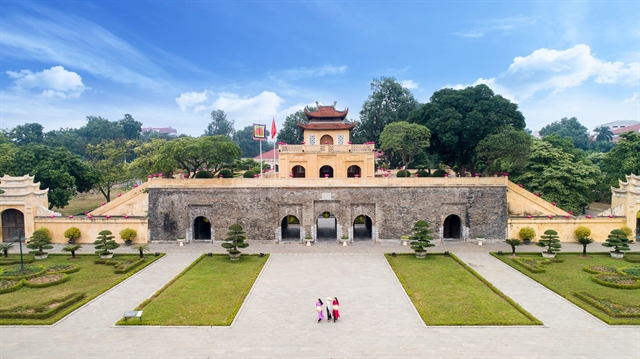
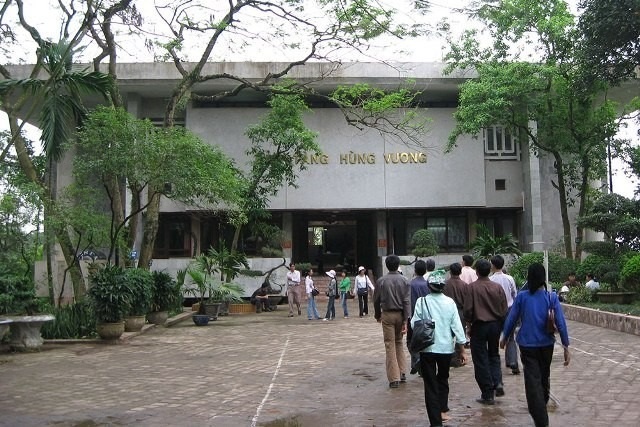
| Đoan Môn is the main southern gate leading into the Thăng Long Imperial Citadel. It was built during the Later Lê Restoration period and renovated during the Nguyễn dynasty. — Photo nhandan.vn |
HCM CITY — Placing culture at the heart of development has become a defining approach for Việt Nam, as cultural identity increasingly serves as both a foundation for cohesion and a driver of national soft power.
Culture is the soul of a nation, a red thread running through history that has shaped the distinctive identity of the Vietnamese people and generated immense spiritual strength.
Throughout many historical periods, it was precisely this cultural foundation that nurtured resilience and resolve, reinforced national unity, and enabled the country to overcome challenges, safeguard independence and sovereignty, and rise steadily.
Endogenous driver
As Việt Nam enters a new stage of development, the requirements extend beyond economic growth alone to include sustainability in spirit, identity and human values.
In this context, Resolution No. 80-NQ/TW of the Politburo on the development of Vietnamese culture consistently affirms a clear viewpoint: culture must be placed at the centre of development, serving simultaneously as the spiritual foundation of society, a development goal, and a vital endogenous driving force for the nation.
According to Professor Dr Từ Thị Loan, former Acting Director of the Việt Nam National Institute of Culture and Arts Studies, “The issuance of Resolution No. 80-NQ/TW by the Politburo on January 7, 2026 on the development of Vietnamese culture is of special significance, marking a strong shift in the Party’s strategic thinking on the position and role of culture in national development. The Resolution was introduced at a time when Việt Nam is entering a new phase of development, requiring both rapid growth and sustainability, while affirming national identity and soft power in a context of deep globalisation and digital transformation.”
Resolution No. 80-NQ/TW not only reaffirms the core values of Vietnamese culture but, more importantly, creates a fundamental shift in development thinking.
Culture is identified as a particularly important endogenous resource, capable of inspiring aspirations for development, promoting creativity, and shaping the character and resilience of the Vietnamese people in the new era.
In practice, Vietnamese culture is increasingly demonstrating its role as a development resource and a form of national soft power.
Vietnamese cinema in recent years has recorded notable progress.
Cultural and heritage tourism in localities such as Hội An, Huế and Ninh Bình shows that when heritage is properly preserved and promoted, culture can become a significant resource, contributing to sustainable livelihoods for communities.
Music and performing arts imbued with Vietnamese identity are also gradually affirming their position in social life and within an increasingly open cultural space.
Foundation of soft power
Bắc Ninh Quan họ folk songs and the Space of Gong Culture in the Central Highlands are two exemplary pieces of Vietnamese culture.
They reflect the distinct identities of communities from the lowlands to the highlands, while highlighting the close relationship between people, community and living environment.
Originating in the village spaces of Kinh Bắc, Bắc Ninh Quan họ is not merely a genre of folk singing but a form of communal and ritual cultural practice, characterised by refined and aesthetically rich antiphonal singing between men and women.
The core values of Quan họ lie in the concepts of tình (affection) and nghĩa (loyalty), reflecting a way of life that treasures emotional bonds and courtesy.
Poetic lyrics, together with traditional costumes and symbols, create a harmonious cultural space imbued with strong identity.
In 2009, Bắc Ninh Quan họ folk songs were inscribed by UNESCO as a Representative Intangible Cultural Heritage of Humanity, affirming their enduring value.
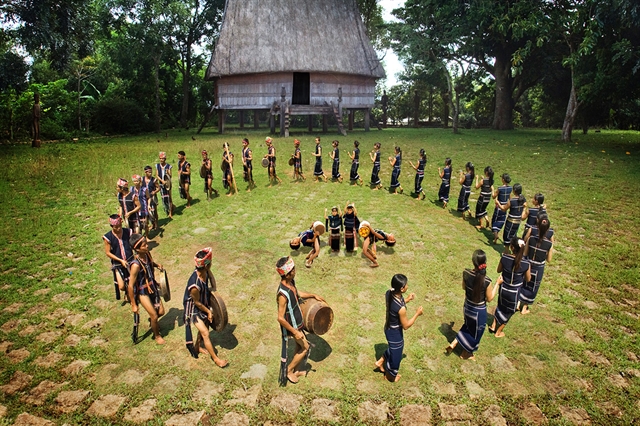
The Space of Gong Culture in the Central Highlands reflects the unique worldview of ethnic groups such as the Ê Đê, Gia Rai, Ba Na, M’nông and Xơ Đăng.
In community life, gongs are regarded as sacred objects, a bridge between humans and deities, reflecting animistic beliefs and the close bond between people, nature and the spiritual world.
Gong culture permeates community life, is closely associated with village rituals and festivals, and embodies a strong sense of community and sacredness.
In 2005, UNESCO recognised the Space of Gong Culture in the Central Highlands as an Intangible Cultural Heritage of Humanity.
Despite differences in space and forms of expression, both Bắc Ninh Quan họ and the Space of Gong Culture in the Central Highlands are outstanding manifestations of Vietnamese cultural identity, contributing to the diversity, richness and sustainability of national culture.
This diversity forms an important foundation for culture to become a source of soft power in the context of integration.
|
| Gong culture is an indispensable heritage of the Central Highlands. — Photo vietnamtourism.gov.vn |
Integration
The inscription of heritages by UNESCO and their preservation by communities not only increases tourism appeal but also affirms cultural value and promotes local images on the international tourism map.
As a result, cultural and community-based tourism has developed, bringing economic benefits, creating jobs and increasing incomes, while fostering awareness of heritage preservation and transmission to younger generations.
From these impacts, Việt Nam has built an image of a country rich in tradition, respectful of cultural diversity and proactive in integration, “dialoguing with the world” through artistic language and humanistic values.
This forms the foundation of cultural diplomacy and soft power in the integration context.
Images of Việt Nam associated with heritages such as Quan họ and gongs help build trust among tourists and investors, thereby enhancing the country’s ability to attract investment, cooperation and sustainable development.
From the perspective of overseas Vietnamese communities, Hoàng Văn Minh from Vũ Dũng Commune, Hải Phòng, who has lived in Germany for many years, believes that preserving and spreading cultural identity helps overseas Vietnamese remain united, maintain strong ties with the homeland, and become natural “cultural ambassadors” for Việt Nam.
Through festivals, performances and authentic stories, images of Việt Nam are vividly introduced, contributing to national reputation-building and promoting cooperation, investment and tourism.
According to Minh, a well-informed, proud and proactive overseas community that promotes culture will help generate positive public opinion about Việt Nam, affirm heritage values and inspire younger generations at home, thereby strengthening internal resources and fostering sustainable national development.
In social life, cultural identity is also preserved and passed on through people’s lived experiences.
Nguyễn Thị Hiền from Bắc Lũng Commune, Bắc Ninh Province, shared that although she moved with her family to HCM City at a young age, she often heard relatives talk about Quan họ folk songs.
As she grew older, visits back to her hometown enabled her to directly experience festivals and Quan họ melodies, and to feel the depth and emotional resonance of this folk art.
According to Hiền, Quan họ melodies flow slowly and smoothly; the voices of liền anh and liền chị are gentle and heartfelt, discreetly conveying emotions through each verse.
Amid the four-panel dresses, flat palm-leaf hats with silk straps, and betel quids delicately prepared and respectfully exchanged, a refined, graceful and profound cultural beauty emerges.
In particular, the verse: “Má đồng tiền tủm tỉm / Mắt bồ câu long lanh / Nón quai thao tròng trành / Áo dài the tha thướt” from the song Trẩy hội Xuân leaves a deep impression, resonating long after a single hearing.
Culture in general, and cultural identity in particular, not only helps individuals recognise themselves within the national community but also enables those far from their homeland to nurture faith, aspiration and the will to strive forward.
In the country’s new development orientation, Resolution No. 80-NQ/TW emphasises the need to place culture at the centre, viewing it as the spiritual foundation, goal and endogenous driving force of development.
From this foundation, a strong and prosperous Việt Nam is being built upon cultural values that are rich in humanity, sustainable and worthy of pride. — VNS
Life & Style
 Life & Style
 Life & Style
 Life & Style
 Life & Style
 Life & Style
 Life & Style
 Life & Style
 Life & Style
 Life & Style
 Life & Style
 Life & Style