 Life & Style

Capital market development critical to unlock investment resources
1.
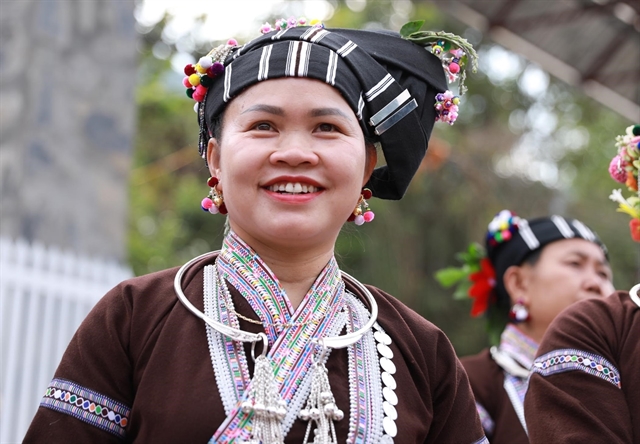 |
| The Lự ethnic group is one of Việt Nam's very small ethnic minorities, with a population of fewer than 10,000, currently living mainly in Tam Đường and Sìn Hồ areas of Lai Châu Province. VNA/VNS Photos |
HÀ NỘI — In the richly diverse tapestry of Việt Nam’s 54 ethnic groups, there are small communities – like precious gems hidden deep in the mountains – that quietly enrich the nation’s cultural identity. These are the very small ethnic minority groups, with populations of fewer than 10,000 people, and in some cases only a few hundred.
They are not only living evidence of Việt Nam’s ethnic and cultural diversity, but also custodians of ancient traditional values, ranging from language, costume and festivals to lifestyles closely harmonised with nature. Yet amid rapid socio-economic change, the preservation and development of their cultural heritage is facing mounting challenges.
Hidden gems among the mountains
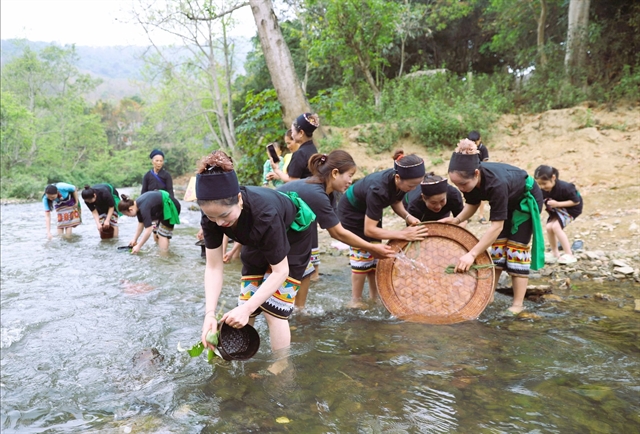 |
| The Ơ Đu ethnic group's first-thunder welcoming ceremony. |
Very small ethnic minority groups are scattered across many provinces and cities, mainly in extremely disadvantaged areas often described as the country’s “poverty core”. Despite their small populations, each group preserves distinctive cultural traits expressed through language, traditional attire, customs, folk knowledge and unique handicrafts.
The Ơ Đu ethnic group, numbering just over 400 people in the central province of Nghệ An, lives in stilt houses along the Nậm Nơn River. The Ơ Đu language is now close to extinction, with most people using Thái and Khơ Mú languages. Nevertheless, distinctive customs such as traditional wedding ceremonies and rituals welcoming the first thunder of the year have been preserved.
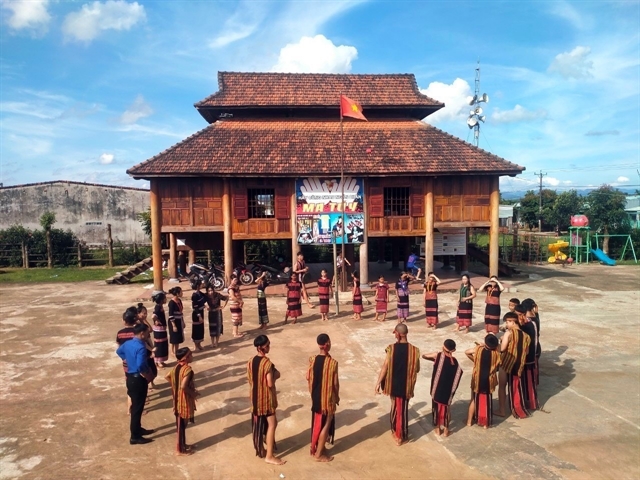 |
| Brâu people perform gong in Đắk Mê Village, Quảng Ngãi Province. |
The Brâu ethnic group, with a population of more than 500, lives in fenced villages where many traditional values remain intact. Folk games, legends and musical instrument-making skills are passed down to younger generations. Gong culture plays a particularly important role, especially the “tha” gong set, consisting of two gongs symbolising husband and wife, which is regarded as a sacred treasure.
The Rơ Măm people – one of the three smallest ethnic groups in Việt Nam – now reside in a single village along the Việt Nam-Cambodia border. They continue to observe agricultural rituals, most notably the “Mở kho lúa” (rice granary opening) ceremony, the largest ritual of the year, expressing gratitude to deities and the harmony between humans and nature.
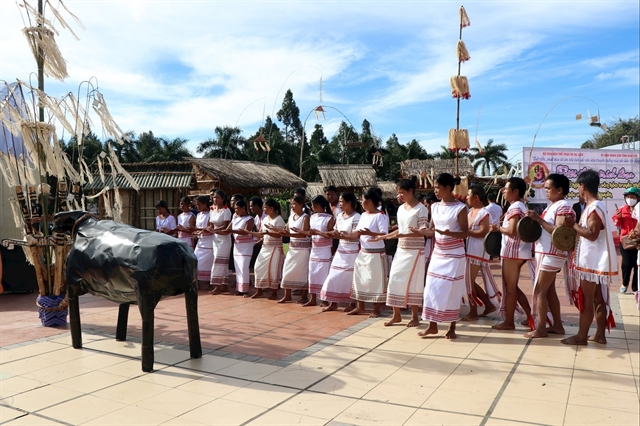 |
| “Mở kho lúa” (rice granary opening) ceremony of Rơ Măm people. |
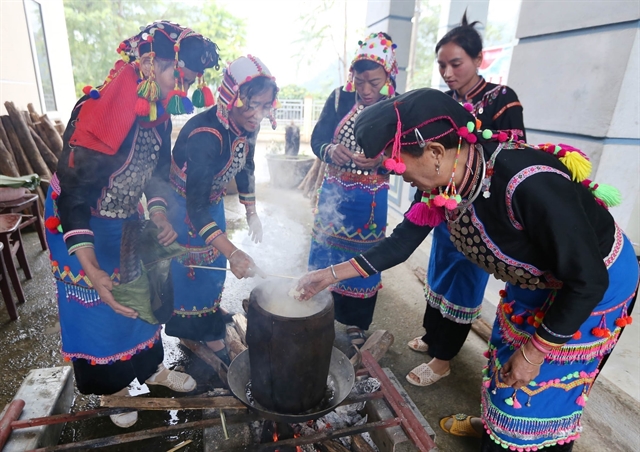 |
| The traditional New Year celebration of the Si La ethnic group in Can Hồ, Lai Châu Province. |
The cultures of these very small ethnic minority groups are “raw gems” in Vietnam’s cultural heritage – simple yet resilient, enriching the nation’s diverse cultural landscape.
Today, the cultural heritage of very small ethnic minority groups is confronting the risk of erosion. Cultural preservation is no longer limited to safeguarding languages, festivals or traditional dress, but has become a struggle against invisible forces that threaten to blur ethnic identities.
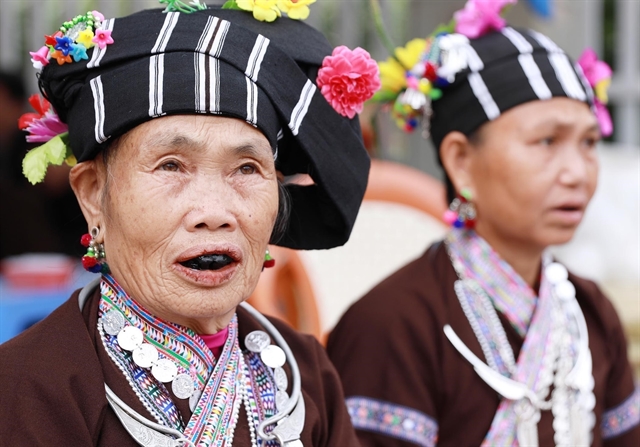 |
| Lự ethnic women in Lai Châu still maintain the tradition of blackening teeth. |
Traditional costumes, once a source of pride across generations, are gradually being replaced. In many areas, ethnic attire now appears only on special occasions such as festivals or Lunar New Year celebrations.
From policy to action
The Party and State regard the culture of ethnic minorities as a precious heritage, contributing to the richness, diversity and unity of an advanced Vietnamese culture imbued with national identity. Preserving the cultural identity of ethnic minorities, particularly very small ethnic groups, is recognised as an important political task.
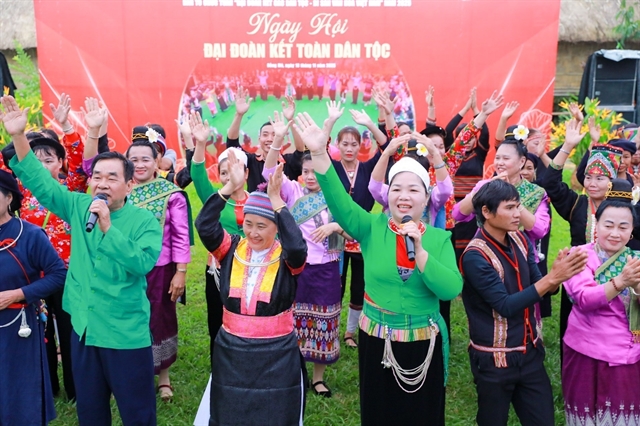 |
| People of different ethnic groups celebrate the “Great National Solidarity Festival” at the Việt Nam National Village for Ethnic Culture and Tourism in Hà Nội on November 18, 2025. |
In recent years, under the National Target Programme on boosting socio-economic development in ethnic minority and mountainous areas for the 2021-30 period, with its first phase spanning from 2021 to 2025, the living conditions of very small ethnic minority groups and other disadvantaged ethnic communities have improved markedly.
Project 6 on preserving and promoting the fine traditional cultural values of ethnic minorities in association with tourism development and Project 9 on the development of very small ethnic minority groups and other disadvantaged ethnic groups have enabled communities to access social services, develop livelihoods and restore many traditional customs, festivals and cultural practices.
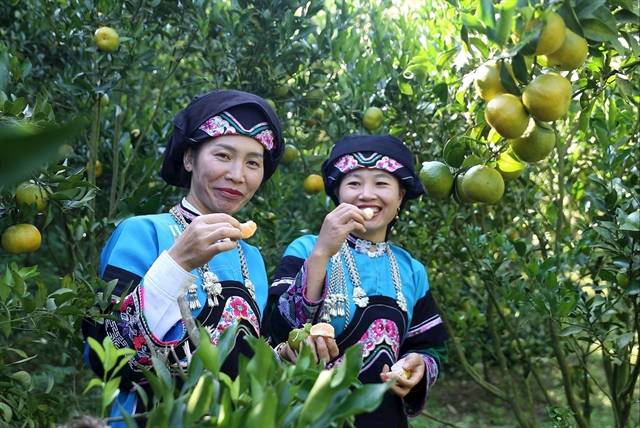 |
| Bố Y ethnic women in Lao Cai Province. |
The Ministry of Culture, Sports and Tourism has also issued decisions to restore, preserve and promote the cultural identity of very small ethnic groups such as the Bố Y in Hà Giang (now Tuyên Quang Province) and Lào Cai, and the Cờ Lao in Tuyên Quang, with the aim of improving cultural enjoyment in ethnic minority and mountainous areas.
These efforts have helped maximise the effectiveness of State, social and community investment in cultural preservation, improve access to cultural activities, and promote local tourism development.
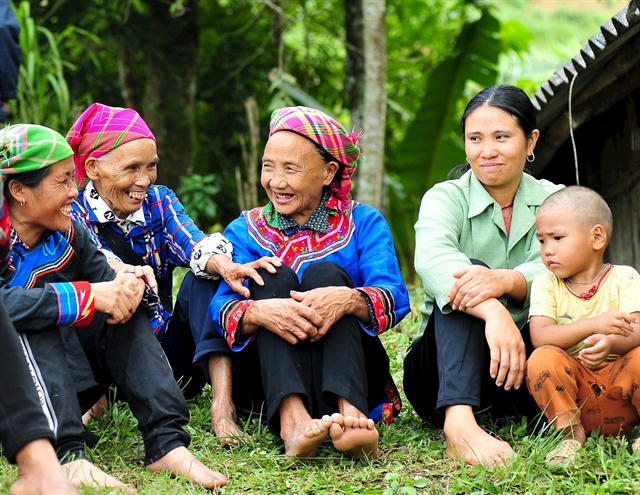 |
| Women of Cờ Lao ethnic group chat cheerfully during a crop-praying ceremony. |
Artisan Đặng Thị Thành introduces the traditional attire of the Phù La people, a very small ethnic group with just over 1,000 members living in Yên Bái (now Lào Cai) Province.
Each year, the Ministry of Culture, Sports and Tourism organises activities marking the Việt Nam Ethnic Culture Day nationwide, while conducting surveys and opening training classes on intangible cultural heritage and traditional crafts of very small ethnic groups, taught directly by artisans to younger generations.
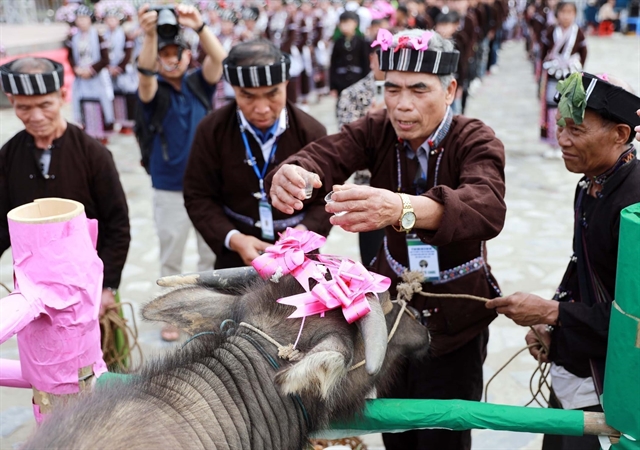 |
| The Sú Khon Khoài Festival, or buffalo soul ceremony, of the Lự ethnic community in Lai Châu. |
These activities contribute to fostering patriotism, strengthening national pride, honouring cultural identities and reinforcing the great national unity bloc.
Traditional cultural values are being built up and safeguarded through the joint efforts of the Party, the State, the entire political system and very small ethnic minority communities themselves. Preserving the cultural identity of these groups is a task of special political, economic and social significance in Việt Nam’s development journey. VNA/VNS
Life & Style
 Life & Style
.jpg) Life & Style
Life & Style
 Life & Style
 Life & Style
 Life & Style
 Life & Style
 Life & Style
 Life & Style
 Life & Style
 Life & Style
 Life & Style
 Life & Style
 Life & Style
 Life & Style