 Life & Style

Wuzhen Summit Puts Spotlight on Tongxiang’s Expanding AI Industry
1.
HÀ NỘI — The Việt Nam National Museum of Fine Arts will open a special thematic exhibition on December 18, presenting 26 selected paintings by the celebrated Vietnamese painter-martyr Tô Ngọc Vân (1906–1954). The collection includes works created both before and after 1945, with several pieces never before widely displayed to the public.

|
| Silk painting ‘Bức Thư’ (The Letter, 1932) by painter Tô Ngọc Vân. |
Organised with the support of the artist’s family, the exhibition captures the profound transformation in Tô Ngọc Vân’s artistic vision and style. It traces his journey from 'art for art’s sake' to 'art for humanity', showing how his creative outlook developed alongside the nation’s turbulent history.
In addition to the paintings, visitors will be able to view treasured keepsakes preserved by his family, offering a more intimate insight into the life of the master painter.
|
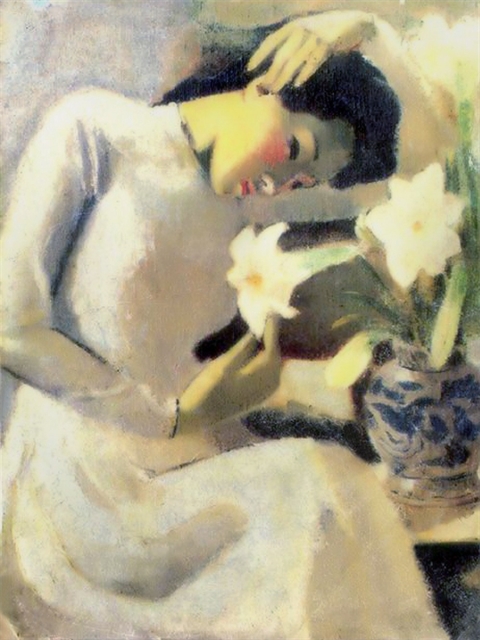
| ‘Thiếu Nữ Bên Hoa Huệ’ (Young Woman by Lilies, 1943) is the most celebrated work of Tô Ngọc Vân. |
Tô Ngọc Vân is recognised as one of the most influential figures in modern and revolutionary Vietnamese fine arts. He not only laid the foundations for revolutionary art in Việt Nam but also served as a vital bridge between two traditions: from the Indochina College of Fine Arts to the Việt Nam College of Fine Arts (today the Việt Nam University of Fine Arts) where he became the first Rector of revolutionary fine arts.
His most celebrated work is Thiếu Nữ Bên Hoa Huệ (Young Woman by Lilies, 1943), an oil painting that epitomises the gentle beauty of Hà Nội women of the past. It depicts a young woman in a white áo dài beside a vase of pristine white lilies, rendered with a tightly composed structure and delicate colour palette.
|
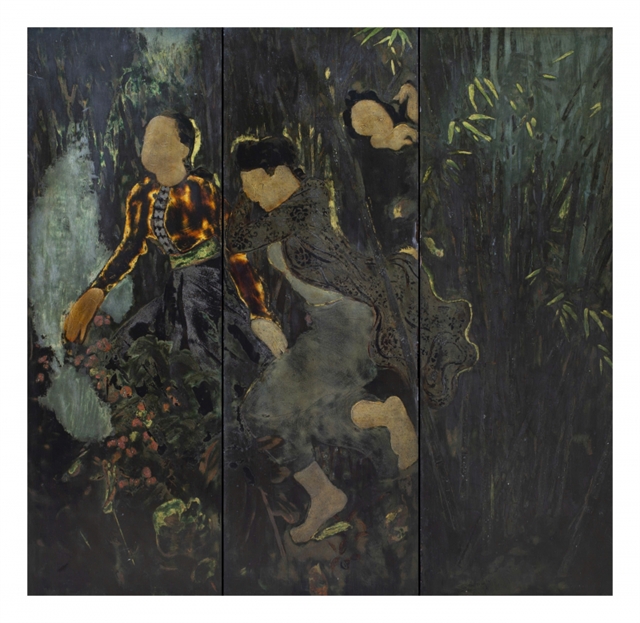
| Lacquer painting ‘Chạy Giặc’ (Fleeing from War, 1949) by painter Tô Ngọc Vân. |
Beyond this masterpiece, he produced many other significant works across two periods: before 1945, including Hai Thiếu Nữ và Em Bé (Two Young Women and a Child); and after 1945, with pieces such as Hồ Chủ Tịch Làm Việc Tại Bắc Bộ Phủ (President Hồ at the Bắc Bộ Palace) and Nghỉ Đêm Bên Đồi (Night Rest on the Hill).
His life was tragically cut short during the Điện Biên Phủ Campaign in 1954 when he sacrificed himself at the front while recording and sketching. The works he left behind are not only of exceptional artistic value but also priceless historical documents, faithfully capturing the spirit of Việt Nam during its heroic years of resistance.
|
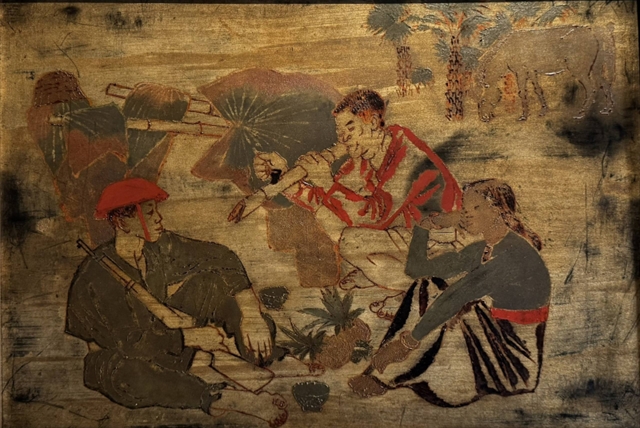
| Lacquer painting ‘Nghỉ Chân Bên Đường’ (Resting by the Roadside, 1953) by painter Tô Ngọc Vân. |
Through his art, Tô Ngọc Vân fulfilled a historic mission, transforming painting into the voice of the Vietnamese nation on its path to independence and the affirmation of national identity. This exhibition gives the public and researchers a valuable opportunity to revisit his extraordinary creative journey, from a romantic artist to a soldier with a brush who devoted his entire life to art and to the Fatherland. — VNS
Life & Style
 Life & Style
 Life & Style
 Life & Style
 Life & Style
 Life & Style
 Life & Style
 Life & Style
 Life & Style
 Life & Style
 Life & Style
 Life & Style
 Life & Style
 Life & Style
 Life & Style

.jpg)




