 Life & Style
Việt Nam fosters comprehensive cooperation with Uruguay
1.
|
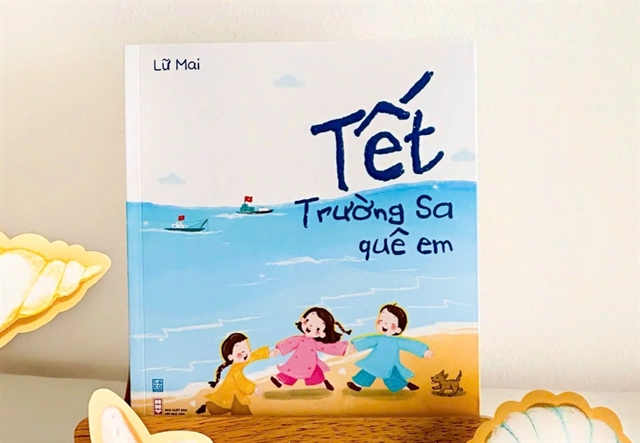
| The children’s poetry collection Tết in My Trường Sa Homeland by poet Lữ Mai, published by the Writers’ Association Publishing House in collaboration with Carobooks. Photo courtesy of thethaovanhoa.vn |
HÀ NỘI — As the Lunar New Year rolls in, Lữ Mai lets poetry set sail. With the release of the children’s collection Tết Trường Sa Quê Em (Tết in My Trường Sa Homeland, Writers’ Association Publishing House, Carobooks), the poet opens a lyrical and deeply human portrait of Tết in the Trường Sa archipelago. Seen through a child’s eyes, the book presents island life as both ordinary and sacred, gently nurturing in young readers a natural love for the nation’s seas and islands.
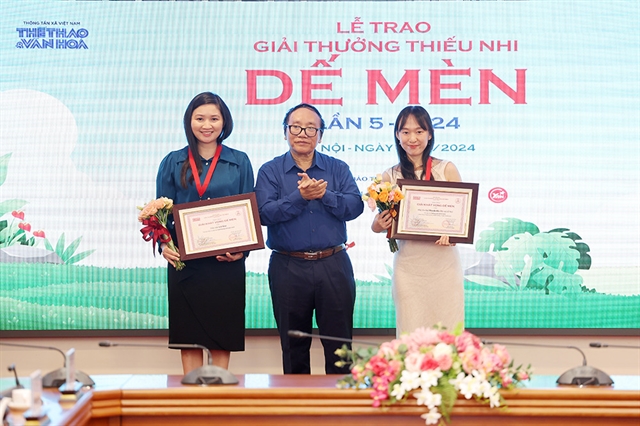
The new collection marks Lữ Mai’s continued commitment to children’s literature, following the success of Dưới Khung Trời Ngát Xanh (Under the Vast Blue Sky), which won the Dế Mèn Aspiration Award at the fifth Dế Mèn Children’s Literature Awards in 2024. With this latest work, she further refines her distinctive approach to the inner world of children, choosing tenderness over instruction and emotion over explanation.
Shaped as a narrative poem, Tết in My Trường Sa Homeland centres on Hạt Dưa, a six-year-old girl born and raised among the waves of Trường Sa. Through her innocent, curious voice, readers are led into a Lunar New Year far from the mainland, a place that feels at once unfamiliar and deeply intimate.
The poems unfold through a series of vivid yet simple images of Tết, each carrying the imprint of island life: square sticky rice cakes wrapped amid salty sea winds; peach blossoms swaying gently at the pier; a five-fruit tray unlike those on the mainland with both real and symbolic offerings; a tall new year pole rising in sun and wind; lights welcoming the new year lit as early as the twelfth lunar month; spring ships bringing gifts from afar; and New Year meals shared beside the waves, where reunion is touched by quiet longing for loved ones far away.
One of the book’s most compelling features is its narrative perspective. Rather than explaining Trường Sa from an adult viewpoint, Lữ Mai allows Hạt Dưa to guide the story. The island is revealed through the language of childhood: spontaneous, observant and sometimes playfully surprising, yet capable of moments of deep emotion. Through this voice, Trường Sa feels less like a remote outpost and more like a small homeland filled with laughter, warmth and memory.
|
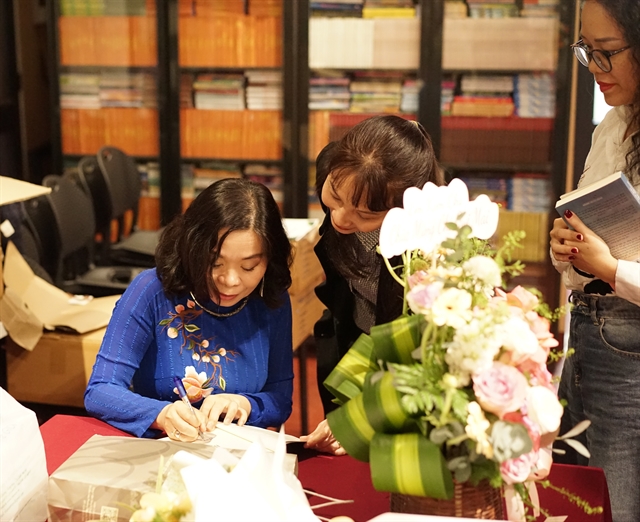
| Poet Lữ Mai (left) receives the 2024 Dế Mèn Aspiration Award. Photo courtesy of thethaovanhoa.vn |
Sharing her thoughts on the character, Lữ Mai said she wanted to portray Trường Sa as a place where children, families and spring coexist naturally. She believes children perceive life primarily through emotion and that from small, vivid details, love and trust can quietly take root. Hạt Dưa, she explained, was inspired by real children she met and spent time with in Trường Sa, youngsters who grow up with the waves, resilient yet remarkably pure.
Alongside childhood and family life, the image of soldiers stationed at the maritime frontier runs gently throughout the collection. The poems place them within the context of Tết, standing guard by the waves, welcoming the new year far from home, protecting the islands during spring and sharing simple moments with local people. Their understated presence helps young readers sense the value of peace and develop a natural feeling of gratitude.
Lữ Mai has often spoken of her empathy for soldiers who spend Tết on distant islands. In her poetry, their quiet sacrifices are not highlighted through heroism but through stillness and devotion, reminding readers that a peaceful holiday on the mainland is made possible by those who stand watch amid the spring sea.
Family warmth is another enduring theme. Though far from the mainland, Tết in Trường Sa remains a time of shared meals, comforting embraces and children’s laughter. Family affection blends seamlessly with love for the homeland, forming a steady emotional anchor. Spring ships crossing the sea, Tết gifts travelling over waves and New Year wishes bridging distances all reinforce the sense that the island and mainland are bound together as one.
Stylistically, the collection employs short poems with four- and five-word lines, creating a lively rhythm that is easy to read, remember and recite. Each poem is brief, allowing images to emerge clearly and naturally, in tune with children’s ways of seeing the world while still retaining poetic subtlety.
Visually, the book is dominated by soft tones of white, blue and pink: white for clouds, sand and coral; blue for sea, sky and steadfast belief; pink for peach blossoms, early sunlight and drifting childhood dreams. These gentle colours, filtered through sea winds and spring light, create a calm and reassuring Tếtatmosphere that resonates closely with young readers.
In Tết in My Trường Sa Homeland, words and illustrations are given room to breathe, opening quiet windows onto island life. For children, the book offers a chance to wander through poetry and feel the spirit of the nation’s farthest islands. For adults, it is a gentle reminder that love for the homeland can begin with the simplest, most tender images – seen through a child’s eyes. — VNS
Life & Style
 Life & Style
 Life & Style
 Life & Style
 Life & Style
 Life & Style
 Life & Style
 Life & Style
 Life & Style
 Life & Style
 Life & Style
 Life & Style
 Life & Style
 Life & Style
 Life & Style