 Life & Style
Việt Nam's organ transplant sector masters multi-organ, domino techniques
1.
|
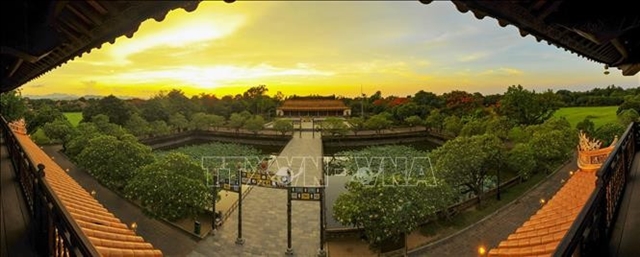
| A view of Thái Hoà Palace of Hue ancient city. — VNA/VNS Photo |
HUẾ — Marked by an innovative approach to heritage renewal, Visit Vietnam Year – Huế 2025 has continued to act as a catalyst for the city to bring heritage and culture into contemporary life, generate strong growth momentum, and advance its ambition of becoming the cultural tourism capital of Southeast Asia.
Letting heritage speak
On March 25, on the banks of the Hương (Perfume) River, the opening ceremony of Visit Vietnam Year – Huế 2025 unfolded through an unconventional narrative. Avoiding spectacle and exuberance, Huế allowed its heritage to speak for itself through the river, music, lighting, rituals and cultural life, all reinterpreted in a contemporary artistic language. The message was clear: renewal rooted in heritage, not a replacement of it.
Addressing the event, Deputy Prime Minister Mai Van Chính said Huế is regarded not only as a city of history but also as a city of the future, a distinctive national centre of cultural tourism and a symbol of development founded on heritage values. He underlined the need to accelerate digital transformation, promote green tourism, reduce impacts on the environment, natural resources, landscapes and heritage, and view tourism as a key pillar in conserving and promoting heritage.
The true value of Visit Vietnam Year 2025 lies less in the number of events or headline growth figures than in Huế's proactive shift in how heritage is approached and utilised. Once known primarily for its quiet and contemplative character, Huế has gently and deliberately brought heritage into modern life, with preservation as its guiding principle.
Art performances, festivals, fashion shows, night-time tourism and culinary activities staged within heritage spaces have not made Huế noisy or disruptive. Instead, heritage has been “retold” in a new language, more accessible to younger audiences and more engaging for international visitors, while retaining cultural depth. The Hương River has become the core of the heritage narrative; Ngọ Môn (Noon Gate) and the Imperial Citadel serve not only as sightseeing sites but also as artistic settings; áo dài, court rituals and Huế royal court music are presented in modern forms without cultural distortion.
Huế has opted for a challenging path: developing new tourism products on the foundation of traditional culture. Huế royal music has evolved into a night-time river experience, while royal and folk cuisine has been integrated into tourism through new dining formats, including digital platforms. Experiencing Huế cuisine in a 3D setting for the first time at the Huế, Culinary Capital festival, visitor Lê Thị Hà Thu from Hà Nội noted that not everyone fully understands the cultural stories behind dishes such as bún bò Huế (Huế beef noodle). The experience demonstrated that technology does not dilute heritage, but rather acts as a bridge connecting it with the wider world.
The message “Huế – a serene green heritage land” has been conveyed through cultural depth, a green environment and a slow-paced lifestyle. Promotion on CNN International, alongside farm trips, press trips and outreach activities in Europe and Northeast Asia, has helped introduce Huế to global audiences through its distinct identity.
This process of renewal is closely tied to digital transformation and sustainable development. Initiatives such as the Huế City Passport, open tourism data, multilingual automated audio guides and the orientation towards AI-supported visitor services show that Huế is not confining heritage to the past, but carefully and intelligently guiding it into the digital era.
Through Visit Vietnam Year 2025, Huế has demonstrated that a heritage city can innovate and integrate internationally without losing its identity, an achievement few heritage destinations manage to realise.
Towards a Southeast Asian cultural tourism hub
|
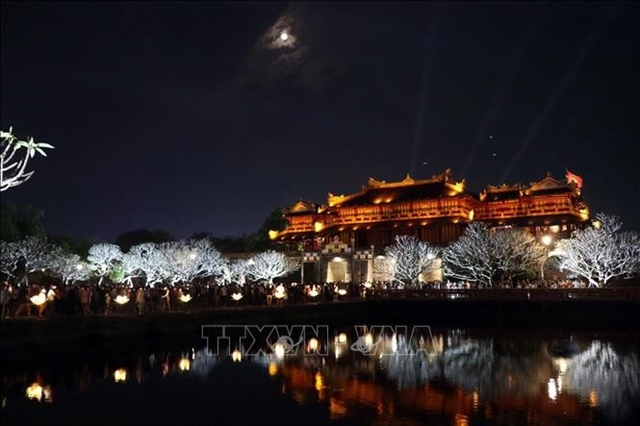
| The imperial city of Huế shimmering at night. —VNA/VNS Photo |
Visit Vietnam Year – Huế 2025 has left a series of strong imprints, reflecting a marked transformation in Huế's tourism in terms of scale, quality and brand positioning. More than a programme of events, it has become a powerful driver, helping position Huế as a competitive cultural and heritage tourism centre in the region.
Estimates show that Huế welcomed about 6.3 million visitors in 2025, up 61.5 per cent year on year. International arrivals reached 1.9 million, an increase of 40.6%, while domestic visitors numbered 4.4 million, up 78 per cent . Tourism revenue was estimated at over VNĐ13 trillion (approximately US$494.2 million), a rise of 64.4 per cent. These figures highlight the sector’s strong rebound and confirm the positive impact of hosting the national tourism year.
Notably, the visitor market structure has shifted towards higher quality, with broader market reach and a strong recovery of traditional key markets. Western European and North American markets recorded robust growth, with France emerging as Hue’s largest source market at around 91,000 visitors, accounting for 14 per cent of international arrivals and up 35 per cent from 2024. Arrivals from Germany and Australia rose by about 32 per cent, while those from the US and Italy increased by roughly 30 per cent. That France, Germany and Australia together contributed nearly one-third of total international arrivals underscores Hue’s growing appeal among high-spending travellers seeking in-depth cultural and heritage experiences. Meanwhile, the domestic market continued to serve as a mainstay, accounting for about 70 per cent of total visitors, particularly vibrant in festival, beach, cultural and culinary tourism.
Looking ahead to 2026, Huế aims to develop as a distinctive heritage city, traditional yet modern, green and smart. Tourism development based on culture and heritage must follow a harmonious approach, with conservation as the foundation, culture as the base, people as the centre and sustainable development as the overarching objective, stressed Nguyễn Thanh Bình, Standing Vice Chairman of the Huế City People’s Committee.
To realise this vision, the city plans to implement a coordinated set of measures, including attracting strategic investment in high-end resort tourism, green tourism and quality entertainment; upgrading key infrastructure such as Phú Bài Airport and Chân Mây Port; diversifying tourism products by tapping deeper into royal heritage values and Huế royal court music; and developing night-time tourism linked with music and local lifestyle experiences. Huế will also work with reputable training institutions to expand capacity-building programmes aimed at improving tourism management, operations and service quality.
According to Trần Thị Hoài Trâm, Director of the Huế Department of Tourism, smart tourism has been identified as an inevitable path. In the coming period, the city will continue to develop digital platforms such as VisitHue and Huế Passport, AI-supported visitor applications, digital maps, multilingual interpretation systems, and VR/AR experiences at destinations, with the aim of enhancing visitor experiences, extending length of stay and strengthening Huế's competitiveness in the smart tourism era. — VNA/VNS
Life & Style
 Life & Style
 Life & Style
 Life & Style
 Life & Style
 Life & Style
 Life & Style
 Life & Style
 Life & Style
 Life & Style
 Life & Style
 Life & Style
 Life & Style
 Life & Style
 Life & Style