 Life & Style
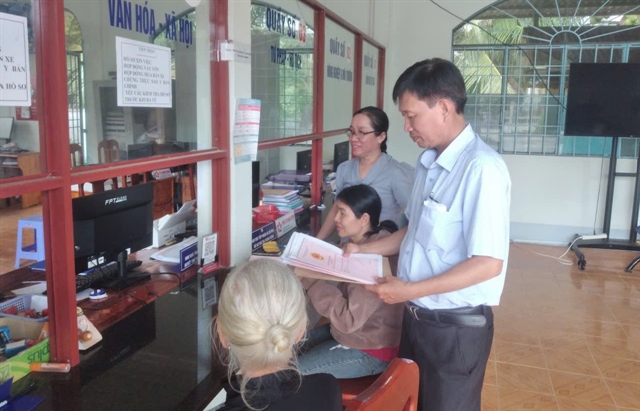
The district tier disappeared, but the work did not: how local officials deal with larger caseloads
1.
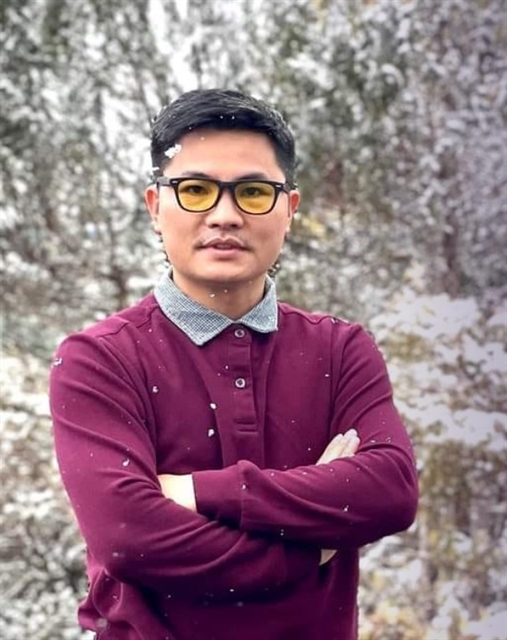 |
| Award-winning director Dương Huy. — Photo thethaovanhoa.vn |
Documentary Bụi Mịn – Hiểm Họa Lơ Lửng (Fine Dust – A Floating Threat) by Dương Huy won the top award in the scientific film category at the 24th Việt Nam National Film Festival.
Huy spoke to Vietnam News Agency's Thể thao & Văn hóa (Sport & Culture) newspaper about his six-month filmmaking process and the responsibility of documentary filmmakers in addressing urgent social and environmental challenges.
Were you surprised when your film was announced at the ceremony?
When the host announced the title of my film, I was genuinely surprised and overwhelmed with happiness. I completed the film in late 2023, yet two years later the issue of fine dust pollution remains painfully urgent and continues to raise strong public concern.
In that moment, I relived the entire journey the crew and I had gone through, a long process filled with questions, doubts and serious research.
For me, the Golden Lotus is not only an award recognising the efforts behind a single project. More importantly, it affirms the relevance and direction of documentary and scientific filmmaking in our society today. We live in an era where environmental issues, public health, technological change and lifestyle transformation demand the involvement of all sectors of society.
A documentary is truly meaningful only when it sparks awareness, opens dialogue or simply makes viewers pause for a few seconds and ask themselves: how are we living? What is floating around us in the air? What will affect future generations?
This award makes me believe that the questions we raised through the film have resonated with the audience, the jury and especially with those who care about the air we breathe every day. That, to me, is the greatest happiness.
What motivated you and your team to choose fine dust pollution as the theme of the film?
During filming trips from the North to the South, I have heard people repeatedly talk about shortness of breath, respiratory illnesses in children and the suffocating atmosphere in big cities. There is also a recurring question: how long do we have to live like this?
Fine dust is not the problem of a single industry, a city or a locality. It is an issue that affects every Vietnamese citizen regardless of age, occupation or social status.
I think that if I do not make this film, perhaps no one will tell this story in a direct, honest and multi-dimensional way. And if it is not told now, then every day that passes might make it too late.
Ultimately, the greatest driving force is the sense of responsibility of a documentary filmmaker. It is to get as close to the truth as possible and to deliver something genuinely useful to the community.
Screenwriter Nguyễn Sỹ Hạo also received an award for best script. How did you two collaborate to ensure scientific accuracy while conveying the message?
After receiving the script on this challenging topic from the leadership of the Central Studio for Documentary and Scientific Films, I began planning a very careful research phase before we started shooting.
Much like Ô Nhiễm Trắng (White Pollution), which I made in 2019, this project required me to work early in the mornings and late at night. I immersed myself completely in the film. It became part of my daily life for six months in order to finish all the necessary footage.
I met and consulted with scientists who specialise in air pollution and environmental studies. I also followed researchers who were working on viable solutions and we travelled across all three regions of Việt Nam to record the voices of working-class people in major cities who are directly affected by fine dust.
A documentary requires a substantial investment in research. For me, simply reading a literary script is never enough. I spent a great deal of time studying both domestic and international research on fine dust, medical and epidemiological reports from major hospitals, data from research institutions and independent monitoring groups, as well as international reports by organisations such as the WHO, the World Bank and IQAir.
Most importantly, I held direct discussions with experts specialising in respiratory health and the environment, as well as electric vehicle makers who are working at the very centre of the problem.
I studied the physical and chemical properties of fine dust, how they affect the human body and the link between traffic, industry and the urban microclimate.
This deep understanding allows me to select the right information, avoid distortion and transform scientific data into cinematic language that is accessible to the general public.
That is, in my view, the mission of cinema: to make science understandable.
How long did the production take and what challenges did you encounter while filming in major cities?
The entire process lasted six months, including four months of pre-production and fieldwork and two months for post-production. I travelled to six major cities: Hà Nội, Bắc Ninh, Thái Nguyên, Đà Nẵng, HCM City and Bình Dương.
I chose to follow the approach of direct cinema, a very demanding style that requires great patience and sensitivity from the director. In this approach, I act as an observer and do not interfere, guide, impose or judge. It allows audiences to hear the real voices of ordinary people and witness what is happening as if they are there.
When a mother shares that her child suffers from pneumonia six times a year, that moment is more powerful than any illustration. When a worker speaks about a dust-filled working environment, that image speaks for itself.
When the experts explain the mechanisms of fine dust, their words help the audience understand the root of the problem without the need for over-explanation.
I combined direct cinema with a structure based on issues, experts and real-life experiences, forming a triangle of information. This approach helps the film maintain scientific integrity while remaining emotional, engaging and persuasive without overwhelming viewers.
What is your next project?
I have completed pre-production for my next documentary Đất Hiếm ở Việt Nam (Rare Earths in Việt Nam). Rare earths are not only a valuable natural resource but also the key to the technological revolution and a strategic asset in the 21st century.
Việt Nam, as one of the countries with the largest reserves of rare earth elements, is facing both enormous opportunities and significant challenges.
To me, documentary making is not just a profession. It is the way I choose to contribute to society through the language of cinema. — VNS
Life & Style
 Life & Style
 Life & Style
 Life & Style
 Life & Style
 Life & Style
 Life & Style
 Life & Style
 Life & Style
 Life & Style
 Life & Style
 Life & Style
 Life & Style
 Life & Style
 Life & Style