 Environment

Việt Nam, EU and Belgium seek deeper, practical cooperation
1.
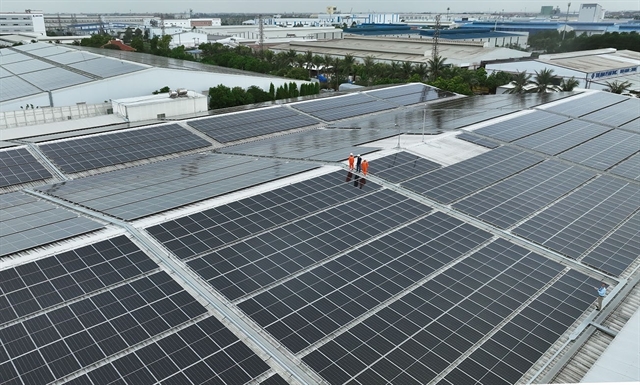 |
| Engineers of Hưng Yên Power Company check a solar power system in the northern province of Hưng Yên. — VNA/VNS Photo Vũ Sinh |
Nguyễn Hằng
HÀ NỘI — Appropriate policies to overcome challenges, maximise opportunities and successfully implement the energy transition are needed, according to leading experts in the field.
The success of this transition is believed to depend on improving energy efficiency, expanding renewable energy development, mobilising investment, applying data and technology, reskilling the workforce and ensuring social equity so that no groups or communities are left behind.
Discussing the challenges facing a just energy transition, Associate Professor Nguyễn Đình Thọ, deputy director general of the Institute for Policy and Strategy on Agriculture and Environment under the Ministry of Agriculture and Environment, said the shift in energy systems would directly affect vulnerable groups, particularly rural residents, women, low-income workers and those employed in the informal sector.
These groups often have low productivity and limited access to resources, making them more vulnerable to negative impacts during the energy transition, he said.
He also pointed out several challenges facing Việt Nam’s labour market, including the relatively high unemployment rate among young people under the age of 24, estimated at around 9-10 per cent, several times higher than the average rate nationwide, indicating that vocational training has yet to fully meet market demands.
Meanwhile, informal workers still account for a large proportion of the workforce, estimated at around 60-65 per cent.
This group is among the most vulnerable to economic fluctuations and the impacts of energy transformation.
Phạm Ngọc Toàn, director of the Centre for Information Analysis, Strategic Forecasting and Public Services under the Institute of State Organisational Sciences at the Ministry of Home Affairs, said the energy transition would reshape the structure of employment in the labour market.
“As fossil fuel-based industries gradually shrink, some workers will need to change careers or face the risk of job losses, while renewable energy and emerging industries will create new employment opportunities,” he said.
Nguyễn Ngọc Hưng, head of the Energy Economics Office under the Institute of Energy, said energy conservation and efficient energy use have always been priorities in Việt Nam’s policies.
National programmes and resolutions on energy, including Resolution No. 70, have set targets to save around 8-10 per cent of energy consumption, while recent directives on electricity conservation have established an important legal foundation for improving energy efficiency.
The implementation still faces several obstacles, particularly related to finance and technology.
From an economic perspective, current energy prices are not yet attractive enough to encourage businesses to invest in energy-saving solutions.
However, energy price adjustments must be implemented appropriately to avoid sudden increases that could affect businesses’ competitiveness.
Energy pricing policies today will determine long-term technology choices, as energy technologies often have a lifespan of 15-20 years.
Hưng also noted that investment in energy efficiency differs fundamentally from investment in electricity generation.
While investment in electricity generation creates a tangible product, investment in energy efficiency generates benefits through reduced energy consumption.
“Therefore, the biggest challenge is accurately measuring energy savings, establishing financial mechanisms and determining how benefits should be shared among stakeholders,” he said.
Vũ Sỹ Cường, deputy head of the Financial Policy Analysis Department at the Academy of Finance, said attracting private investment into energy efficiency requires addressing one of the biggest challenges in the energy transition process called 'stranded assets'.
These refer to existing factories, machinery and equipment that rely on traditional energy sources but risk becoming unsuitable as the energy system shifts towards new models.
Therefore, Việt Nam needs detailed assessments of the impacts of the transition on each sector, as well as solutions for managing, reusing or converting these assets.
He also said Việt Nam has already introduced various policies to support energy transition, including incentives related to corporate income tax, import tax, electricity prices, land allocation and land rental fees for renewable energy projects.
The Government is also promoting solutions such as green bonds and attracting international sources of finance.
However, investment mobilisation remains challenging.
According to World Bank estimates, Việt Nam requires around US$384 billion in investment for renewable energy development, a substantial financial requirement.
Another difficult challenge is balancing investors’ interests with society’s ability to pay.
To attract investment, businesses must be assured of reasonable returns, but higher energy prices could affect production activities and consumers.
Cường from the Academy of Finance also emphasised the challenge of establishing a long-term policy vision.
Energy transition requires 10-20 years to deliver meaningful results, while policymaking processes are often influenced by shorter-term objectives of two to five years.
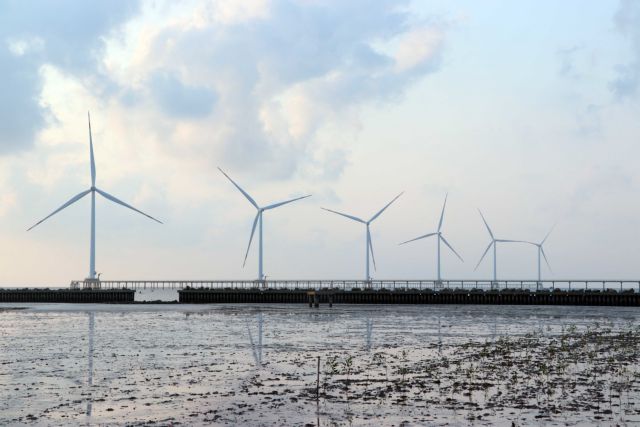 |
| An offshore wind farm cluster in Lai Hòa Commune, in the Mekong Delta city of Cần Thơ. — VNA/VNS Photo Trung Kiên |
Opportunities and recommendations
Jonathan Pincus, dean of Fulbright School of Public Policy and Management at Fulbright University Vietnam, said that the country's energy transition should be viewed not simply as a way to cut carbon emissions, but as an opportunity to build a more productive, innovative, energy-secure and inclusive economy.
He recommended placing energy efficiency at the centre of the new growth model, promoting renewable energy for its economic as well as environmental benefits, and introducing carbon pricing alongside redistribution policies to protect vulnerable households from the short-term costs of reform.
Drawing on international experience, he highlighted four common pitfalls that countries should avoid, such as treating cheap energy as an industrial policy, relying excessively on foreign direct investment (FDI) to drive the transition, poor coordination among government agencies and focusing on short-term political priorities at the expense of long-term energy and industrial transformation.
In the meatime, Thọ from the Institute for Policy and Strategy on Agriculture and Environment said achieving high growth while ensuring sustainable development requires greater focus on training and job creation for young people who remain unemployed or lack professional skills.
At the same time, support should be provided to low-income workers in sectors likely to be affected, including thermal power, cement, steel and other energy-intensive industries.
Thọ recommended further research into the role of climate finance, carbon finance and international standards linked to the Sustainable Development Goals (SDGs) to promote a green and inclusive transition.
He also called for stronger digital transformation in agriculture through technologies such as sensors, low-altitude aviation technology, digital twins and smart farming models to reduce the use of fertilisers and pesticides, save energy and improve livelihoods.
He said these research areas were crucial to identifying key solutions that would ensure the energy transition not only reduces emissions but also improves living standards, particularly in agricultural communities and among vulnerable groups.
Toàn, from the Centre for Information Analysis, Strategic Forecasting and Public Services, said reducing negative impacts required identifying three groups affected by the transition: workers directly employed in fossil fuel industries; workers in industries dependent on fossil fuels as production inputs; and households in project areas that may lose land or livelihoods.
He proposed establishing an early warning system and workforce demand forecasting mechanism to identify sectors with potential for new job creation as well as those at risk of decline during the energy transition.
Based on these assessments, Việt Nam should strengthen retraining, upskilling and support programmes to help workers move into suitable occupations.
The training system must also be closely linked to labour market demand rather than based solely on existing training capacity.
Specific support policies are needed for vulnerable groups, including older workers, those with limited education, informal workers and people living in remote areas, helping them overcome financial, livelihood and access barriers to training opportunities.
He added that Việt Nam must address labour market information gaps and improve workforce quality, noting that only around 30 per cent of Vietnamese workers have received formal training.
According to Hưng, to address these challenges of energy efficiency investment, Việt Nam needs to develop energy-saving performance contracts, which clearly define baseline energy consumption levels, the amount of energy saved, revenues generated and the mechanism for sharing benefits among investors, solution providers and production facilities.
The Ministry of Industry and Trade and the Ministry of Finance should soon issue detailed guidelines to facilitate investment in this sector.
Cường suggested in-depth research is needed to identify which industries can transition quickly, which sectors can generate the greatest positive impacts, and where resources should be prioritised to encourage effective investment. — VNS
Environment
 Environment
 Environment
 Environment
 Environment
 Environment
 Environment
 Environment
 Environment
 Environment
 Environment
 Environment
 Environment
 Environment
 Environment