 Talking Shop

Việt Nam, EU and Belgium seek deeper, practical cooperation
1.
 |
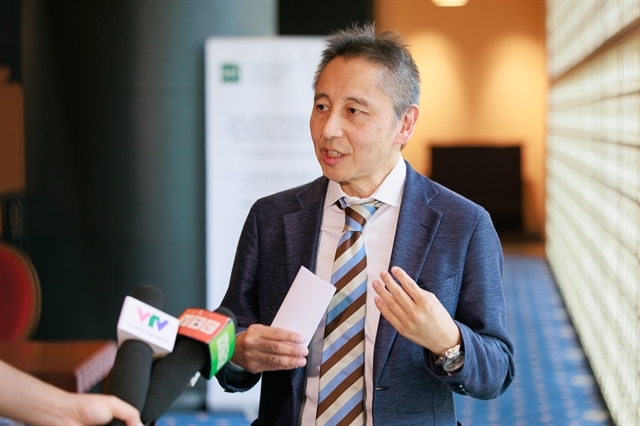
| Dr. Nguyễn Văn Tư, head of the Việt Nam Petroleum Institute (VPI). — Photo bnews.vn |
In Resolution 70-NQ/TW issued on August 20, 2025, on safeguarding national energy security through 2030 with a vision to 2045, the Politburo set a target for Việt Nam to maintain petroleum reserves equivalent to approximately 90 days of net imports by 2030. The resolution also calls for the development of a national crude oil and petroleum storage system aligned with the country's socio-economic development needs and long-term energy security objectives, including facilities both onshore and offshore.
Dr Nguyễn Văn Tư, head of the Việt Nam Petroleum Institute (VPI), speaks to the Vietnam News Agency (VNA) about Việt Nam's strategic energy reserves and multiple layers of energy security protection.
How is Việt Nam's current crude oil and petroleum storage capacity compared with regional and global standards?
As the institution tasked by the Ministry of Industry and Trade and the Việt Nam National Industry–Energy Group (PetroVietnam) with conducting research and advising on the formulation of Việt Nam's National Energy Reserve Strategy, VPI believes it is important to distinguish three distinct layers within a comprehensive energy security reserve system.
The first is strategic national reserves, owned by the State and intended solely for emergencies. The second consists of mandatory commercial reserves, held by key fuel wholesalers and distributors to support market operations. The third comprises operational reserves, including crude feedstock, intermediate products and inventories maintained by domestic refineries.
For strategic national reserves, VPI estimates that Việt Nam currently has reserves equivalent to only seven to 10 days of domestic consumption, reflecting relatively limited capacity.
When combined with commercial inventories held by major fuel wholesalers (around 20 days), distributors (about five days), and operational stocks at the Dung Quất Refinery in Quảng Ngãi Province and the Nghi Sơn Refinery and Petrochemical Complex in Thanh Hóa Province, Việt Nam's total petroleum reserve capacity is estimated at 30–65 days, depending on the methodology used and the level of refinery inventories at any given time.
However, the majority of these stocks are commercial inventories maintained for business operations rather than dedicated strategic reserves.
Compared with international benchmarks, this represents a significant gap. Under the standards of the International Energy Agency (IEA), member countries are required to maintain strategic oil stocks equivalent to at least 90 days of net oil imports.
As a result, the target set out in Resolution 70 of maintaining reserves equivalent to 90 days of net imports is not simply a matter of expanding storage capacity. It also requires a fundamental restructuring of the country's overall petroleum reserve system.
Many experts argue that expanding Việt Nam's petroleum reserves to the equivalent of around 90 days of net imports will be challenging, requiring substantial investment as well as coordinated planning for storage infrastructure, logistics and long-term cooperation between the Government and businesses. What do you think about this issue?
I believe the target is ambitious but entirely achievable, provided there is a well-defined roadmap. More importantly, implementation should not be delayed.
From a financing perspective, increasing reserves to the equivalent of 90 days of net imports will require significant investment – not only in storage facilities and supporting infrastructure, but also in maintaining the necessary inventory over time.
International experience suggests that the Government should retain responsibility for the core layer of strategic reserves, while the private sector shares the burden by maintaining mandatory commercial inventories under statutory obligations, supported by appropriate cost-recovery mechanisms. Such an approach would ease pressure on public finances while making effective use of private-sector resources.
Integrated planning is equally critical. A strategic storage facility delivers value only when it forms part of a complete system encompassing import terminals, pipeline networks, storage depots, distribution infrastructure, and well-defined stock release and replenishment mechanisms.
In other words, the challenge extends beyond simply constructing additional storage tanks, it requires the development of an integrated strategic logistics network.
Long-term coordination between the Government and businesses is also a challenge, but one that can be addressed through a robust institutional framework.
Once the legal framework clearly defines the rights, responsibilities and incentives of each stakeholder, the system can operate on a stable and transparent basis, rather than relying on ad hoc arrangements from one situation to the next.
What kind of national petroleum reserve model should Việt Nam adopt to strengthen long-term energy security?
As part of the development of Việt Nam's National Energy Reserve Strategy, VPI has proposed a national energy reserve model for Việt Nam guided by several key principles.
First, national strategic reserves should be clearly separated from commercial inventories. Strategic reserves should only be released under the authorisation of the competent authorities during emergencies. This separation is fundamental to ensuring that strategic reserves function as a genuine safeguard rather than becoming intertwined with routine commercial operations.
Second, Việt Nam should strike an appropriate balance between crude oil and refined petroleum product reserves. Crude oil reserves are generally less expensive to maintain, have a longer storage life and provide greater flexibility. However, they deliver higher value only when supported by sufficient domestic refining capacity.
VPI therefore proposes locating part of the country's crude oil reserves alongside the Dung Quất and Nghi Sơn refining complexes, while maintaining adequate stocks of refined products to meet immediate emergency needs.
Third, the reserve system should combine onshore and offshore storage, consistent with the direction set out in Resolution 70. Onshore facilities provide long-term stability and security, while offshore floating storage solutions – including floating storage units and storage tankers – offer faster deployment, greater locational flexibility and the ability to capitalise on favourable market conditions.
Fourth, storage facilities should be strategically distributed across Việt Nam's three regions, closely integrated with ports, pipeline infrastructure and major consumption hubs. Such an arrangement would ensure that supply disruptions do not lead to fuel shortages in any particular region and would strengthen the country's ability to redistribute supplies when necessary.
Fifth, implementation should follow a phased roadmap rather than a simultaneous nationwide rollout. Priority should be given to projects that leverage existing infrastructure and deliver the greatest benefit, with reserve capacity expanded progressively to achieve the target of 90 days of net imports by 2030 and further strengthened through 2045.
Finally, with regard to governance, VPI recommends that a single coordinating entity be entrusted with overseeing strategic reserve management and fuel security.
This would allow Việt Nam to capitalise on the existing infrastructure, storage facilities, port networks and operational expertise of its leading State-owned enterprises while ensuring centralised and effective risk management.
What policies and mechanisms are needed to enable Việt Nam to raise its reserve levels to international standards?
VPI has proposed six key policy recommendations to support the Ministry of Industry and Trade in developing the National Energy Reserve Strategy.
The first is to establish a comprehensive legal framework. Việt Nam should clearly distinguish national strategic reserves from commercial inventories in law, defining mandatory stockholding obligations for businesses and establishing robust mechanisms for supervision, compliance and enforcement. This is the fundamental prerequisite for the entire system.
Besides that, financing sources should be diversified. In addition to State budget funding for core strategic reserves, Việt Nam should mobilise private capital through public-private partnership (PPP) models, bond issuance and, in particular, green finance where reserve infrastructure is designed to support the country's broader energy transition objectives.
At the same time, businesses required to maintain mandatory inventories should be provided with appropriate cost-recovery mechanisms, ensuring that compliance remains commercially viable and sustainable.
The Government should introduce land-use, planning and administrative incentives, alongside appropriate tax and fee preferences, to facilitate investment in reserve infrastructure.
Việt Nam should also adopt a flexible procurement policy that enables strategic stockpiling when international oil prices are favourable, thereby minimising acquisition costs over the long term.
Finally, the country should strengthen risk management capabilities and financial hedging tools by developing integrated data systems, early-warning mechanisms and the capacity to use market instruments such as futures and options contracts to manage input costs. Physical reserves and financial hedging should function as complementary layers of protection. — VNS
Talking Shop
 Talking Shop
 Talking Shop
 Talking Shop
 Talking Shop
 Talking Shop
 Talking Shop
 Talking Shop
 Talking Shop
 Talking Shop
 Talking Shop
 Talking Shop
 Talking Shop
 Talking Shop
 Talking Shop