 Talking Shop



Dream of the visible 1300 years of history in the heart of Hà Nội starts to take shape
1.

|
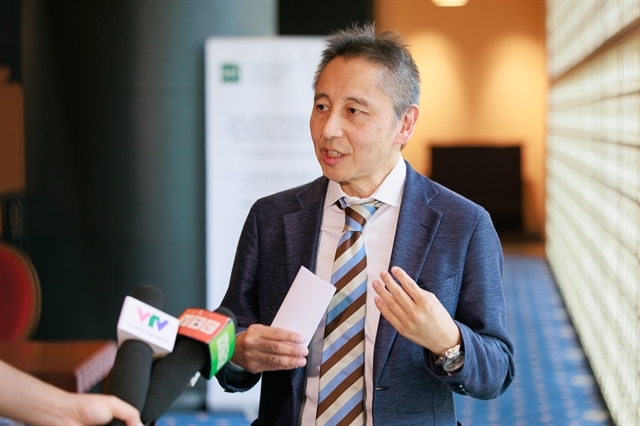
| Heng Jian Xin, Senior Country Risk Analyst at BMI. — Courtesy photo |
Việt Nam’s economic outlook remains solid in the near term, but rising external risks could weigh on growth prospects, according to Heng Jian Xin, Senior Country Risk Analyst at BMI, a unit of Fitch Solutions.
In an interview with Việt Nam News reporter Mai Hương, he said the country’s export- and FDI-driven model continues to deliver strong results, but growing reliance on major partners and structural constraints could challenge sustainability in the years ahead.
With Việt Nam maintaining solid growth momentum into 2026, is the current outlook of around 7 per cent still conservative and where do you see the biggest upside risks?
We regard our current forecast of 7 per cent GDP growth in 2026 as optimistic. We see significant downside risks to this Vietnamese growth outlook emanating from a global growth slowdown.
US-bound exports alone comprised around 30 per cent of Việt Nam’s GDP in 2025, with exports to China comprising another 14 per cent. A shock to income levels in either of these major economies would reduce Việt Nam’s exports and hurt its GDP.
To achieve its growth targets, the government has committed to an ambitious public investment programme. This deficit spending alongside other fiscal measures to stabilise energy prices will help to support Việt Nam’s economy in 2026.
However, because many of the planned investments involve construction of new infrastructure such as highways, they are energy intensive. Higher construction costs could constrain the real value of resources allocated towards these projects. For this reason, we judge the upside risk to growth from government spending to be small for now.
Is Việt Nam’s current growth model, driven by exports and FDI, showing signs of strain, or does it still have room to sustain strong expansion?
The most recent data suggest Việt Nam’s particular growth model is not showing any sign of immediate strain.
Exports rose 19 per cent year-on-year in Q1 2026, backed by a 24 per cent surge in US-bound merchandise.
Registered FDI grew 43 per cent year-on-year during the same quarter, indicating long-term foreign investors remain optimistic about Việt Nam’s prospects.
We believe tariff differentials faced by US imports from Việt Nam and China over the past decade are an important cause of Việt Nam’s recent trade performance. Companies have rerouted supply chains across the Việt Nam-China border to evade tariffs. Việt Nam’s external sector has prospered as a result.
However, we assess that Việt Nam’s particular version of the Asian exports-led growth model introduces medium-term risk to the economy.
|
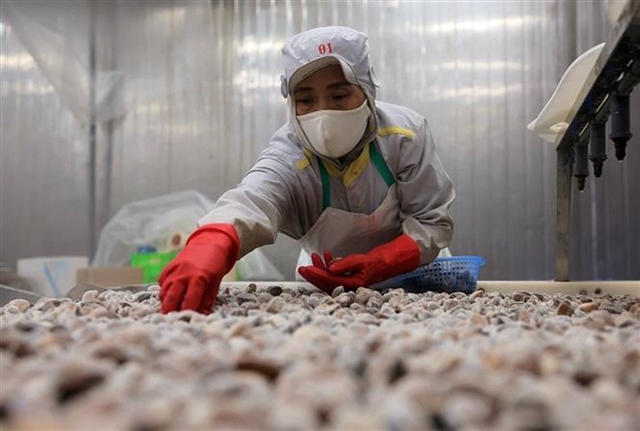
| Clams are processed for export at Thanh Hoa Seafood Import-Export JSC's factory in Thanh Hóa Province. — VNA/VNS Photo Lê Đông |
Việt Nam is increasingly reliant on the US as a market for its exports and on China as a source of imports and foreign investment. As a result, Việt Nam became the country registering the largest trade deficit with the US in January 2026.
This leaves Việt Nam vulnerable to allegations over transshipments of Chinese products into the States. The optics of having a large trade deficit with the US also mean future presidential administrations may be tempted to raise tariffs on goods from Việt Nam to protect American jobs.
How resilient is Việt Nam’s economy to prolonged external shocks such as energy price volatility or a global slowdown?
The increasingly concentrated nature of Việt Nam’s trade patterns means the economy is vulnerable to prolonged shocks to US income levels or Chinese production costs.
Based on historical correlations, we estimate a 0.2-0.3 percentage points reduction in US GDP could lead to a 0.1 percentage points decline in Vietnamese growth the following year, via reduced exports.
A supply-side shock to the Chinese economy would likewise hurt Việt Nam’s GDP by raising the Southeast Asian country’s import costs. Surging energy prices during 2026 means such a supply-side shock is more probable than before.
Looking ahead, how realistic is the shift towards an innovation- and high-tech-driven economy, and what will determine the pace of this transition?
The shift toward an innovation-driven economy reflects a clear-eyed recognition among government officials of the structural problems facing Việt Nam’s economy.
Growth accounting analysis by BMI shows capital accumulation was the main driver of growth over the past decade. This growth model is not sustainable over the long term, since it suffers from diminishing returns to capital expansion.
Long-term prosperity can only stem from technological improvements that enable Việt Nam to create more value from existing capital.
The Government has proposed several interesting ideas to boost commercial innovation, including making 200 per cent of R&D spending deductible from corporate income taxes. Hà Nội’s concurrent drive to expand the economy’s private sector will also help.
|
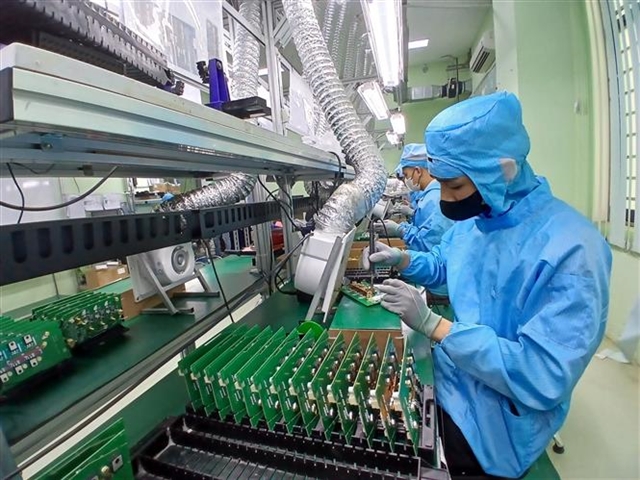
| Workers assemble electronic products at the Trung Nam EMS factory in Đà Nẵng Hi-Tech Park. Việt Nam is shifting towards a science- and technology-driven growth model. — VNA/VNS Photo Mỹ Hà |
Nevertheless, quickening the pace of a country’s technological innovation is historically a difficult endeavour for any government in the world. Moreover, we do not yet see any concrete, credible proposals to translate Việt Nam’s large foreign direct investments into productivity improvements for domestic sector firms.
We thus believe the Government’s desired pace of technological progress (which requires technological improvements to contribute 5.5 percentage points to GDP growth by 2030) to be overly optimistic.
Following the recent consolidation of the leadership and administrative apparatus, what changes do you expect in policy execution and economic governance and how might these affect growth prospects in the medium term?
The recent consolidation of the leadership and administrative apparatus will accelerate implementation of policies to increase annual GDP growth to 10 per cent over the coming five years. Consequently, we expect greater fiscal expenditure and increased involvement of the private sector in generating economic activity.
These factors will support Việt Nam’s long-term prospects. However, we do not think these factors alone are sufficient to allow Việt Nam’s economy to grow 10 per cent per annum over 2026-30. — VNS
Talking Shop
 Talking Shop
 Talking Shop
 Talking Shop
 Talking Shop
 Talking Shop
 Talking Shop
 Talking Shop
 Talking Shop
 Talking Shop
 Talking Shop
 Talking Shop
 Talking Shop
 Talking Shop
 Talking Shop