 Talking Shop

Online sellers face shakeout despite market expansion
1.
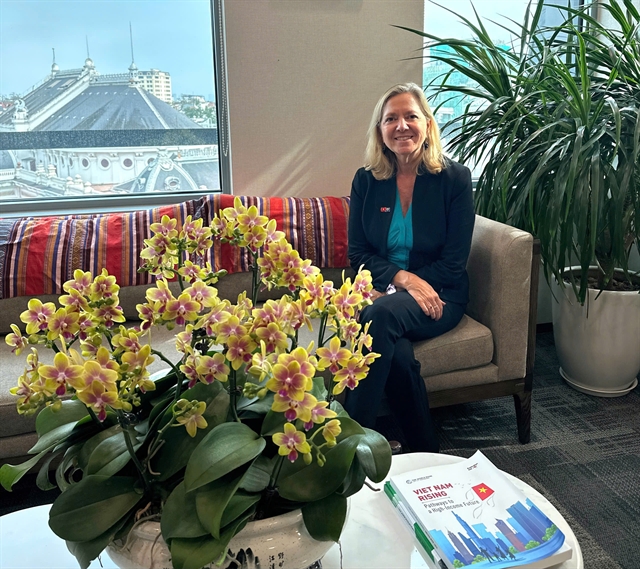 |
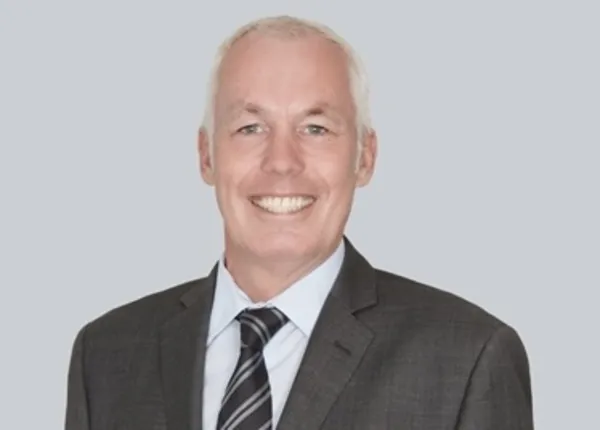
| Mariam J. Sherman, World Bank Division Director for Việt Nam, Cambodia, and Lao PDR |
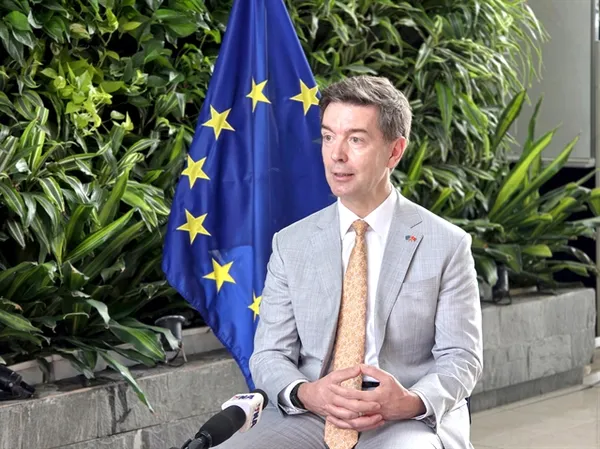
In an interview with Viet Nam News Agency, Mariam J. Sherman, World Bank Division Director for Việt Nam, Cambodia, and Lao PDR discusses the macro-economic outlook for Việt Nam in the year ahead.
How do you assess Việt Nam’s economic outlook for 2026, given the continued uncertainties in the global economy?
Việt Nam enters 2026 with strong momentum following a robust performance in 2025, just as the country begins implementing the directions set out by the recent Party Congress.
GDP growth is estimated at around 8 per cent in 2025 – its second-highest rate in 15 years. The economy performed strongly because key drivers worked together, including resilient exports, robust public and private investment, and a record tourism recovery. Additionally, FTSE Russell’s recent upgrade of Việt Nam’s stock market signals growing confidence from international investors and is set to unlock more capital.
However, the global environment remains uncertain. The World Bank projects global growth to ease to around 2.6 per cent in 2026, with trade tensions and geopolitical risks creating headwinds for export-oriented economies.
For Việt Nam, the key risk is that export momentum may slow if the trade environment becomes more restrictive. However, the country possesses critical strengths: economic stability, well-contained inflation, and low public debt. This foundation sustains investor confidence and gives the government fiscal space to invest in infrastructure, skills development, and reforms that help domestic firms scale up and create better jobs.
How can Việt Nam leverage these strengths to maintain a competitive edge in global supply chains as multinational firms continue to diversify production?
The 2025 figures tell an important story. Disbursed FDI reached a record US$27.6 billion - the highest in five years - with 83 per cent going into processing and manufacturing. This confirms Việt Nam’s central role as a global manufacturing hub.
Việt Nam’s advantages are clear: a strategic location at the heart of Asian trade routes, a strong industrial base, an extensive network of free trade agreements, and a cost-competitive and increasingly qualified workforce.
Looking ahead, sustaining this position will depend on efficient logistics, predictable regulations, and reliable access to energy. Moving up the value chain will further depend on deeper linkages between foreign-invested firms and domestic enterprises. Stronger domestic suppliers are a powerful channel for productivity growth and job creation.
The World Bank Group’s partnership with Việt Nam focuses here: sharing global knowledge and financing solutions to improve the investment climate, reduce logistics costs, expand skills, and modernise infrastructure.
How do you assess the shift of FDI into high-tech and green sectors, and what does this trend mean for Việt Nam's growth prospects?
This is a necessary step, not just a positive trend. For Việt Nam to sustain its position as a strategic FDI destination, it needs to upgrade to higher-value production rather than competing solely on cost. We are seeing a positive transition of capital into high-tech and green sectors, which aligns with the Party Congress resolution’s emphasis on a growth model driven by innovation, digital transformation, green growth, and energy transition.
This shift is a catalyst for three key changes. High tech investment deepens Việt Nam’s role in global value chains and raises productivity. Digital transformation allows firms to scale and integrate effectively with global networks. Meanwhile, green manufacturing is becoming a core requirement for investors as supply chains increasingly reflect climate commitments and energy security.
If these trends continue to strengthen, this wave of high-tech and green investment will serve as a powerful engine for resilient growth and the creation of higher-quality jobs from 2026 onwards.
As Việt Nam enters a new growth cycle in 2026, what are the critical factors for success?
Việt Nam has a strong opportunity to enter a new growth cycle in 2026, the first year of a new five-year period targeting double-digit GDP growth.
The country has a significant advantage: controlled inflation and low public debt provide the government room to respond to global uncertainty while protecting stability.
To succeed, public investment must work better - spending more efficiently, not just spending more. This requires stronger project preparation and faster implementation to close gaps in energy, transport, and logistics, which directly affect competitiveness.
Simultaneously, the business environment needs continued improvement. Investors need predictability: clear rules and transparent procedures. The Party’s Resolution 68 shows Việt Nam’s commitment in creating an enabling environment for the private sector to thrive.
Finally, human capital is crucial; the next growth model requires higher skills. Investing in people is as important as investing in infrastructure. Underpinning all of this are strong institutions - the “breakthrough of breakthroughs” - which ensure strategies turn into results.
On the occasion of the Year of the Horse, what message do you have for the Vietnamese people?
As Việt Nam prepares to welcome Tết (Lunar New Year), I extend my warmest wishes to the people of Việt Nam for a happy, healthy, and prosperous Lunar New Year of the Horse. This is a moment of optimism as Việt Nam steps into a new rising era, with a clear vision for a modern, resilient, and high-income economy with better jobs and opportunities for all. The World Bank Group is proud to be a trusted partner of Việt Nam, and we look forward to deepening our co-operation in 2026 to turn ambition into results. VNS
Talking Shop
 Talking Shop
 Talking Shop
 Talking Shop
 Talking Shop
 Talking Shop
 Talking Shop
 Talking Shop
 Talking Shop
 Talking Shop
 Talking Shop
 Talking Shop
 Talking Shop
 Talking Shop
 Talking Shop