 Talking Shop



Sơn La holds second coffee festival, targeting stronger businesses in future
1.
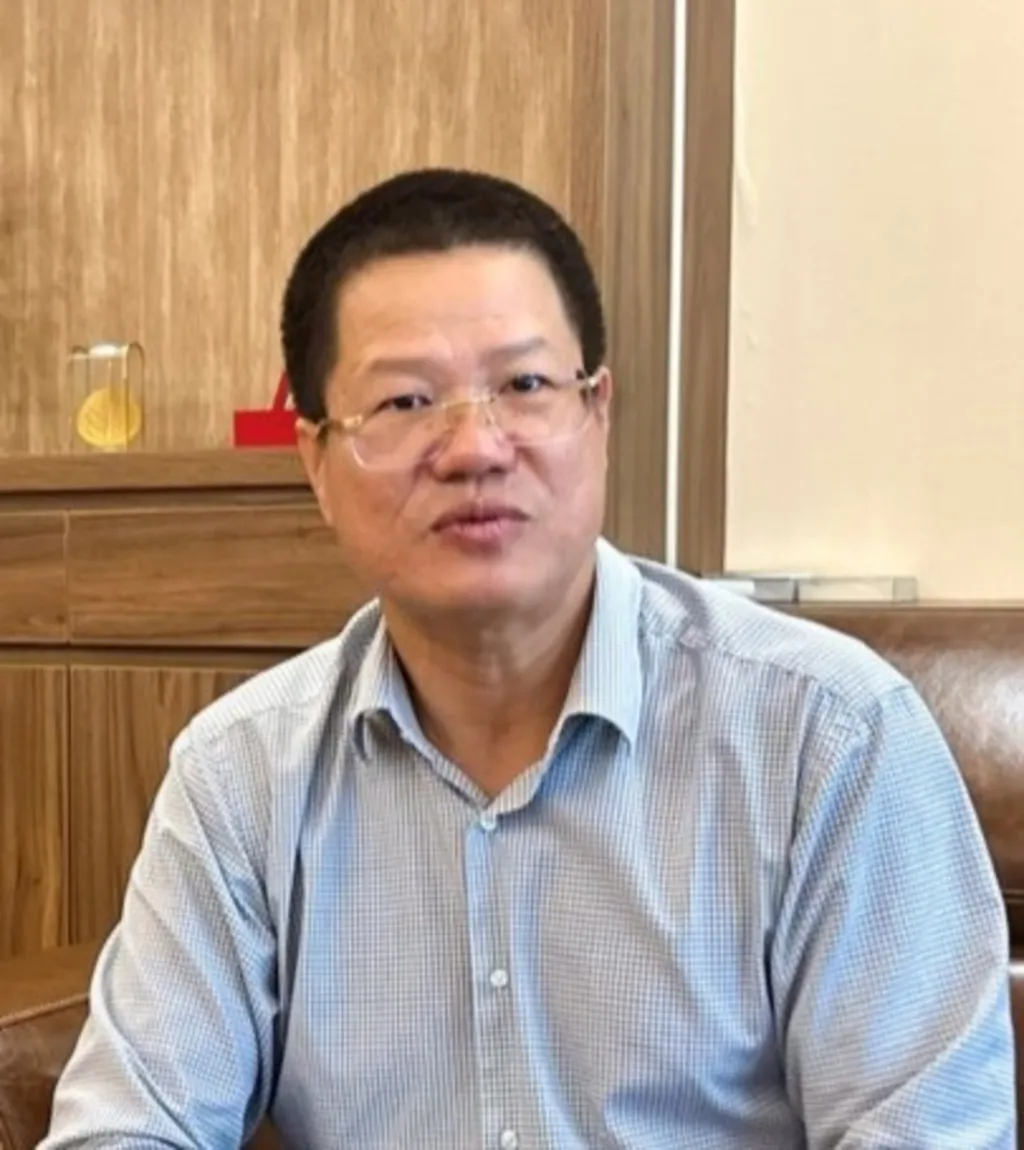 |
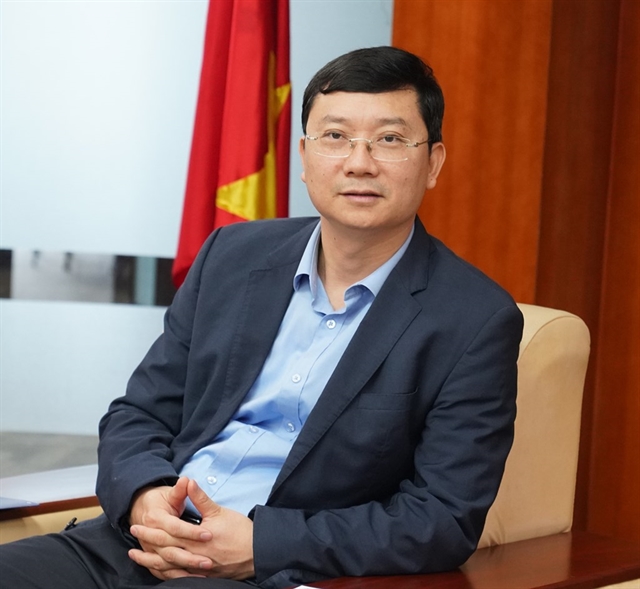
| Lilama General Director Nguyễn Văn Hùng. VNA Photo Thu Hằng |
To realise the revised Power Development Plan VIII target of bringing around 15 liquefied natural gas (LNG) power projects into operation before 2030, the power sector requires special mechanisms and strong policy support.
Speaking to the Vietnam News Agency (VNA), Nguyễn Văn Hùng, general director of Vietnam Machinery Installation Corporation (Lilama), one of Việt Nam’s leading engineering and industrial construction firms, shared his views on how to promote major LNG power projects.
Nhơn Trạch LNG Power Plants 3 and 4 were selected as the first LNG power project under the revised Power Development Plan VIII. Even though the EPC contractor selection was the fastest ever, it still took nearly one year, while construction lasted about four years. Do current bidding rules create difficulties for Vietnamese contractors?
The current Law on Bidding and related regulations clearly set out bidding methods and selection criteria. However, in practice, these rules are difficult to apply in Việt Nam’s specific conditions. For example, Lilama was the EPC contractor for Nhơn Trạch 2, which began commercial operation in 2011, about 14 years ago. For current LNG power projects, if bidding rules require EPC contractors to have experience from similar projects within the past five to 10 years, Lilama struggles to meet those criteria.
As a result, for the Nhơn Trạch 3 and 4 project, completed at the end of 2025, Lilama had to form a consortium with a foreign partner, even though it has the technical capacity to carry out the EPC package independently. In addition, requirements related to contract value and contractor asset size also limit Vietnamese firms. This forces local contractors to partner with foreign companies in projects such as Nhơn Trạch 3 and 4, Quảng Trạch 2 and Ô Môn 4.
Most Vietnamese contractors, including Lilama, have relatively small capital bases. Lilama’s charter capital is capped at VNĐ900 billion (around US$34 million). The company has proposed increasing its capital several times, but these proposals have not yet been approved.
Lilama is listed on UPCoM, but has not used this channel to strengthen its financial capacity. Does the company have a plan to improve its financial strength?
Lilama proposed a capital increase as early as 2016 under a development plan approved by the Ministry of Construction. During equitisation, the company aimed to raise capital from VNĐ750 billion to VNĐ1.5 trillion by issuing shares and attracting foreign investors, but this plan did not succeed.
One reason is that Lilama’s main assets are its workforce and brand. Domestic investors often see this as risky, as the firm does not own large real estate assets. Investors usually prefer companies with land and tangible assets.
Foreign investors, meanwhile, are less interested in co-managing a business in a sector with modest profits and high risks. In addition, State ownership remains controlling, limiting decision-making power for foreign shareholders.
Lilama believes its financial capacity issue could be addressed if the Government supports the development of leading domestic enterprises to compete with foreign contractors in key national projects. The company hopes to be allowed to increase capital through additional State investment or by retaining profits to reinvest as capital.
Does Lilama plan to take part in upcoming LNG projects through 2030?
LNG power will be a key part of Việt Nam’s energy transition, meeting green energy goals while ensuring energy security. Lilama is therefore focused on training engineers and workers to master modern LNG power technologies. Since 2006, when Lilama was EPC contractor for Cà Mau 1 and 2, we have trained many young engineers who have gained hands-on experience across several projects. This allows us to adapt quickly to new LNG technologies.
Lilama was the EPC contractor for major domestic gas-fired power projects, such as Nhơn Trạch 1 and 2 and Cà Mau 1 and 2. Through these projects, we built strong EPC experience, which is our biggest advantage. For LNG projects under the revised Power Development Plan VIII, the main difference is more advanced technology. Lilama can adapt quickly. This sets us apart from other domestic companies.
For the Nhơn Trạch 3 and 4 project, Lilama handled about 40 per cent of the EPC package. Although the plant uses the world’s most advanced gas turbine technology and requires extremely precise alignment of a 70-metre turbine-generator system, Lilama completed the work to a high standard.
What should the Government do to help Vietnamese companies compete at home and build their reputation abroad?
The Law on Bidding includes policies to prioritise domestic contractors, but implementation needs to be stronger. Law 90/2025/QH15, passed in June 2025, allows investors to directly appoint contractors for special and key national projects that require fast progress. Investors remain responsible for transparency and are subject to post-inspection.
However, many investors are hesitant to apply this mechanism. Lilama hopes authorities will support investors in appointing contractors based on proven track records and completed projects.
For companies, investors could assign tasks with clear requirements and agreed profit margins. This approach is already used in countries like the US. It shortens contractor selection time, controls costs, and can be more effective than formal bidding procedures. — VNS
Talking Shop
 Talking Shop
 Talking Shop
 Talking Shop
 Talking Shop
 Talking Shop
 Talking Shop
 Talking Shop
 Talking Shop
 Talking Shop
 Talking Shop
 Talking Shop
 Talking Shop
 Talking Shop
 Talking Shop