 Talking Shop


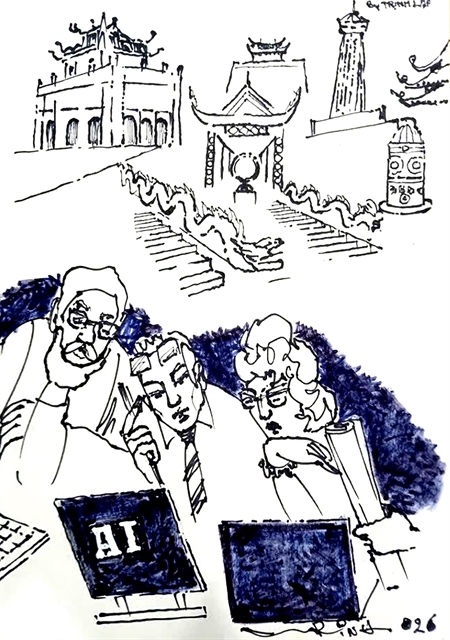
Dream of the visible 1300 years of history in the heart of Hà Nội starts to take shape
1.
After achieving significant growth over the past few decades, Việt Nam has set a target of becoming a high-income country by 2045. However, that ambition faces mounting challenges as global uncertainty deepens.
 |
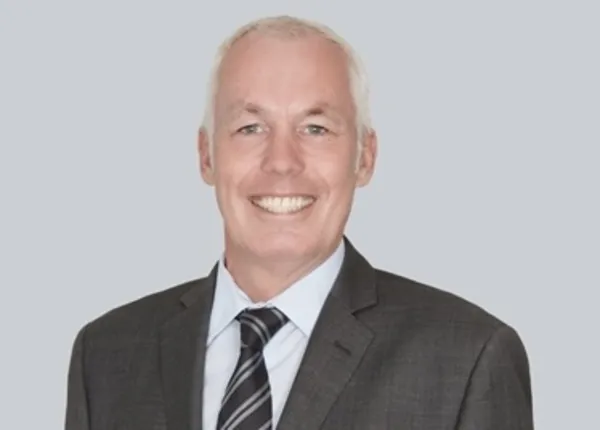
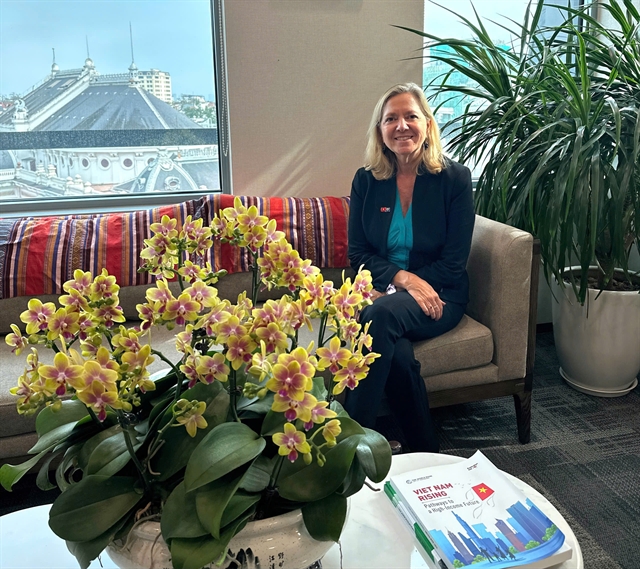
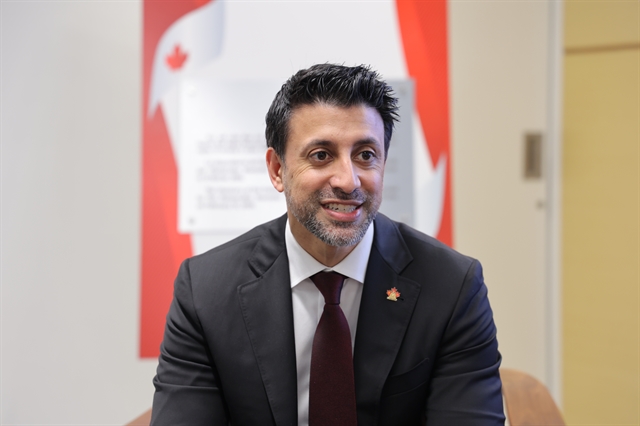
| Mariam J. Sherman, World Bank’s division director for Việt Nam, Cambodia and Lao PDR. — VNS Photo |
Mariam J. Sherman, World Bank’s division director for Việt Nam, Cambodia and Lao PDR; and Nguyễn Xuân Thành, a lecturer at the Fulbright School of Public Policy and Management discuss the opportunities Việt Nam could still seize amid the global crisis to achieve its ambitious goal during the World Bank’s recent launch of the Việt Nam Economic Update.
Mariam J. Sherman, World Bank’s division director for Việt Nam, Cambodia and Lao PDR
Việt Nam has followed a very successful development trajectory but its ambitions are also very high, particularly the goal of becoming a high-income country. In your view, how does the World Bank assess Việt Nam’s development priorities over the next few years? And given that ambition, do you see any risks associated with achieving it?
I think any of us privileged to work in Việt Nam are struck by the remarkable journey the country has been on. You can't help but be somewhat overawed by its successes. If you consider the past number of years, there has been consistently strong economic growth over a long period, alongside a massive reduction in poverty. Extreme poverty in the country is now below 1 per cent, down from very high rates years ago.
But, as you said, we are at an interesting point, particularly given Việt Nam’s ambition to become a high-income economy by 2045. What we see is a very open economy with significant dependence on global value chains. At the same time, uncertainty in the global environment and increasing geopolitical fragmentation are creating additional risks for that model going forward.
So I think much of the emphasis, as highlighted in the World Bank’s Việt Nam Economic Update, is on addressing some of the domestic vulnerabilities.
One area is the highly leveraged corporate sector and the implications that may have, as well as how the Government manages that element of risk within the economy.
Another striking issue is the bifurcation between the FDI economy, if we could call it that, and domestic firms.
When I refer to domestic firms here, I mean all domestic firms. I'm not talking about the large conglomerates, but rather the many formal but small, or informal, businesses in Việt Nam. It is important to consider how they can receive investment to better connect with and benefit from FDI, while also becoming a future engine of growth.
I think this may be a risk, but it is also an opportunity for Việt Nam in the next phase of development. We see the country’s progress to date as an excellent story. Its resilience is coming through.
Even in this year’s data, we can see resilience but there are also risks and vulnerabilities ahead. There is also the massive reform agenda we are all witnessing, which I think is generational in nature. It is truly impressive. But the key question is whether it can now be effectively implemented. The focus must be on implementation and driving those reforms forward.
 |
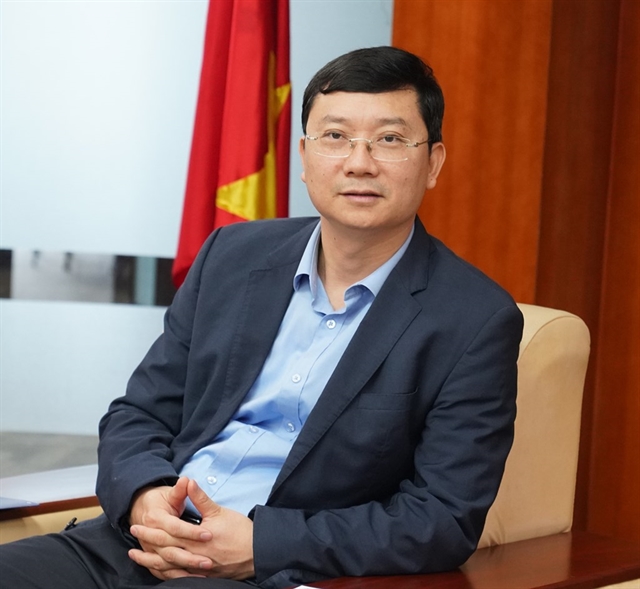
| Professor Nguyễn Xuân Thành, a lecturer at the Fulbright School of Public Policy and Management. — Photo courtesy of Fulbright School |
Professor Nguyễn Xuân Thành, a lecturer at the Fulbright School of Public Policy and Management
When we look at the implementation challenges, which would be the hardest for Việt Nam, especially based on your experience? How can the Government ensure that the regulations, decrees and laws being implemented actually lead to results on the ground?
My view is that the greatest challenge remains policy design, as well as the formulation and selection of public investment projects.
On the policy front, the challenge is still to focus on market-supporting institutions.
For public investment, the priority should not be rushing cost-benefit analysis, but rather screening for efficient and economically viable public investment projects.
In terms of implementation, the challenge is how to reconcile the top-down and bottom-up processes of policy and project execution.
Another key challenge, particularly for public investment programmes, is how to continue reforming the model of project management units (PMUs). For most public investment projects, procurement processes will still have to be carried out under the PMU model, whether under central ministries or local governments.
As Việt Nam experiments with special mechanisms for PMUs, granting them greater authority while also improving accountability and checks and balances will be essential. That means allowing not only top government agencies, but also the wider public, to have a voice in supervising implementation carried out by PMUs, especially those under provincial administrations.
So, in my view, those are the key challenges facing Việt Nam over at least the next five years.
You've highlighted what Việt Nam can do domestically. What about externally? Do you see any particular risks where Việt Nam is more exposed and what policymakers should consider?
I think, first of all, there is a very high level of political consensus that, despite rising geopolitical tensions and global uncertainty, Việt Nam will remain a very open economy. The country will not close itself off. Việt Nam’s economy will continue to depend heavily on FDI and exports. That also means a willingness to accept greater uncertainty by becoming not just as open as before, but potentially even more open.
I think Việt Nam will continue to maintain a fairly liberal foreign direct investment environment. Of course, the aim is to move up the value chain. That means there may no longer be overly generous policy incentives, particularly tax or land incentives, for FDI projects. Instead, the policy focus is to use the current public investment drive to give a major push to infrastructure development.
For Việt Nam, the strategy is still to attract FDI, but not through traditional fiscal incentives. Instead, the country will seek to offer better infrastructure and stronger support services for investors.
I think Việt Nam will remain highly proactive in attracting more FDI, not only from advanced economies but also from BRICS countries and other emerging market economies.
Secondly, there is the issue of financial liberalisation alongside stronger financial regulation. I do see confidence within the Government that it will pursue more ambitious international and cross-border financial liberalisation to help develop the financial system and attract further international capital flows. That includes not only foreign direct investment but also portfolio investment.
The aim is both to provide more financing opportunities for the private sector and public investment programmes, and to develop not only the domestic banking sector but also the capital market.
The challenge, however, is how to pursue liberalisation while also strengthening regulatory capacity, improving implementation, designing market-based financial regulations and enhancing supervisory capabilities at both the State Bank of Vietnam and the Ministry of Finance.
So Việt Nam must pursue liberalisation and stronger regulation at the same time. — BIZHUB/VNS
Talking Shop
 Talking Shop
 Talking Shop
 Talking Shop
 Talking Shop
 Talking Shop
 Talking Shop
 Talking Shop
 Talking Shop
 Talking Shop
 Talking Shop
 Talking Shop
 Talking Shop
 Talking Shop
 Talking Shop