 Talking Shop
Việt Nam, EU and Belgium seek deeper, practical cooperation
1.
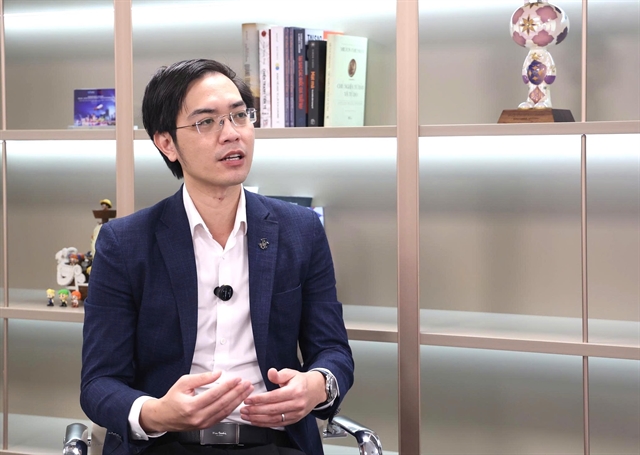 |
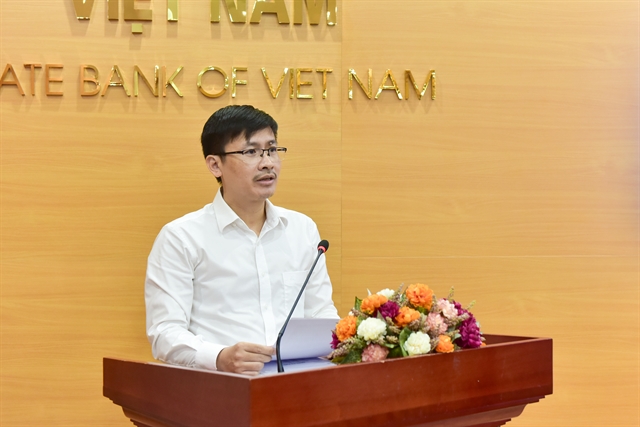
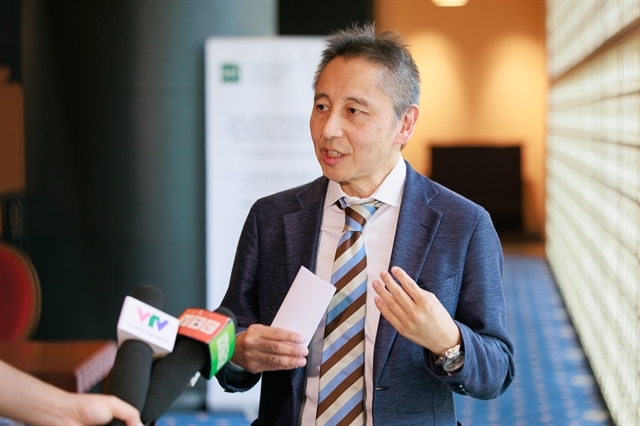
| Associate Professor Nguyễn Hữu Huân, vice chairman of the Executive Board of the Việt Nam International Financial Centre in HCM City. — VNA/VNS Photo |
The June 8 issuance of Resolution 10-NQ/TW by the Politburo on developing the foreign-invested economic sector marks a significant shift in Việt Nam's approach to attracting foreign investment.
For the first time, the resolution recognises the foreign-invested sector as an integral part of the national economy and a key driver of growth, innovation and international integration.
Against this backdrop, the Việt Nam International Financial Centre (VIFC) is expected to play a pivotal role in attracting, connecting and channelling high-quality global capital into the country.
In an interview with the Vietnam News Agency, Associate Professor Nguyễn Hữu Huân, vice chairman of the Executive Board of the Việt Nam International Financial Centre in HCM City, discussed how the new policy direction could reshape Việt Nam's investment landscape and strengthen the country's ambition to become a regional financial hub.
What role does Resolution 10 assign to the VIFC as Việt Nam shifts from attracting foreign investment by quantity to building a high-quality investment ecosystem?
Resolution 10 does more than seek to increase international capital inflows. It reflects a fundamental shift in development thinking, moving from a focus on the volume of foreign investment to building a strategic national investment platform.
A notable feature of the resolution is that it places the foreign-invested sector within a long-term development ecosystem that includes the capital market, the International Financial Centre, free trade zones, innovation, data infrastructure, logistics and the growth of domestic enterprises.
This signals that Việt Nam is no longer competing solely as a manufacturing destination. It also aims to become a base for higher value-added activities, such as research and development, regional headquarters, business services and international financial operations.
Such a strategy will enable Việt Nam to participate more deeply in global value chains while attracting investment into innovation and knowledge-intensive industries, thus enhancing the country's position in the global economy.
In this context, the Việt Nam International Financial Centre, particularly in HCM City, will play a critical role in attracting the next generation of foreign investment. With the special mechanisms and advanced institutional framework now being developed, the VIFC is expected to attract international capital and facilitate new models of capital mobilisation and allocation that create greater value for the economy.
We believe these mechanisms will help Việt Nam attract more high-quality investments, while gradually establishing itself as a regional gateway for global capital flows into Southeast Asia and Asia.
Many foreign corporations have established manufacturing operations in Việt Nam, but high-value financial activities such as fundraising, fund management and asset management are still largely handled in financial centres like Singapore and Hong Kong. How can the VIFC help retain these activities in Việt Nam?
Việt Nam now has the National Assembly's Resolution 222/2025/QH15 on the International Financial Centre, along with eight related Government decrees. These provide a highly specialised institutional framework for attracting capital, particularly high-quality investment.
Although Việt Nam has successfully attracted large volumes of foreign investment, especially in manufacturing, many financial services associated with those investments continue to be carried out in regional financial centres such as Singapore, Hong Kong and Dubai. As a result, much of the value added by financial services linked to investment in Việt Nam has remained overseas.
Việt Nam is a highly open economy. When businesses generate profits, part of those financial flows continues to circulate through overseas financial centres rather than being reinvested or serviced domestically.
The establishment of the VIFC presents an opportunity not only to attract investment for production and business activities, but also to retain more of the financial services associated with those capital flows within Việt Nam. This would increase added value for the economy while supporting the development of the domestic financial market.
Financial services typically generate significant added value. The VIFC is not simply a special institutional model; it is also intended to become a platform for developing new financial products, thus increasing the depth of Việt Nam's financial system. A deeper financial market will enable capital to circulate more efficiently and generate greater economic value.
Instead of arranging insurance, cross-border payments, capital management, fund management or asset management overseas, international financial institutions and foreign-invested enterprises will be able to conduct these activities directly through the VIFC. This would allow Việt Nam to retain a greater share of added financial value.
We expect that as the country's financial ecosystem becomes more comprehensive, these capital flows will increasingly remain in Việt Nam to support re-investment, while allowing investors access to deeper and more sophisticated financial services.
As Việt Nam gradually develops into a regional international financial centre, I believe more capital will remain in the country and generate greater value through re-investment.
Many believe that an international financial centre requires not only favourable policies, but also a sufficiently deep and competitive financial market. What strengths does Việt Nam already possess, and what areas still need improvement?
One of Việt Nam's greatest advantages is its strong real economy and manufacturing base. This distinguishes it from some regional financial centres such as Singapore, where financial services dominate while manufacturing is relatively limited.
Việt Nam has become an increasingly important manufacturing hub in the region. At the same time, it has a large workforce with steadily improving skills and growing English language proficiency. These are important foundations for developing financial services in the future.
The country's geographical location is another advantage. Việt Nam is well positioned to support international trade and logistics, with major transshipment ports, such as Cái Mép-Thị Vải, providing important infrastructure for the future development of the International Financial Centre.
However, Việt Nam's financial market remains relatively shallow, and the economy still relies heavily on the banking system. Around 70-80 per cent of capital is currently supplied through bank credit. As a result, the financial system remains insufficiently diversified, while the medium- and long-term capital market is still at an early stage of development and has yet to fully meet the needs of the economy.
To attract international and high-quality capital, Việt Nam must continue developing its capital market, deepen the financial system and broaden its range of financial products. Expanding new financial instruments, particularly derivatives, will be an important factor in improving the competitiveness of the country's financial market.
You previously said the VIFC aims not only to attract capital into Việt Nam, but also to become a regional hub for capital flows. After around six months of preparation and ecosystem development, what progress has been made?
Although the VIFC has officially been operating for around six months, we are still completing the necessary conditions for full implementation. Licensing of members will begin once the operating regulations are finalised, and we hope this process will be completed soon.
At the same time, we have focused on building the foundation of the International Financial Centre in HCM City. The Executive Board has adopted a development strategy built around four pillars: aviation finance, maritime finance, a fintech hub and an international interbank system.
Several key components have already been launched. The Aviation Finance Centre opened in February, followed by the Fintech Hub in April and the maritime finance ecosystem on May 21.
Alongside these sector-specific pillars, we have worked closely with domestic and international financial institutions to build the necessary ecosystems and prepare for the centre's next phase of operations.
Overall, both local and international financial institutions have shown strong interest in participating. Once the operating regulations are approved, members will be able to begin operations immediately, helping create a relatively complete financial ecosystem. This will strengthen the VIFC's attractiveness and open new channels for international capital to flow into HCM City and Việt Nam.
Resolution 10 sends a strong message about Việt Nam's determination to attract high-quality investment and build a more competitive investment environment. What message would you like to convey to international investors and financial institutions?
I believe HCM City will become a highly attractive destination for international investors and financial institutions in the years ahead. We are not only introducing special policies for the International Financial Centre, but are also building a comprehensive financial ecosystem that will support financial institutions as they expand their operations and pursue new growth opportunities through the VIFC.
Beyond attracting international capital, the centre also aims to draw investment into innovation and attract high-quality talent from across the region. These will become important resources for creating new value in the economy and enabling Việt Nam to integrate more deeply into global value chains.
We also hope international financial institutions will come to Việt Nam not only as investors, but as long-term partners in building and developing the International Financial Centre. I believe the participation of the global financial community will strengthen the role and standing of the VIFC, not just for Việt Nam but for the wider region. — VNS
Talking Shop
 Talking Shop
 Talking Shop
 Talking Shop
 Talking Shop
 Talking Shop
 Talking Shop
 Talking Shop
 Talking Shop
 Talking Shop
 Talking Shop
 Talking Shop
 Talking Shop
 Talking Shop
 Talking Shop