 Talking Shop
NA President sets June 2027 deadline for APEC projects, rules out delays, quality cuts and violations
1.
 |
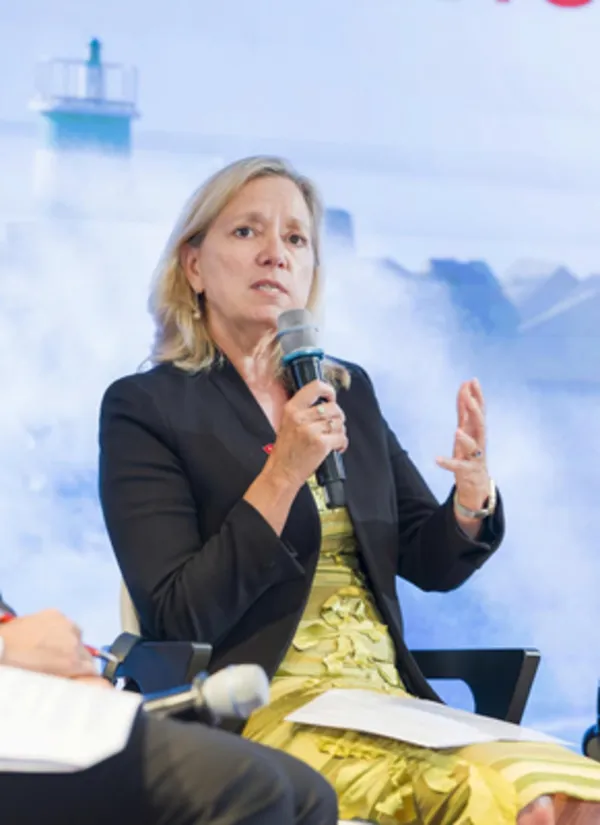
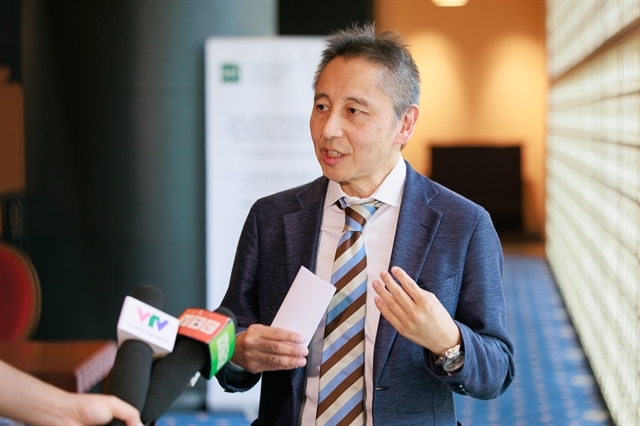
| Executive Director of the EU-ASEAN Business Council Chris Humphrey. — Courtesy photo |
Illicit trade continues to pose a growing threat to government revenues, public safety and supply-chain integrity across Southeast Asia, despite ASEAN's long-standing efforts to deepen economic integration. Chris Humphrey, executive director of the EU-ASEAN Business Council, speaks to Việt Nam News reporter Mai Hương about illicit trade in ASEAN, Việt Nam's strategic role in regional supply chains and the importance of intelligence-sharing.
ASEAN has long talked about deeper economic integration, but illicit trade remains widespread across sectors from fuel and tobacco to pharmaceuticals and agriculture. What are the biggest structural weaknesses that still allow illicit trade to flourish in ASEAN?
The biggest structural weakness is the lack of regional coordination among ASEAN member states across several areas. Customs enforcement remains fragmented, border controls and regulations are unevenly applied, and risk-management and intelligence-sharing systems are still not sufficiently integrated.
These create weak links in regional supply chains that illicit operators can exploit with relative ease. They exploit regulatory gaps between markets, porous land and maritime borders, free trade zones and the rapid growth of e-commerce and informal distribution channels. In many cases, criminal networks operate faster and more seamlessly across borders than enforcement systems do.
Another critical gap is the under-utilisation of digital tools by enforcement authorities. Illicit networks are highly tech-savvy, making use of encrypted messaging channels, social media platforms and online marketplaces to distribute illicit goods.
Current enforcement measures are simply inadequate, and government authorities need to better integrate AI-powered technology, advanced analytics, digital traceability systems and real-time intelligence-sharing mechanisms into enforcement operations.
Việt Nam is one of ASEAN's fastest-growing manufacturing hubs. How important is its role in securing regional supply chains?
Việt Nam plays a highly strategic role in ASEAN’s push to strengthen supply chains and combat illicit trade. As a major manufacturing hub, Việt Nam sits at the centre of many regional trade and logistics flows, making it a frontline player in illicit trade prevention.
In our latest report on illicit tobacco in ASEAN, Việt Nam, alongside Malaysia and Singapore, is identified as a key transit hub for illicit cigarettes, supported by extensive land border crossings and maritime trade routes. This would naturally apply to other illicit goods, not just cigarettes, facilitating broader illicit trade flows across the region.
Việt Nam has made substantial progress in strengthening enforcement against smuggling, counterfeit goods and trade fraud. In 2024, authorities handled nearly 18,000 cases, with confiscated goods exceeding VNĐ135 trillion (US$5.1 billion) in value – a 151 per cent increase from the previous year.
Việt Nam has also invested more heavily in risk-based customs inspections, digital customs systems and tighter monitoring of high-risk trade corridors, including along the Việt Nam-Laos and Việt Nam-Cambodia borders.
These efforts will certainly strengthen ASEAN’s broader supply chain resilience and reinforce confidence in the region as a trusted manufacturing and investment destination. ASEAN’s supply chains are deeply interconnected, and stronger enforcement in Việt Nam has positive spillover effects across neighbouring markets.
As businesses worry that tighter controls may hamper trade, how can ASEAN crack down on illicit trade while keeping goods moving efficiently?
Our key proposal is to strengthen institutional coordination through a more consolidated, multi-stakeholder platform focused on illicit trade prevention. The idea is not to create more bureaucracy, but to make enforcement faster and more consistent across ASEAN.
Stronger coordination would help streamline and harmonise border controls, improve regulatory coherence and allow authorities to act more quickly and effectively. This includes developing common risk indicators, shared Standard Operating Procedures (SOPs), interoperable digital systems and stronger intelligence-sharing among customs and enforcement agencies.
By standardising approaches and improving data visibility across borders, authorities can better target high-risk shipments while allowing legitimate trade to move more efficiently.
Ultimately, illicit trade prevention and trade facilitation should not be seen as competing objectives. Secure, transparent and predictable trade environments are exactly what legitimate businesses and investors are looking for.
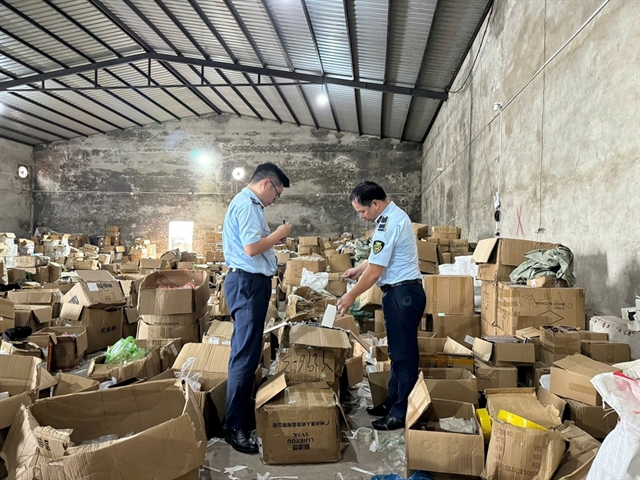 |
| Market surveillance officers inspect a warehouse in Móng Cái 3 Ward, Quảng Ninh Province, during an enforcement operation. — Photo bnews.vn |
Which sectors face the greatest illicit-trade risks in Việt Nam today, and what makes them particularly vulnerable?
Our most recent report focused on illicit trade in tobacco products across the ASEAN region. A future report will look more broadly at illicit trade flows in other products. But all sectors face similar problems: illicit trade is on the rise, fuelled by high tax and excise rates, uneven application of regulations, a lack of coordinated enforcement action and weak criminal deterrence mechanisms.
For Việt Nam, we estimated that government fiscal losses from illicit tobacco products amount to around $1 billion over the last two years, with the market share for illicit cigarettes reaching more than 16 per cent.
ASEAN countries are at different stages of digitalisation and customs modernisation. How feasible is meaningful regional data-sharing and intelligence cooperation in the near term?
This is a readily achievable objective that ASEAN enforcement agencies can and should put into action immediately. The Council has long pushed for greater intelligence sharing both between customs authorities across the ASEAN region and between the public and private sectors.
It is only through increased intelligence sharing that the cross-border nature of illicit trade can truly be tackled. Illicit trade is a regional problem, and no one country can tackle the problem alone.
Informal mechanisms already exist, and there are annual joint customs control exercises. But no formal mechanism for regular information sharing truly exists. The Council has been working on guidelines for the sharing of intelligence between customs authorities and the private sector, a concept for note for which was endorsed at the recent ASEAN Customs Directors-General meeting in Phnom Penh.
We will be working closely with the customs authorities to turn that concept note into formal guidelines in order to progress the issue of greater intelligence sharing going forward.
Given its impact on public revenues, investment and supply chains, is illicit trade being treated with sufficient urgency in ASEAN?
Across the region, government action has not quite caught up with the scale of illicit trade and its continued growth. More concerted action needs to be taken, both by individual ASEAN member states and by ASEAN as a collective.
Illicit trade is, unfortunately, on the rise. The COVID years saw an unprecedented increase in illicit trade across all sectors, and the boom in e-commerce is further fuelling its rise. This is a transnational crime which is linked to broader criminal activity. And it is an activity that undermines the formal legitimate economy, robs governments of much-needed revenue and harms public health and safety.
It is essential that all governments in the region pay more attention to stopping illicit trade in all its forms. This means putting more emphasis on enforcement activities, better application of IPR laws, strengthening the penalties associated with illicit trade and improving cross-border information sharing and coordination. — VNS
Talking Shop
 Talking Shop
 Talking Shop
 Talking Shop
 Talking Shop
 Talking Shop
 Talking Shop
 Talking Shop
 Talking Shop
 Talking Shop
 Talking Shop
 Talking Shop
 Talking Shop
 Talking Shop
 Talking Shop