 Economy



Vincom Retail Partners with South Korean Premium Buffet Giant QooQoo
1.
|
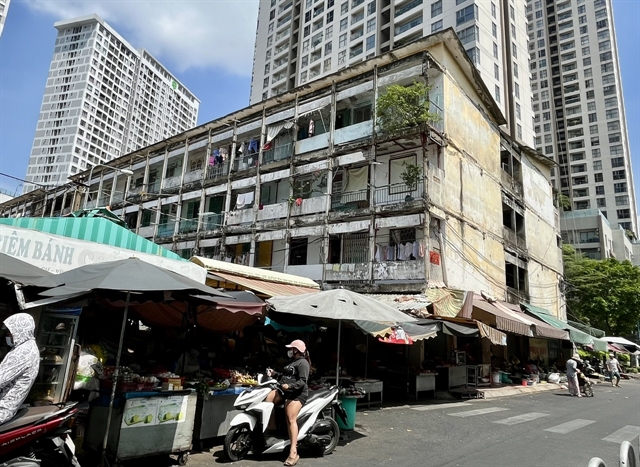
| An ageing apartment building stands alongside newer high-rises in HCM City. Proposed rules linking building use periods to construction lifespan could affect how apartments are valued. — VNS Photo Bồ Xuân Hiệp |
HCM CITY — Việt Nam’s plan to link the usable life of apartment buildings to their construction lifespan could change how apartments are valued, making the age and condition of buildings more important in a market where location and land value have traditionally been key factors.
The Government has recently asked the Ministry of Construction to develop clearer rules on apartment building lifespans as part of revisions to the Housing Law.
The rules would cover what happens when a building reaches the end of its usable life, as well as the rights and obligations of apartment owners.
The move does not mean that apartment ownership would automatically end after a fixed number of years.
A policy direction issued in July said the use period of newly built apartments should be linked to the lifespan of the building, while protecting owners’ property rights and allowing them to contribute to rebuilding costs when necessary.
The proposed changes could affect how buyers, property valuers and banks assess apartments, especially in the secondary market.
Võ Hồng Thắng, deputy general director of property consultancy DKRA Group, said clearer rules on a building’s lifespan would give buyers more information to consider depreciation when deciding on a price.
An apartment that has been occupied for 10 or 20 years could be valued differently from a newer apartment of the same size in the same area, depending on its condition and remaining usable life.
Building age and land value
An older building does not necessarily mean that the property will lose value at the same rate.
Real estate expert Lê Quốc Kiên told Việt Nam News and Law that an apartment should be considered as both the value of the building and the rights linked to the land underneath it.
This means redevelopment potential could become a more important factor in apartment prices.
An old apartment building in a central area, where land is scarce and redevelopment is possible, could still retain significant value. An apartment of the same age in an area with weaker demand or limited redevelopment potential could face greater pressure on its value.
The proposed rules could therefore lead to more factors being considered when apartments are valued, including the building’s age, remaining usable life, maintenance costs, land value and redevelopment potential.
For banks, the remaining usable life of a building could also become more important when apartments are used as collateral for loans.
Lessons from other Asian markets
|
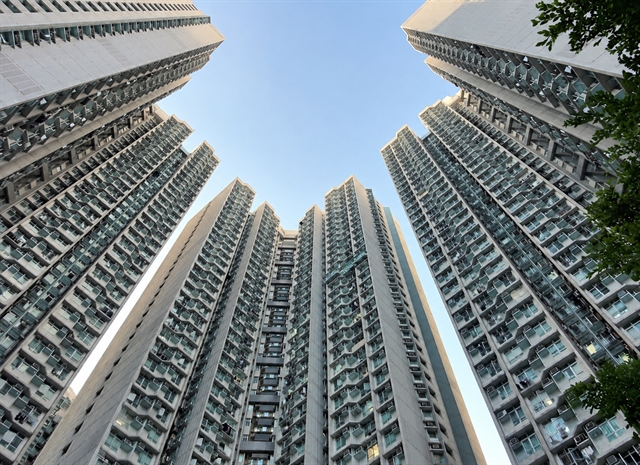
| High-rise residential buildings in Hong Kong, where ageing private housing and redevelopment have become growing policy challenges. — VNS Photo Bồ Xuân Hiệp |
Other Asian markets have taken different approaches to ageing residential buildings.
Hong Kong (China), where the number of buildings aged 50 years or more is rising by more than 500 a year, has introduced incentives to encourage redevelopment.
From September, a five-year pilot scheme will provide an additional 20 per cent of premium-free gross floor area for qualifying residential redevelopment projects involving buildings at least 50 years old in seven designated older districts.
The Hong Kong (China) example shows that an ageing building can still retain value because of the redevelopment potential of its site, rather than simply losing value as it gets older.
Singapore’s public housing system generally uses 99-year leases, making the remaining lease an important part of housing tenure.
Some older estates can also be redeveloped under Government programmes, with eligible residents offered replacement flats, including options for new 99-year leases.
Mainland China takes a different approach by separating residential buildings from residential land-use rights. Under its Civil Code, the right to use residential construction land is automatically renewed when the term expires.
Malaysia has also been working on an urban renewal framework for ageing and deteriorating properties.
The proposed legislation aims to make collective redevelopment easier while protecting owners’ interests.
The Government said in 2025 that it planned to set the consent threshold for urban renewal projects at 80 per cent.
The systems are different, but they point to the same issue: the physical building loses value over time, while the value of the land underneath it can increase.
Location still matters in Việt Nam
In Việt Nam, there is still no simple relationship between the age of an apartment building and its price.
Data cited by property platform Batdongsan.com.vn showed that of more than 620 apartment projects it tracks, about 594 recorded year-on-year price increases, while around 29 recorded declines.
Đinh Minh Tuấn, the platform’s southern regional director, said that location, infrastructure, construction quality, management and the reputation of a project remained important factors in apartment prices.
This means the proposed rules are unlikely to create a simple formula in which older apartments automatically become cheaper.
Instead, buyers may pay more attention to the remaining useful life of a building.
An older apartment may have a lower purchase price but higher maintenance costs, fewer facilities or weaker demand from tenants. A newer building may command a higher price because of its condition, facilities and lower maintenance costs.
Redevelopment potential matters
For Việt Nam, the longer-term issue may be what happens when an apartment building reaches the end of its useful life.
Current regulations require buildings to be inspected when they reach their designed lifespan or become unsafe.
The proposed changes would provide clearer rules on owners’ rights and financial obligations when rebuilding is required.
If owners retain rights linked to the land and there is a workable way to finance and carry out rebuilding, an old apartment could still retain considerable value even as the building itself loses value.
But if redevelopment is delayed by financing problems, planning restrictions or disagreements among owners, that potential value may be difficult to realise.
For Việt Nam’s rapidly growing cities, apartment values could therefore depend on more than location and floor area.
Building age, remaining usable life, maintenance costs, land value and redevelopment potential could become increasingly important factors in determining what an apartment is worth, experts said. — VNS
Economy
 Economy
 Economy
 Economy
 Economy
 Economy
 Economy
 Economy
 Economy
 Economy
 Economy
 Economy
 Economy
 Economy
 Economy