 Economy



Vincom Retail Partners with South Korean Premium Buffet Giant QooQoo
1.
|
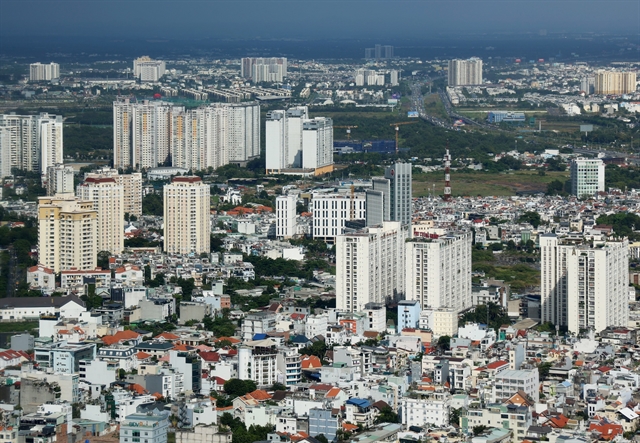
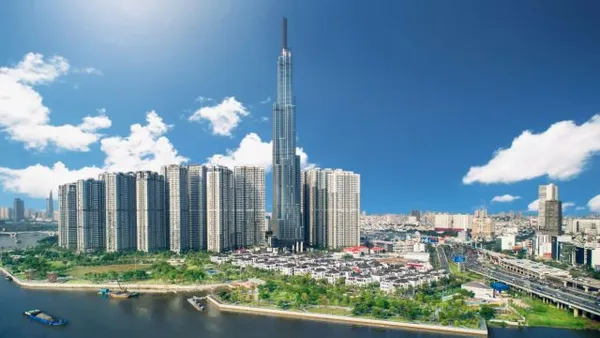
| A corner of HCM City. Việt Nam is considering restricting foreign home ownership to apartments while removing provisions allowing foreign organisations and individuals to own landed houses. — VNA/VNS Photo Hồng Đạt |
HÀ NỘI — Việt Nam is considering restricting foreign home ownership to apartments under a draft revision of the Law on Housing that would remove provisions allowing foreign organisations and individuals to own landed houses.
Under the existing rules, which eligible foreigners can own both apartments and landed houses within housing development projects, subject to limits on ownership numbers and locations.
The latest draft released on September 13 stipulated that foreign organisations operating in Việt Nam and foreign individuals permitted to enter the country would be allowed to buy or lease-purchase commercial apartments from project developers, as well as receive eligible apartments as gifts or inherit them.
Of note, the draft no longer allows foreigners to own landed houses.
The Ministry of Construction said that the change is intended to ensure consistency with the Resolution 21-NQ/TW adopted by the Communist Party of Việt Nam's Central Committee on July 28. Under the resolution, land cannot be privatised and foreigners cannot receive transfers of land-use rights, except in the case of overseas Vietnamese.
The proposed change would therefore narrow the types of housing foreigners can own rather than end foreign home ownership in Việt Nam. Eligible foreign buyers would continue to be able to own apartments subject to restrictions.
Foreign organisations and individuals would be limited to owning no more than 30 per cent of the apartments in a condominium building. For projects with multiple buildings, the 30 per cent ceiling would apply to each building.
Foreigners would not be allowed to own homes in projects located in areas where national defence and security need to be protected. The Government would define such areas, while local authorities would publish lists of projects where foreign ownership is permitted.
The draft also stipulates a maximum ownership period of 50 years from the date of issuance of the ownership certificate, with a possible one-time extension of up to another 50 years, subject to the remaining useful life of the apartment building.
Foreign individuals married to Vietnamese citizens living in Việt Nam would retain home ownership rights equivalent to Vietnamese citizens. Foreigners married to overseas Vietnamese who are permitted to enter Việt Nam would have corresponding rights.
The number of homes currently owned by foreign organisations and individuals in Việt Nam remains relatively small.
Statistics of the Ministry of Construction (MoC) showed that since the 2023 Law on Housing took effect, foreign organisations and individuals have acquired 1,519 homes nationwide. Including ownership acquired before the law, the total is estimated at more than 6,000 homes.
The MoC stated that foreign ownership is already subject to restrictions on the number of units in each condominium building, project location and national defence and security considerations
The ministry said continued foreign ownership of apartments under strict conditions would not affect national defence and security, while removing landed houses from the scope of foreign ownership would ensure consitency to the land policy.
Proposed options
|
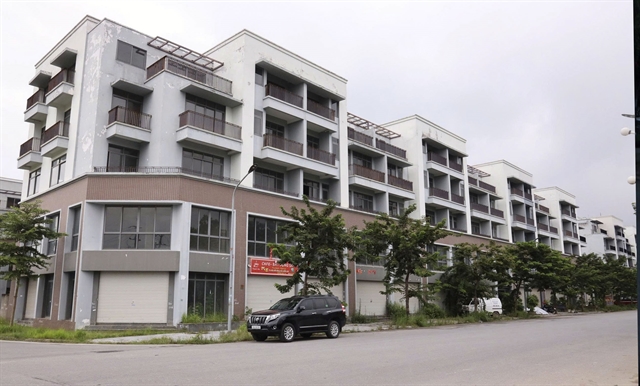
| Landed houses in a project in Phúc Yên Commune, Phú Thọ. — VNA/VNS Photo Hoàng Hùng |
Lawyer Nguyễn Văn Đính of the Hanoi Bar Association said the objective of preventing foreigners from acquiring land-use rights could be achieved without completely removing their ability to own landed houses.
Foreigners could potentially be allowed to own a house without acquiring land-use rights. Under such a model, ownership of a house is recognised separately from rights to the land on which it stands, he said.
Đính said this approach could meet the requirement under the Resolution 21-NQ/TW while helping attract foreign workers, specialists and businesspeople to live and work in Việt Nam.
He also noted that apartment owners still hold shared land-use rights relating to the land on which a condominium project is built.
Đính also called for clearer rules governing foreign individuals married to Vietnamese citizens. He proposed that equivalent ownership rights be limited to housing jointly owned by the spouses, while separately owned property would remain subject to the rules applicable to foreigners.
Nguyễn Duy Thành, vice chairman of the HCM City Apartment Building Operation and Management Association, the proposed change would have limited impact on property liquidity and prices because the number of landed houses owned by foreigners was relatively small, he said.
He stressed land is a strategic finite national resource and that access to land in strategically important areas, including border, coastal and island areas, requires careful management in relation to national defence and security.
Danny Võ, vice president of the HCM City Association for Liaison with Overseas Vietnamese, said called for clearer distinctions between foreign nationals, overseas Vietnamese, people of Vietnamese origin and dual nationals.
He also proposed simplifying procedures for verifying Vietnamese origin and establishing consistent procedures across localities to encourage overseas Vietnamese to invest in Việt Nam.
For foreigners who have already received legally valid ownership certificates, property rights including transfer, gifting, mortgage and inheritance should be fully protected, he said.
He also proposed considering long-term leasing mechanisms for landed houses in designated areas for strategic investors, specialists and foreigners married to Vietnamese citizens. — VNS
Economy
 Economy
 Economy
 Economy
 Economy
 Economy
 Economy
 Economy
 Economy
 Economy
 Economy
 Economy
 Economy
 Economy
 Economy