 Economy



84 individuals investigated for transnational online frauds
1.
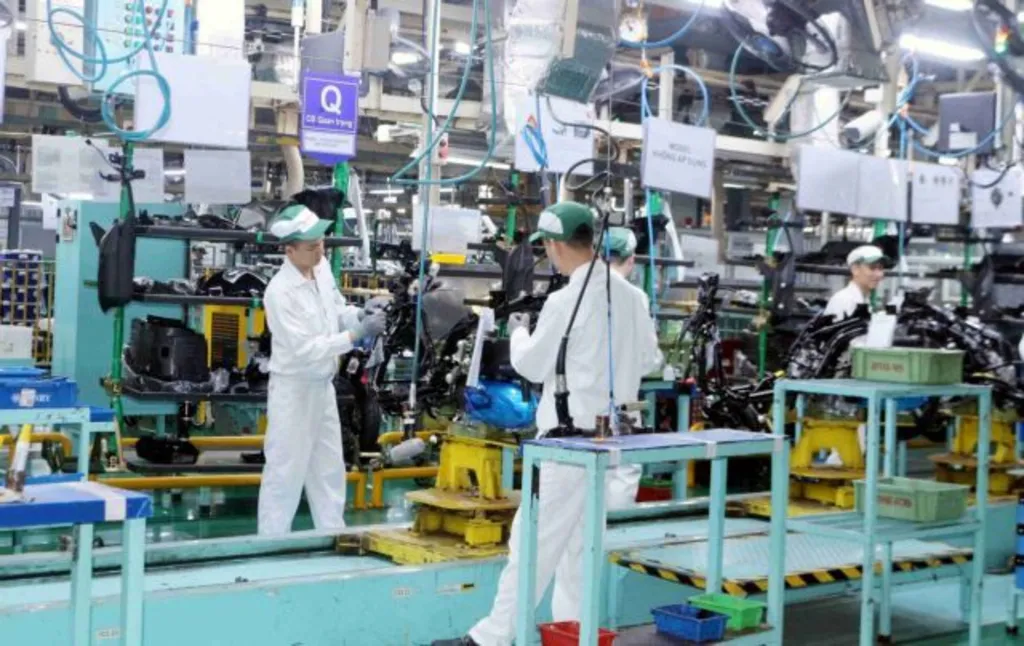 |
| A production line at a factory in Ninh Bình Province. A further marked rise in manufacturing production was registered in September. VNA/VNS Photo |
HÀ NỘI — The S&P Global Vietnam Manufacturing Purchasing Managers' Index (PMI) dropped to 51.9 in September from August's reading of 53.3, but despite the fall, overall business conditions have now strengthened in each of the past 15 months.
A further marked rise in manufacturing production was registered in September, continuing the sequence of expansion which began in May 2025. The rate of growth eased from that seen in August.
Panellists reported that higher new orders were behind the latest increase in output, but the pace of expansion also slowed. In fact, the rise in new business was the weakest in the current five-month period of growth. Where new orders increased, panellists reported improving market conditions and customers expanding their order volumes.
There were again reports of weakness in international demand, however, resulting in a second successive fall in new export orders. New business from abroad decreased solidly, and at the fastest pace since April.
Backlogs of work were broadly unchanged in September, after having risen in each of the previous two months. While a combination of rising new orders and falling employment imparted pressure on capacity at some firms, others reported that slower growth of new business meant that they were able to keep on top of workloads.
The latest reduction in employment was the second in as many months, as panellists reported a combination of staff resignations and restructuring efforts. The fall in staffing levels in September was only slight, however.
A further marked increase in purchasing activity was recorded in September as firms secured inputs to help support output growth. The use of materials in the production process meant that stocks of inputs continued to fall.
Manufacturers also expressed a desire to draw down holdings of finished products, and used the prompt shipment of goods to customers to achieve this. In fact, stocks of finished goods decreased at the sharpest pace since the survey began in March 2011.
Suppliers' delivery times lengthened modestly, meanwhile, with panellists linking delays to issues with international shipping and poor weather conditions.
International issues were also central to a further rise in input costs as the war in the Middle East caused higher prices for fuel and oil. Increased transportation costs were also reported. The rate of input price inflation was marked and slightly faster than in August, albeit still among the lowest over the past year.
Meanwhile, the pace of output price inflation slowed for the fifth consecutive month and was the weakest since June 2025, as strong competition limited the ability of firms to pass higher input costs through to customers.
Expected improvements in market conditions supported confidence that output will rise over the coming year. The planned launch of new products was also behind the optimistic outlook, with sentiment reaching its highest since February.
Andrew Harker, Economics Director at S&P Global Market Intelligence said: "Despite these headwinds, production continued to rise markedly, and firms were more optimistic in the outlook for the coming year. Based on the historical relationship between the PMI and official data, the manufacturing sector should continue to make a solid contribution to GDP growth in the third quarter of 2026, with the potential for growth to strengthen further should the international environment improve." — VNS
Economy
 Economy
 Economy
 Economy
 Economy
 Economy
 Economy
 Economy
 Economy
 Economy
 Economy
 Economy
 Economy
 Economy
 Economy