 Economy



Coca-Cola Hong Kong Launches "Coca-Cola Recycling Academy"
1.
|
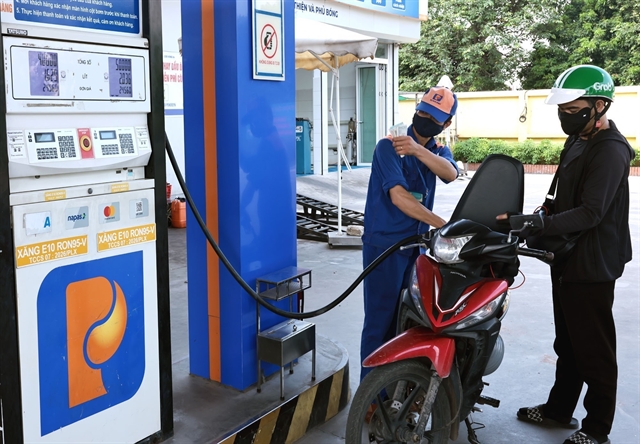
| A man buys petrol for his motorbike at a Petrolimex station. Preferential taxes on fuels have been extended through the end of this year. — VNA/VNS Photo Trần Việt |
HÀ NỘI — Việt Nam will extend preferential import, environmental protection and value-added tax (VAT) measures for fuel through the end of 2026, according to a Government resolution issued on September 30.
Resolution 43/2026/NQ-CP extends measures from Resolution 25/2026/NQ-CP dated April 30 and Decree 72/2026/NĐ-CP dated March 9.
Under Decree 72, Việt Nam cut preferential import tariffs on several petroleum products to zero per cent from existing rates.
The tariff on unleaded motor gasoline and gasoline blending materials such as naphtha and reformate was reduced to zero from 10 per cent.
Preferential import tariffs on diesel, fuel oil, jet fuel and kerosene were also cut to zero from 7 per cent.
Import tariffs on some petrochemical feedstocks, including xylene, condensate and para-xylene, were reduced to zero from 3 per cent, as well as on cyclic hydrocarbons from 2 per cent.
The measures were initially effective from March 9 to April 30 and were extended through June 30 and then September 30.
Resolution 43 also extends through December 31 the provisions of National Assembly’s Resolution 19/2026/QH16 on the environmental protection tax and VAT for gasoline, diesel, kerosene, fuel oil and aviation fuel.
Under the resolution, the environmental protection tax on gasoline (excluding ethanol), diesel, kerosene, fuel oil and aviation fuel is set at zero per litre.
Those fuels are also not subject to declaration and payment of value-added tax, while input VAT remains deductible.
The Finance Ministry said extending the tax measures would help safeguard energy security, support macroeconomic stability and inflation control, and aid the recovery of production and business activity amid volatile global fuel prices and developments in the Middle East conflict.
These measures are also intended to allow fuel companies to diversify import sources and reduce reliance on traditional supply markets, helping maintain domestic fuel supplies, the ministry said.
The Ministry of Industry and Trade may propose shortening or extending the measures if changes are needed to support economic development, energy security and stability in the domestic fuel market. — BIZHUB/VNS
Economy
 Economy
 Economy
 Economy
 Economy
 Economy
 Economy
 Economy
 Economy
 Economy
 Economy
 Economy
 Economy
 Economy
 Economy