 Economy


HCM City honours fallen soldiers with solemn musical tribute
1.
|
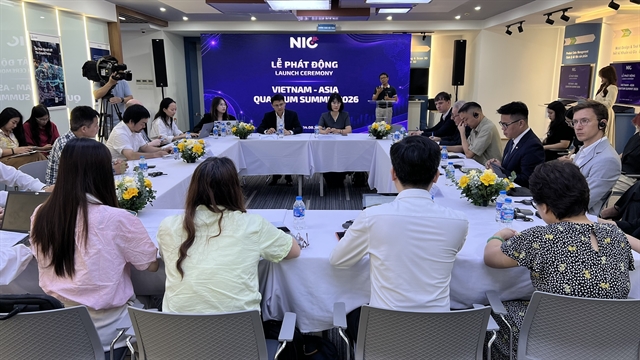
| Participants at the launch on Friday. — VNS Photo Mai Hương |
HÀ NỘI — Việt Nam is stepping up efforts to build a domestic quantum technology ecosystem, with policymakers, researchers and international partners seeking to turn the emerging technology into concrete research, talent and investment opportunities.
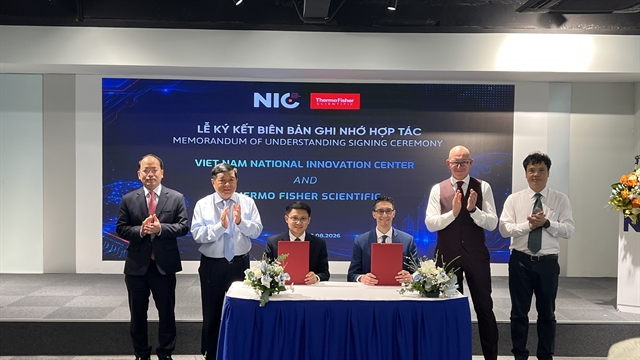
The National Innovation Centre (NIC) under the Ministry of Finance on Friday launched the Vietnam – Asia Quantum Summit 2026, ahead of the main event scheduled for November.
The summit is designed to connect Vietnamese universities, research institutes, businesses and investors with international partners, as quantum technology moves from laboratory research towards applications in areas ranging from AI and cybersecurity to finance, energy and healthcare.
Speaking at the launch, NIC deputy director Võ Xuân Hoài said Việt Nam needs to engage in quantum technology early, as the global ecosystem is still taking shape.
He said national quantum capabilities should be developed across research, a skilled workforce, businesses, products and markets, allowing Việt Nam to gradually build technological capacity and create value from quantum applications.
The push comes as the Government has identified quantum technology as one of 10 strategic technologies for national development. The Poliburo’s Resolution 57 places science, technology, innovation and digital transformation among key drivers of rapid and sustainable growth, while Decision 21/2026/QĐ-TTg lists quantum technology among the country's strategic technologies.
But talent remains a major constraint.
Associate Professor Lại Ngọc Điệp of Université Paris-Saclay in France said Việt Nam has some foundations for participating in the field, but faces significant gaps in personnel, basic research and laboratory infrastructure.
He called for parallel investment in education and research, including more specialised training programmes, efforts to attract young people into quantum physics and technology, and modern laboratories capable of supporting advanced research.
Beyond talent, Việt Nam is seeking to turn an emerging network of experts and institutions into practical projects.
The NIC has supported the establishment of the Vietnam Quantum Innovation and Expert Network, organised the Vietnam Quantum Roadshow 2026 and launched the international Quantum Computing for Social Good Hackathon.
These initiatives aim to link scientists, universities, businesses, start-ups, investors and international partners, creating a broader community around quantum technology.
“No country can develop quantum technology on its own. Cooperation among domestic and international partners is therefore one of the most important factors in building the quantum technology sector," Hoài said.
“We want to work with partners around the world to train talent, develop workers and transfer technology, while bringing new equipment and technologies to universities, research institutes and businesses in Việt Nam.”
International partners are also showing interest in Việt Nam's emerging ecosystem.
Denis Avetisyan, senior adviser at JV Quantum under Russia's State Atomic Energy Corporation Rosatom, said Việt Nam has potential to become a hub connecting international resources in research, talent and business.
Through NIC, Rosatom is exploring cooperation with Việt Nam in areas including talent training, access to quantum infrastructure, joint research, technology demonstrations and pilot applications.
Ge Gui Guo, a senior expert at the Chinese Academy of Sciences' CAS Cold Atom, highlighted the growing role of Asia in the global quantum ecosystem and the potential for greater regional cooperation in research, talent development and technology applications.
The Vietnam-Asia Quantum Summit 2026 is intended to move beyond networking towards research cooperation, training, technology transfer, investment and project development.
Its November programme will focus on policy dialogue, research and applications, talent development, international cooperation, business and investment links and technology demonstrations.
Organisers expect the programme to generate concrete cooperation in research, training, technology transfer, business development and investment, while creating opportunities to test quantum applications in areas where Việt Nam has strong demand and potential.
The summit is also being positioned as a long-term platform linking Việt Nam with major quantum centres worldwide, while giving Vietnamese researchers, businesses and talent greater access to the global quantum network. — VNS
Economy
 Economy
 Economy
 Economy
 Economy
 Economy
 Economy
 Economy
 Economy
 Economy
 Economy
 Economy
 Economy
 Economy
 Economy