 Economy


HCM City honours fallen soldiers with solemn musical tribute
1.
|
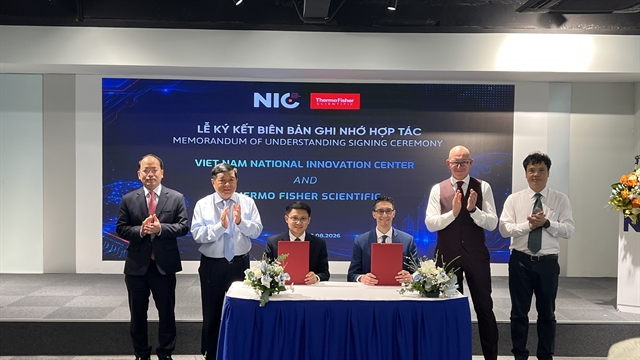
| Both sides at the signing ceremony. — VNS Photos Mai Hương |
HÀ NỘI — Plans are in place to develop a shared laboratory for semiconductor and biomedical research at the National Innovation Centre (NIC) in Hòa Lạc under a new cooperation agreement with Thermo Fisher Scientific.
The facility will give businesses, start-ups, universities and research institutes greater access to advanced technology, equipment and international expertise.
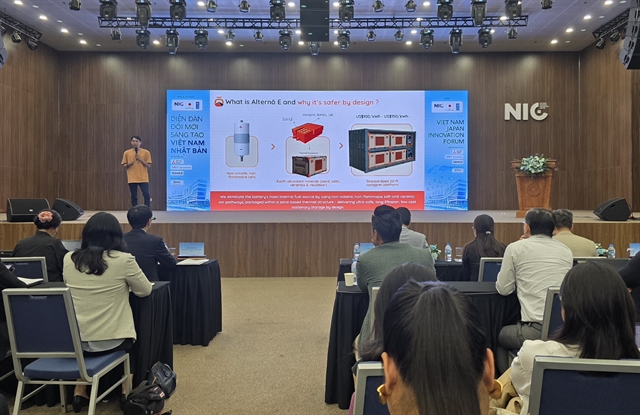
NIC and the US technology group signed a memorandum of understanding (MoU) on Thursday at a forum on the development of semiconductors, artificial intelligence (AI) and innovation in Việt Nam.
The planned laboratory will be developed to international standards and serve as shared infrastructure for research, product development, technology testing and talent training.
The cooperation comes as Việt Nam seeks to strengthen its capacity in strategic technologies, including semiconductors and AI, while implementing Politburo’s Resolution No. 57-NQ/TW on breakthroughs in science and technology, innovation and national digital transformation.
Võ Xuân Hoài, deputy director of NIC, said the partnership went beyond bringing equipment and technology into Việt Nam.
“The greatest value of the cooperation between NIC and Thermo Fisher is not only bringing equipment or technology into Việt Nam, but jointly building an open research infrastructure model,” he said.
Under the model, businesses, start-ups, universities and research institutes will be able to access internationally standardised technology, equipment and expertise at more reasonable costs and within shorter timeframes.
Thermo Fisher Scientific plans to contribute technology, equipment and expertise to the initiative. The group, valued at about US$220 billion, operates research and innovation facilities in more than 50 countries and has experience in developing shared laboratories and cooperation centres.
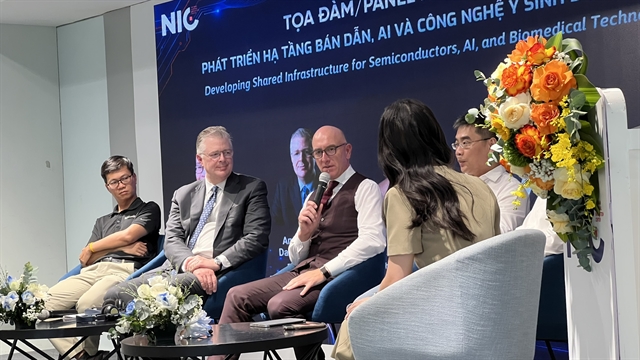
Gianluca Pettiti, president and chief operating officer of Life Sciences Solutions at Thermo Fisher Scientific, said Việt Nam had significant opportunities to develop high-tech industries but needed continued investment in research infrastructure, technology and human resources.
Pettiti said: “Building a sustainable high-technology ecosystem depends on strong scientific and research infrastructure, a highly skilled workforce, robust standards and quality systems, and also the effective integration of artificial intelligence and advanced digital technologies.”
He also stressed the importance of stronger links between research institutions and businesses to expand access to advanced technologies and accelerate the application and commercialisation of research results.
|
| Gianluca Pettiti, president and COO of Life Sciences Solutions at Thermo Fisher Scientific, speaks at the discussion. |
Shared infrastructure
The shared laboratory is part of NIC's broader effort to build a common research and innovation infrastructure in Hòa Lạc.
NIC will work with Thermo Fisher to develop an implementation roadmap, connect businesses, start-ups, research institutes and universities with the facility, and organise training and capacity-building programmes.
It also plans to bring additional technology corporations, research organisations and international partners into the network.
The shared-infrastructure approach is designed to address the high investment and operating costs associated with technology-intensive research, while improving the use of expensive equipment.
Instead of requiring each business, university or research institute to develop its own full-scale facilities, shared laboratories can pool resources and give more organisations access to advanced technologies.
The model is also expected to strengthen links between research and industry, support startups in developing products and expand the capacity of universities and research institutes for applied research.
The MoU represents an effort to develop a public-private model for technology infrastructure, with the State playing a role in creating an enabling environment and connecting stakeholders, while international technology companies contribute technology and expertise.
Former Deputy Prime Minister Nguyễn Chí Dũng said Việt Nam needed to move from individual investment towards shared infrastructure and ecosystems that could mobilise resources from both domestic and international partners.
The cooperation with Thermo Fisher is expected to provide a foundation for expanding shared laboratories and research infrastructure to other strategic technology fields. — VNS
Economy
 Economy
 Economy
 Economy
 Economy
 Economy
 Economy
 Economy
 Economy
 Economy
 Economy
 Economy
 Economy
 Economy
 Economy