 Economy


HCM City honours fallen soldiers with solemn musical tribute
1.
|
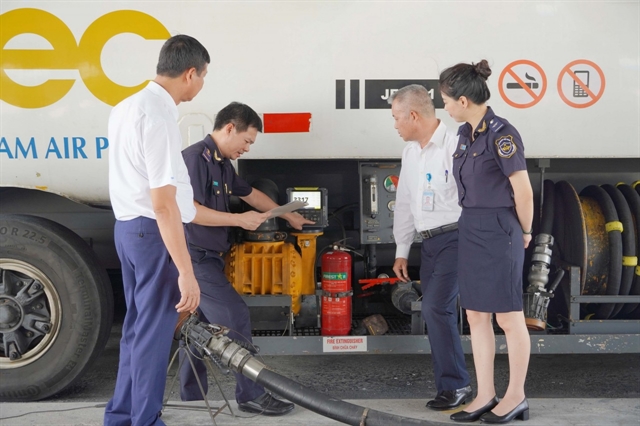
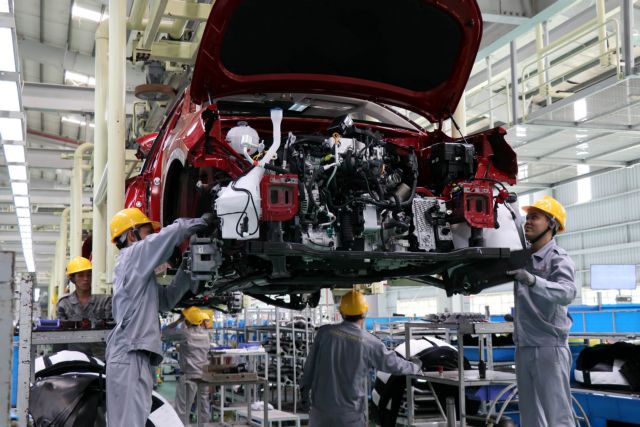
| Imported petroleum products and blending components on the list of high-risk goods would remain subject to State quality inspections. — Photo chinhphu.vn |
HÀ NỘI — The Ministry of Finance is drafting a circular to simplify customs procedures for the import and export of petroleum products, blending components and crude oil, with greater use of electronic data, risk-based management and less reliance on paper documents and direct customs supervision.
The ministry said Circular No 69/2016/TT-BTC, issued in 2016, has provided a stable framework for customs procedures involving petroleum products, chemicals, gas, crude oil and goods serving oil and gas operations.
After 10 years of implementation, however, some requirements have become overly detailed and technical and no longer fit administrative reform, digital transformation and the increased use of equipment in customs inspection and supervision.
The draft circular therefore aims to streamline procedures and increase the use of technology and risk-based management.
Imported petroleum products and blending components on the list of high-risk goods would remain subject to State quality inspections.
Where sampling is required under relevant technical regulations, samples must be taken before the goods are pumped from the means of transport into storage tanks.
Shipments meeting quality requirements may be cleared or released. Those failing to meet requirements would have to be recycled or re-exported.
If non-compliant fuel has already been mixed with fuel in a storage tank, the entire quantity in the tank would have to be recycled or re-exported.
For petroleum products and blending components temporarily imported for re-export, traders would be allowed to use products of the same type stored at another warehouse owned by the same trader when transferring goods for domestic consumption or re-export.
The warehouse must meet customs requirements for the gathering, inspection and supervision of goods.
The draft would simplify procedures for supplying fuel to ships departing Việt Nam.
Current rules require traders to submit various additional documents, including agency contracts, shipmasters' orders, fuel allowances and warehouse release slips.
The ministry said such requirements are no longer necessary as ship supervision has improved, many procedures are now electronic and authorities can access shared data.
Under the draft, traders could supply fuel to departing ships from imported stocks, goods temporarily imported for re-export or domestically produced fuel.
Supervision of fuel transfers from storage tanks to transport vehicles and from vehicles to ships would follow a risk-based approach, with customs authorities deciding the level of supervision.
The ministry also proposes reducing paperwork for fuel supplied to aircraft. — BIZHUB/VNS
Economy
 Economy
 Economy
 Economy
 Economy
 Economy
 Economy
 Economy
 Economy
 Economy
 Economy
 Economy
 Economy
 Economy
 Economy