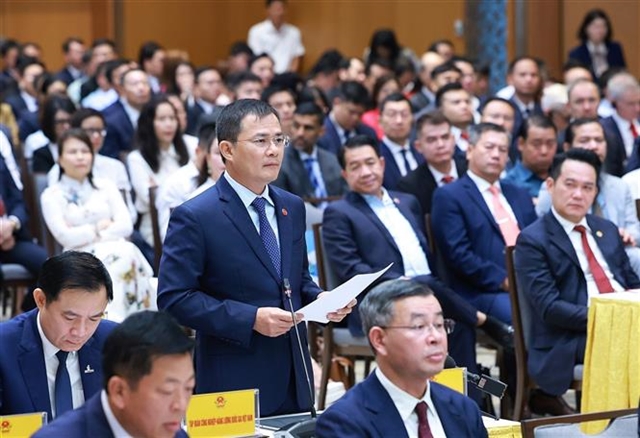
 |
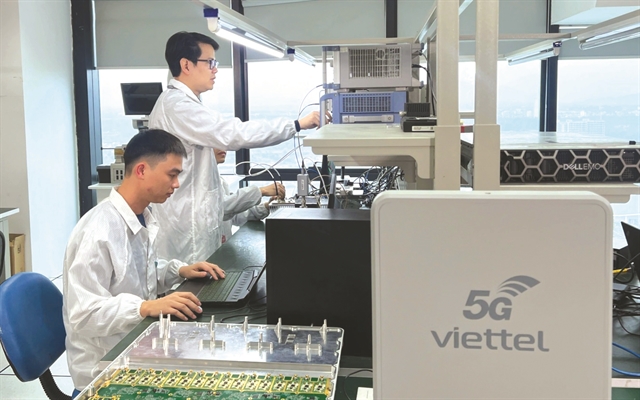
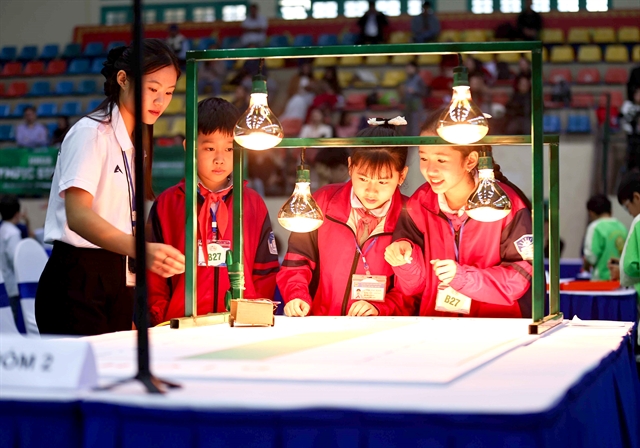
| Students test their engineering projects during the HNUE Olympic STEM 2025 competition, where participants developed and built solutions through hands-on learning. — VNA/VNS Photo Thanh Tùng |
Building a globally competitive technology workforce starts long before young engineers enter research laboratories or high-tech companies.
As Việt Nam accelerates ambitions in artificial intelligence (AI), semiconductors and other strategic technologies, the country's next challenge is no longer simply producing more graduates. It is ensuring they possess the skills to adapt, innovate and solve problems in industries evolving faster than traditional education systems.
The urgency is becoming increasingly apparent.
Under its national semiconductor workforce programme, Việt Nam aims to train at least 50,000 university-level professionals by 2030, including 15,000 chip designers and 5,000 AI specialists serving the semiconductor industry. Yet, STEM students account for only around 27-29 per cent of total university enrolment, according to the Ministry of Education and Training.
Resolution No 57-NQ/TW identifies high-quality human resources as one of the foundations for breakthroughs in science, technology, innovation and national digital transformation. It calls for stronger cooperation among government, universities and businesses to ensure education keeps pace with technological change.
For education experts and investors, however, reforming curricula alone will not be enough. The real transformation, they argue, lies in changing how future engineers learn.
Teaching students how to learn
For decades, universities have focused on building students' academic foundations, while businesses took responsibility for providing hands-on experience and industry-specific skills.
That model worked when technologies evolved gradually.
Today, however, advances in AI are measured in months rather than years, making it increasingly difficult for universities to keep curricula up to date.
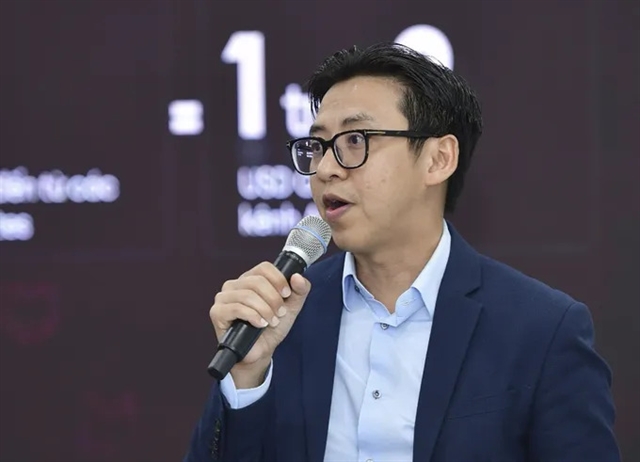
Laura Nguyễn, managing director of GenAI Fund, believes this has fundamentally changed the purpose of higher education.
"The question is no longer whether education should change. If we are only starting to discuss it now, we are already behind," she told Việt Nam News.
According to Laura, universities can no longer aim simply to transfer knowledge because knowledge itself is becoming obsolete much faster than before.
A programming framework or AI tool introduced in classrooms today may be replaced within 18 months. What remains valuable is the ability to keep learning.
"What universities need to teach is not knowledge itself, but the ability to learn – to ask the right questions, find the right resources, experiment and learn from failure,” she said.
“Those capabilities never become obsolete because they are the foundation for mastering whatever technologies come next."
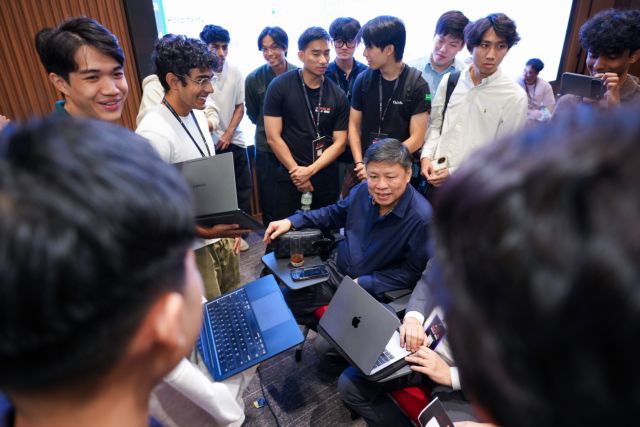 |
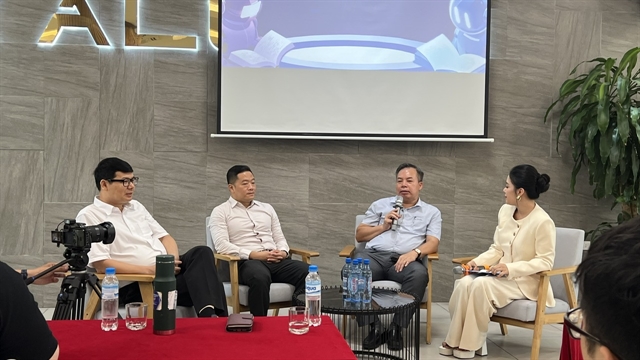
| Participants at the Agentic AI Build Week organised in HCM City during July 8-12. — Photo courtesy of the organiser |
That shift extends beyond AI.
As Việt Nam develops strategic industries such as semiconductors, biotechnology and advanced manufacturing, employers are placing greater value on graduates who can learn continuously, adapt quickly and solve unfamiliar problems.
The shift is already influencing education policy.
Alongside efforts to expand STEM enrolment, universities are opening new programmes in semiconductor design, AI, big data and other strategic technologies, while the Government is developing scholarship policies for students pursuing basic sciences and priority technology disciplines.
The effort is also backed by new financial incentives. Under Government Decree No 179/2026/NĐ-CP, students enrolled in eligible programmes in basic sciences, key engineering disciplines and strategic technologies are entitled to monthly scholarships ranging from VNĐ3.7 million to VNĐ5.5 million (US$141-209).
Priority fields include information technology, information security, electronics and telecommunications, automation, artificial intelligence and other STEM disciplines considered critical to Việt Nam's long-term technology development.
Associate Professor Trần Mạnh Cường, Vice Rector of University of Science under Vietnam National University, Hà Nội, said scholarships should be accompanied by sustained investment in lecturers, laboratories and research infrastructure to ensure universities could deliver high-quality STEM education and produce the skilled workforce needed for strategic technologies.
Yet, experts say producing graduates with the right mindset will require more than new degree programmes. Students must also have opportunities to work on real-world problems before they graduate.
Bringing industry into the classroom
If universities need to rethink how they teach, businesses also need to rethink how they develop talent.
For decades, companies largely entered the picture only after graduation, recruiting engineers and providing additional training to meet workplace requirements.
Resolution 57 seeks to narrow that gap by promoting closer cooperation among the Government, universities and businesses, recognising that developing technology talent requires contributions from all three.
Under this approach, universities are expected to align training more closely with industry demand, while enterprises participate more actively in research, curriculum development and practical training.
Laura said businesses should no longer be viewed simply as employers waiting for universities to produce graduates.
Instead, they should become active partners in shaping how future engineers are trained.
"We don't invest in education simply as a social responsibility. It's one of the best ways to meet the next generation of founders before they become well known. A strong talent pipeline is also a strong dealflow pipeline," she said.
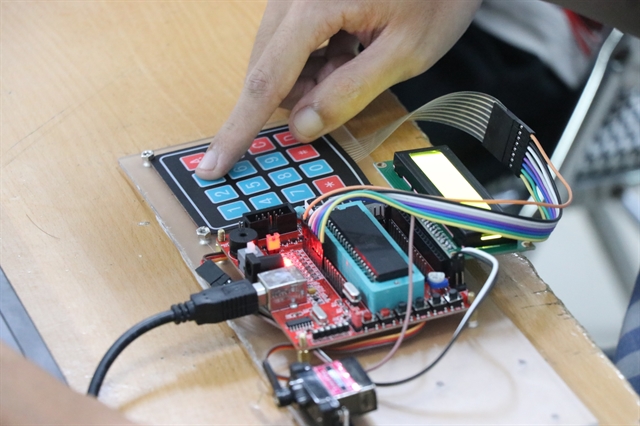 |
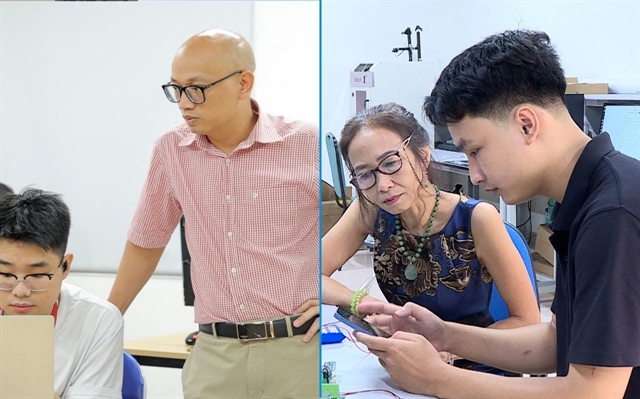
| A student assembles an electronic circuit and programs a microcontroller during a practical engineering session. — Photo by Xuân Quý/VNA |
She argued that this collaboration should go far beyond internship programmes.
Students need opportunities to work alongside engineers, researchers and entrepreneurs on genuine industry challenges, allowing them to experience how technologies are developed, tested and commercialised rather than merely studying theories in classrooms.
That shift is already taking shape in Việt Nam.
Samsung Electronics Vietnam has recently expanded cooperation with leading engineering universities, supporting postgraduate training, research, laboratories and scholarships in strategic technology fields.
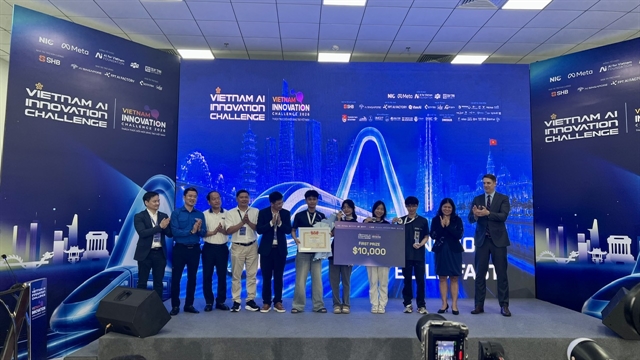
Beyond university partnerships, the National Innovation Centre (NIC) has teamed up with global technology companies, including Google and Meta, to organise AI bootcamps, hackathons and innovation challenges that connect students, start-ups and researchers with real-world technologies.
Such initiatives reflect a broader shift in how technology companies view talent development – not simply as recruitment, but as a long-term investment in future innovation capacity.
From engineers to innovators
Drawing on GenAI Fund's work with start-ups, Laura said Vietnamese engineers generally compare well with regional peers in technical ability. Many participants joining AI programmes already have years of practical experience in software engineering and machine learning.
The bigger gap, however, often lies beyond technical knowledge.
Many engineers are highly capable of building technology, but have had fewer opportunities to develop product thinking, understand customer needs or transform research into commercially viable products.
"The difference between a good engineer and a successful founder is not technical ability. It's the mindset – asking why users need a product before asking how to build it, and having the resilience to keep iterating when there are no clear answers," she said.
That ability, she argued, cannot be cultivated solely through lectures or examinations.
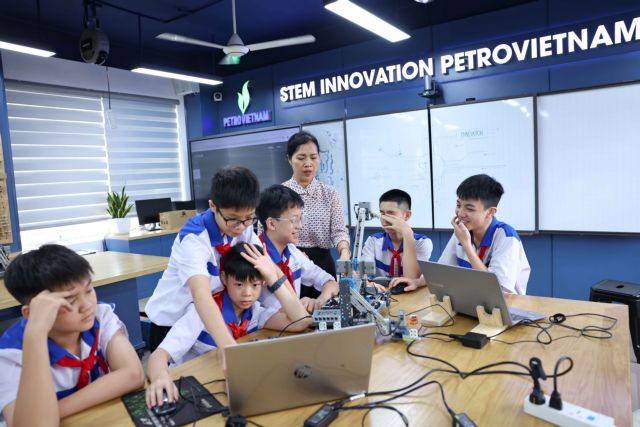 |
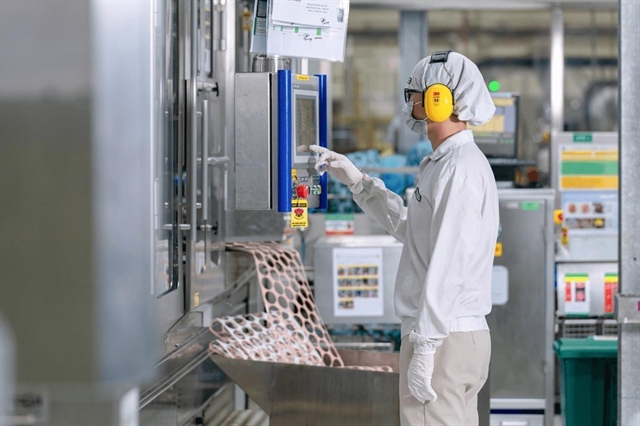
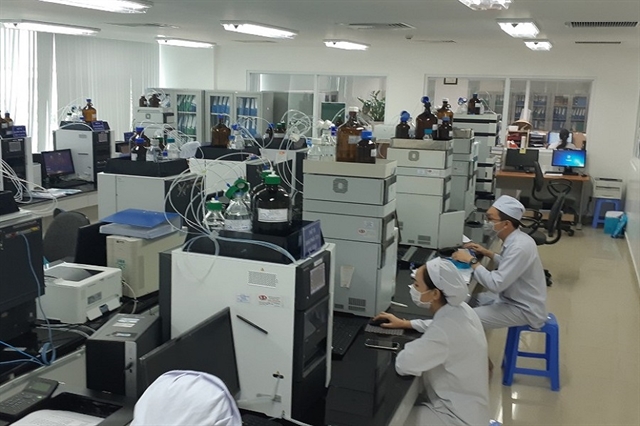
| A STEM laboratory funded by Petrovietnam provides students with a modern learning environment for science and technology education. — VNA/VNS Photo |
It develops when students are encouraged to experiment, collaborate across disciplines, learn from failure and tackle open-ended challenges with no predetermined answers.
As technologies continue to evolve, experts believe this combination of technical competence, adaptability and entrepreneurial thinking will become increasingly important for countries seeking to move beyond technology adoption towards technology creation.
For Việt Nam, the goal is therefore no longer simply to produce larger numbers of engineers.
It is to build a generation of innovators equipped to create new technologies, launch globally competitive products and contribute to the country's long-term ambitions in science, technology and innovation. — VNS
This story is one of a three-part series "The human factor behind Việt Nam's technology ambitions", examining how talent policies, education and global collaboration are shaping the country's innovation future.
More in this series:
Việt Nam bets on innovation system in tech talent race
Connecting the dots behind Việt Nam's technology ambitions
 Society