 Economy


Cultural industry product 'The Moment' debuts to bring new staging experience to theatregoers
1.
|
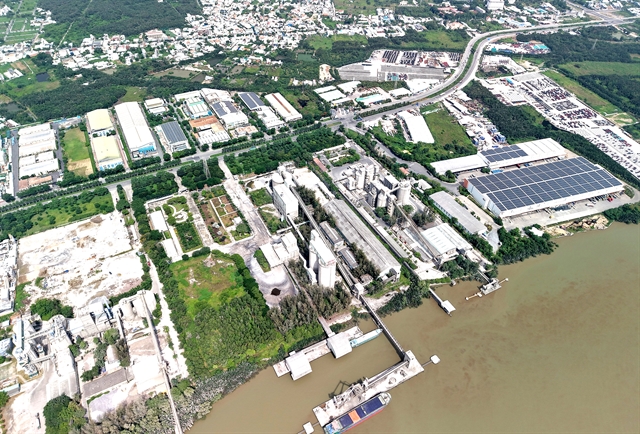
| Hiệp Phước Industrial Park is being transformed into an eco-industrial park as HCM City promotes circular economy models and sustainable industrial development. — VNA/VNS Photo |
HCM CITY — Vietnamese businesses are accelerating the adoption of circular economy practices to improve competitiveness, reduce emissions and meet increasingly stringent sustainability standards.
The circular economy is becoming an increasingly important strategy for businesses in Việt Nam as rising production costs, stricter environmental regulations and growing market expectations reshape the country's manufacturing landscape.
Associate Professor Dr Lê Thị Kim Oanh, dean of the Faculty of Environment at Văn Lang University, said rising prices of raw materials, energy and water have directly affected manufacturers' profit margins.
At the same time, international buyers and major business partners are placing greater emphasis on environmental performance, with stricter requirements on greenhouse gas emissions, waste management and environmental, social and governance (ESG) reporting.
She said sustainable consumption and production (SCP) encourages businesses and consumers to work together throughout a product's life cycle, enabling companies to build circular value chains, reduce environmental impacts and comply with emerging legal frameworks.
The transition is also gaining momentum at the local level.
HCM City has identified the circular economy as a core component of its vision for green urban development and low-carbon growth.
The city is implementing plans to transform export processing and industrial zones into eco-industrial parks that make more efficient use of resources, promote industrial symbiosis and reduce emissions.
Many industrial parks have expanded waste separation at source, recycling activities and implementation of extended producer responsibility (EPR), while working to reduce landfill disposal as part of broader efforts to move towards a zero-waste economy.
Local authorities are also supporting businesses through technology upgrades, access to green finance, technical consultancy, workforce training and green trade promotion.
Among foreign-invested enterprises, HEINEKEN Việt Nam has continued to advance its sustainability commitments through water stewardship initiatives.
Working with the Ministry of Agriculture and Environment, WWF-Việt Nam and local partners, the company has achieved its target of replenishing 100 per cent of the water used in three breweries located in Tiền Giang, Hà Nội and HCM City.
James Crampton, Senior Corporate Affairs Director of HEINEKEN Việt Nam, said today's environmental and social challenges cannot be addressed by a single organisation alone and require collaboration among governments, businesses and communities.
He said the company would continue integrating sustainability into its operations while working with partners to create long-term positive impacts for Việt Nam's development.
Domestic companies are also accelerating their transition.
Võ Mậu Quốc Triển, chairman of Rita Võ Group, said 2026 marked a new stage in the company's development after two decades of growth, with greater investment in manufacturing alongside its traditional distribution business.
The group's long-term strategy includes expanding Rita Võ Wood, a manufacturing facility producing engineered wood materials, as part of efforts to strengthen domestic production capacity, develop proprietary brands and contribute to sustainable economic development.
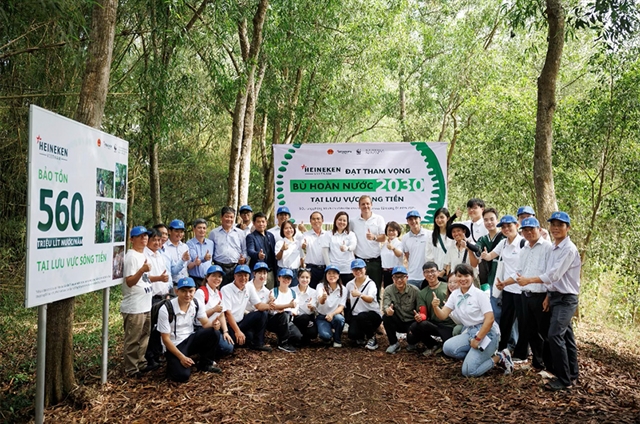
|
| HEINEKEN Việt Nam's water replenishment programme supports watershed conservation through partnerships with government agencies and WWF-Việt Nam. — Photo courtesy of HEINEKEN Việt Nam |
EPR framework accelerates transition
As global environmental standards become increasingly important for international trade, Vietnamese businesses are entering a new phase of implementing circular economy regulations.
The 2020 Law on Environmental Protection formally established the circular economy as a national development orientation, while Decree No 110/2026/NĐ-CP and Circular No 24/2026/TT-BNNMT have further strengthened the legal framework governing extended producer responsibility (EPR).
Under the regulations, producers and importers are required to recycle designated products and packaging, while making financial contributions for products that are difficult to recycle.
Experts say businesses should view EPR not merely as a compliance obligation but as an opportunity to redesign products, improve resource efficiency and strengthen competitiveness.
Lê Văn Thịnh, deputy head of the HCM City Export Processing and Industrial Zones Authority (HEPZA), said businesses should move from managing waste to managing resources, turning environmental responsibility into a competitive advantage.
He said the circular economy enables companies to generate greater value from the same or even fewer resources while supporting sustainable industrial growth.
HEPZA will continue working with relevant organisations to assist businesses through administrative reforms, technical support and access to financial resources, helping existing industrial parks transition towards eco-industrial park models.
Nguyễn Thị Thu Hà, deputy director of the Institute of Recycling Science and Technology under the Việt Nam Recycling Association, said integrating EPR with circular economy solutions would encourage companies to redesign products, increase material recovery, expand recycling systems and develop industrial symbiosis.
Such models allow waste generated by one enterprise to become production inputs for another, improving resource efficiency while reducing carbon emissions, she said.
She added that stronger coordination between policy, technical solutions and financial support would enable businesses to better understand regulatory requirements and implement practical roadmaps suited to their operating conditions.
This would also encourage wider adoption of cleaner production technologies, eco-design, renewable energy, water recycling and more efficient resource use.
To support businesses during the second half of the year, HCM City's Department of Industry and Trade will continue coordinating with relevant agencies to address challenges related to financing, production sites, administrative procedures, input costs and market access.
The department will also accelerate digital transformation, promote science, technology and innovation, and improve the business environment to enhance productivity, strengthen competitiveness and support the city's long-term sustainable development. — VNS
Economy
 Economy
 Economy
 Economy
 Economy
 Economy
 Economy
 Economy
 Economy
 Economy
 Economy
 Economy
 Economy
 Economy
 Economy