 Economy


HIIVE by fusion brings business and golf closer in Bình Dương
1.
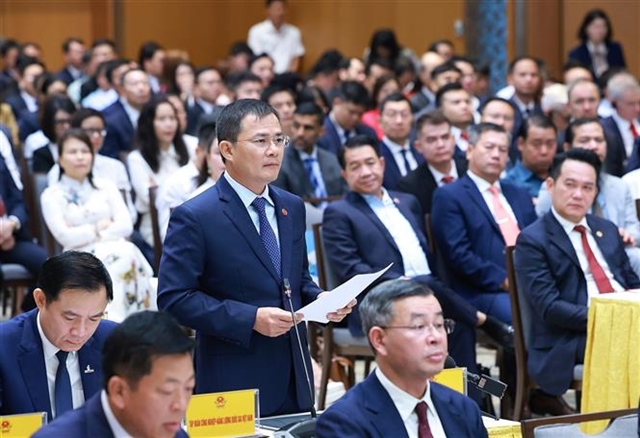 |
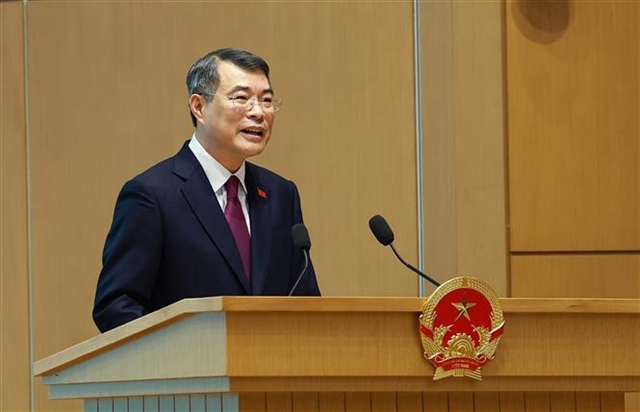
| Tào Đức Thắng, chairman and CEO of Viettel Group, speaks at the meeting with the Government. — VNA/VNS Photo |
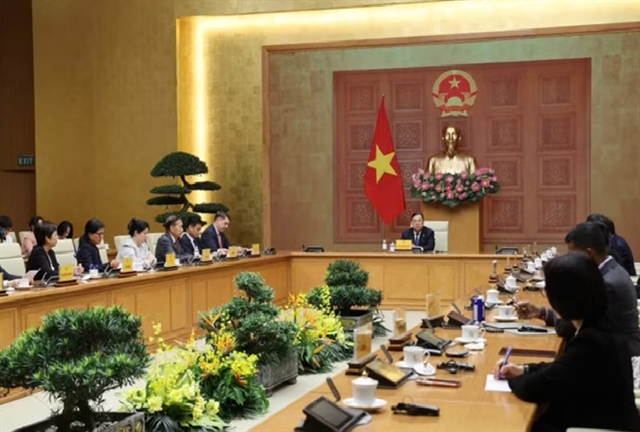
HÀ NỘI — Domestic and foreign business leaders on Saturday urged faster institutional reforms and more consistent policy implementation at their first meeting with the new Government Standing Committee, saying the changes are vital to achieving Việt Nam's double-digit growth target.
The conference, chaired by Prime Minister Lê Minh Hưng, brought together leaders from across the business community to present recommendations on removing bottlenecks and unlocking new growth drivers.
It marked the first dialogue between the new Government Standing Committee and businesses since the new administration took office.
Many speakers argued that institutional reform remains critical to improving competitiveness, while calling for clearer regulations, more predictable policies and faster implementation across ministries and local authorities.
Representing the State-owned enterprise sector, Tào Đức Thắng, chairman and CEO of Viettel Group, proposed establishing a group of nationally strategic enterprises with clearly defined leadership roles in key industries, including Viettel, VNPT, MobiFone, FPT, CMC among others.
He said these firms should be assigned broader national missions beyond commercial objectives, including developing strategic technologies, expanding domestic supply chains, participating in major national projects and strengthening Việt Nam's technological self-reliance.
He also urged the Government to introduce mechanisms encouraging large State-owned enterprises to prioritise Vietnamese suppliers and products, arguing that major public investment projects should generate wider spillover effects for domestic businesses.
Performance indicators, he said, should measure not only financial results but also contributions to local supply chains, localisation and support for small- and medium-sized enterprises (SMEs).
Lê Ngọc Sơn, chairman of Petrovietnam, called for faster legal reforms to support the energy sector, including amendments to petroleum and electricity legislation and clearer regulations governing offshore wind development.
He proposed allowing major State-owned groups to take the lead in building integrated value chains that bring together domestic private firms and foreign investors in large-scale energy projects, including the Block B gas-to-power development, LNG power infrastructure and offshore wind projects, to create broader spillover benefits across the economy.
He also proposed establishing a legal framework for strategic national crude oil reserves to strengthen the country's energy security amid increasing geopolitical uncertainty.
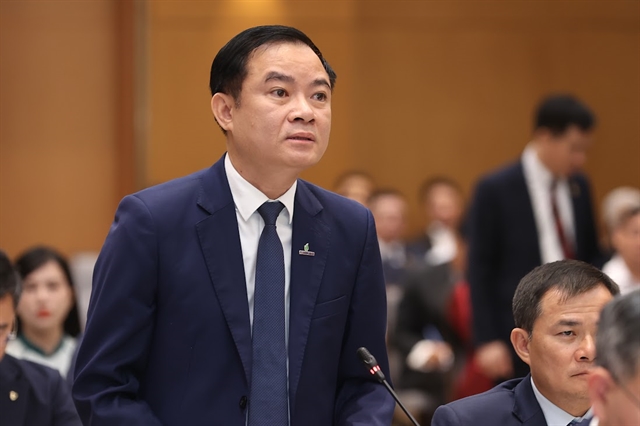 |
| Lê Ngọc Sơn, chairman of Petrovietnam, calls for faster legal reforms to support the energy sector. — Photo baochinhphu.vn |
The banking sector focused on long-term financing needs as investment demand rises.
Nguyễn Thanh Tùng, chairman of Vietcombank, said domestic savings would not be sufficient to finance the investment needed to sustain annual GDP growth of 10 per cent or more.
He noted that investment would have to reach around 40 per cent of GDP, compared with a domestic savings rate of only 36.5 per cent, creating a funding gap for large-scale projects. He therefore proposed that the Ministry of Finance issue international sovereign bonds to diversify funding sources.
Private sector priorities
Meanwhile, private-sector representatives called for stronger policy support to encourage investment, innovation and domestic consumption.
Nguyễn Thị Nga, acting chairwoman of the Vietnam Association of Private Entrepreneurs and chairwoman of BRG Group, proposed expanding green finance through clearer green credit standards, interest-rate support for sustainable projects and preferential refinancing mechanisms for commercial banks.
She also called for a national programme to strengthen Vietnamese supply chains and recommended pilot policies for large-scale tourism and commercial complexes, including faster VAT refunds for international visitors and incentives to support the night-time economy.
Nguyễn Văn Trường, general director of Xuan Truong Construction Enterprise, urged authorities to revise pricing mechanisms for construction materials such as sand and soil to better reflect market conditions, saying unrealistic reference prices continue to delay infrastructure projects.
Meanwhile, Nguyễn Văn Thân, chairman of the Vietnam Association of Small and Medium Enterprises, proposed raising tax thresholds for SMEs and household businesses, introducing independent credit-rating services for SMEs and expanding legal support for micro-enterprises.
FDI concerns
Foreign business associations stressed that policy stability and regulatory consistency remain key factors in maintaining investor confidence.
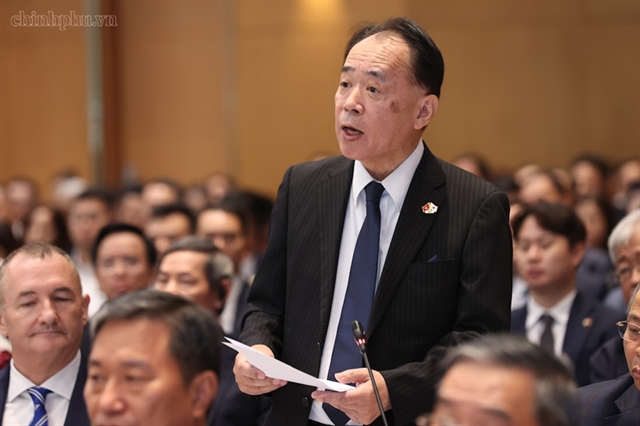 |
| Tsuchibashi Akito, general director of Meiko Electronics Vietnam, speaks at the meeting. — Photo baochinhphu.vn |
Representing the Japanese Business Association in Việt Nam (JCCI), Tsuchibashi Akito, general director of Meiko Electronics Vietnam, called for greater investment in high-quality human resources for the electronics and semiconductor industries, closer cooperation between businesses and educational institutions and stronger support for Vietnamese suppliers to move further up global value chains.
He also urged the Government to maintain a transparent, stable and predictable investment environment while expanding public-private consultation during policymaking.
Ko Tea Yeon, chairman of the Korean Chamber of Business in Việt Nam (KoCham), highlighted the need for greater consistency in policy implementation, simpler administrative procedures, faster customs clearance and VAT refunds and continued support for high-tech industries and domestic supplier development.
He said stronger linkages between Vietnamese and foreign-invested enterprises would enhance the country's position in global supply chains.
Despite focusing on different sectors, business representatives broadly agreed that sustaining double-digit growth would require deeper institutional reforms, alongside policies that encourage investment, strengthen domestic enterprises and improve the business environment. — VNS
Economy
 Economy
 Economy
 Economy
 Economy
 Economy
 Economy
 Economy
 Economy
 Economy
 Economy
 Economy
 Economy
 Economy
 Economy