 Economy


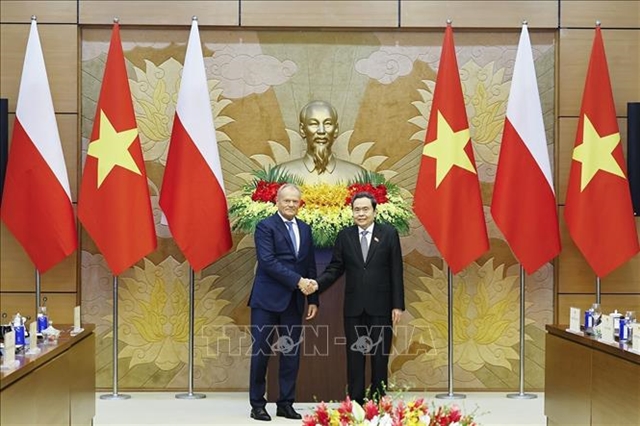
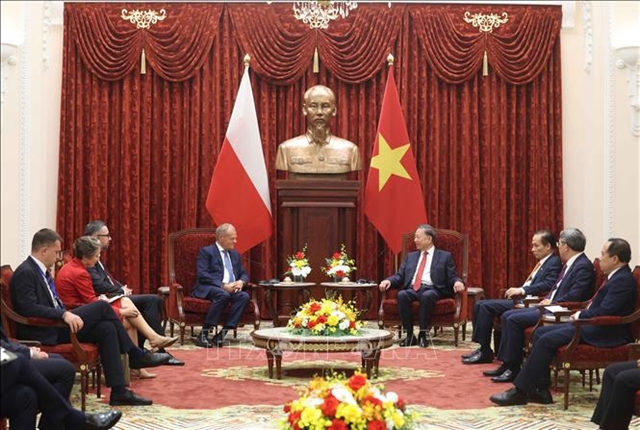
Polish Prime Minister Donald Tusk wraps up official visit to Việt Nam
1.
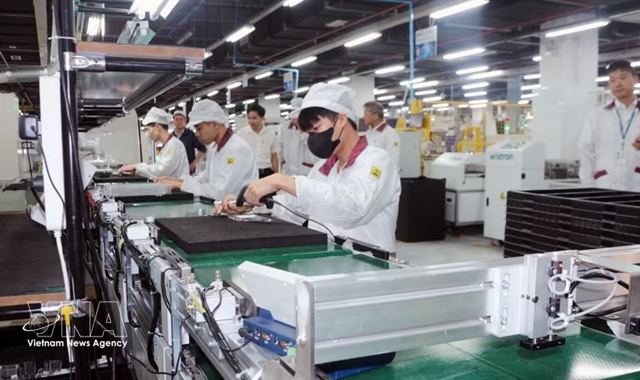 |
| Beyond expanding opportunities for economic cooperation, the agreement reaffirms the commitment to promoting free trade based on transparency and fairness. — VNA/VNS Photo |
HÀ NỘI — After more than 14 years of negotiations, Việt Nam and the European Free Trade Association (EFTA) have officially concluded talks on a Free Trade Agreement (FTA), paving the way for its signing in the fourth quarter of this year and opening a new chapter in economic cooperation with some of Europe's most advanced economies while reaffirming Việt Nam's commitment to deep and comprehensive international integration.
The Việt Nam-EFTA FTA is one of the longest-negotiated trade agreements in Việt Nam's history, reflecting its broad scope of commitments covering trade in goods and services, investment, intellectual property, government procurement, environmental protection, sustainable development, small- and medium-sized enterprises (SMEs), and other areas of cooperation.
The conclusion of negotiations comes at a time when global trade is facing mounting challenges from protectionism, strategic competition among major economies, supply chain disruptions and climate change.
Beyond expanding opportunities for economic cooperation, the agreement reaffirms the commitment to promoting free trade based on transparency and fairness, creating new momentum for growth while strengthening Việt Nam's position in global value chains.
According to Deputy Minister of Industry and Trade Nguyễn Sinh Nhật Tân, the Việt Nam-EFTA FTA is highly complementary in nature.
The EFTA members comprise Norway, Switzerland, Iceland and Liechtenstein – the economies recognised for their strengths in technology, finance, innovation, green industry, clean energy and modern governance.
Việt Nam, meanwhile, continues to strengthen its role as a dynamic manufacturing and export hub within global supply chains.
Espen Barth Eide, Minister of Foreign Affairs of Norway, said that, amid growing global uncertainties, concluding an ambitious and forward-looking FTA would significantly improve market access for goods and services while deepening cooperation in areas such as sustainable development and intellectual property, creating new business opportunities for enterprises on both sides.
The complementary strengths of Việt Nam and the EFTA economies provide a solid foundation for deeper cooperation. The agreement will give Vietnamese businesses greater access to high-income markets, while creating new investment opportunities for EFTA companies. It will also allow investors from the bloc to leverage Việt Nam's network of 17 free trade agreements with major economies.
Trade between Việt Nam and the EFTA states has expanded steadily over the past decade, reaching 4.8 billion euros (US$5.5 billion) last year.
Việt Nam recorded a trade surplus of 2.5 billion euros, up sharply from 500 million euroes a decade ago, excluding Switzerland's gold trade.
EFTA's key exports to Việt Nam include electrical machinery, pharmaceutical products and mechanical equipment, while its main imports from Việt Nam are electrical machinery, footwear and apparel.
Experts noted that although EFTA's combined population is only around 15 million, it represents a high-income market with stringent standards and global leadership in technology, finance and innovation.
The agreement is expected to diversify Việt Nam's export markets and create new growth opportunities for agricultural and aquatic products, textiles and garments, footwear, wood products, electronics and processed goods.
Meeting EFTA's demanding standards is also expected to encourage Vietnamese businesses to improve product quality, strengthen branding and enhance international competitiveness.
The Việt Nam-EFTA FTA is also expected to attract high-quality foreign investment into Việt Nam's priority sectors, including high technology, renewable energy, green industry, circular economy, healthcare, pharmaceuticals, finance and digital transformation.
Opportunities, however, come with challenges.
The EFTA countries maintain some of the world's strictest requirements on product quality, food safety, environmental protection, labour standards, traceability and sustainable development.
To fully benefit from the agreement, Vietnamese businesses will need to upgrade technologies, improve corporate governance and adopt internationally recognised quality management systems, ensuring tariff preferences translate into genuine competitive advantages.
The Ministry of Industry and Trade stressed that concluding negotiations marks only the beginning. The agreement's success will ultimately depend on how effectively businesses take advantage of its commitments.
In the lead-up to the signing, the ministry will step up efforts to disseminate information about the agreement, provide guidance on rules of origin, technical standards, environmental requirements, sustainable development commitments and trade remedy measures.
It will also strengthen trade promotion, business matchmaking and support for Vietnamese enterprises to join EFTA supply chains, helping them maximise the opportunities created by the agreement. — VNA/VNS
Economy
 Economy
 Economy
 Economy
 Economy
 Economy
 Economy
 Economy
 Economy
 Economy
 Economy
 Economy
 Economy
 Economy
 Economy