 |
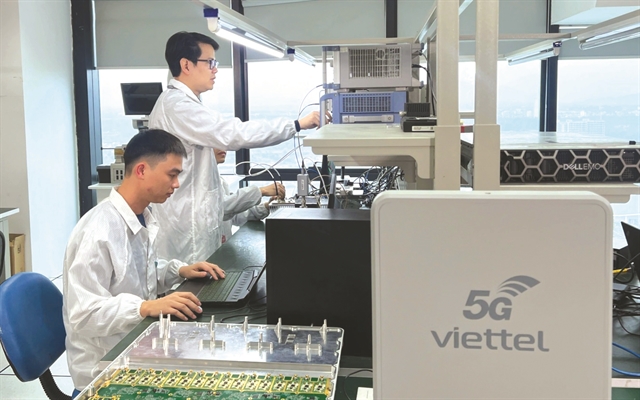
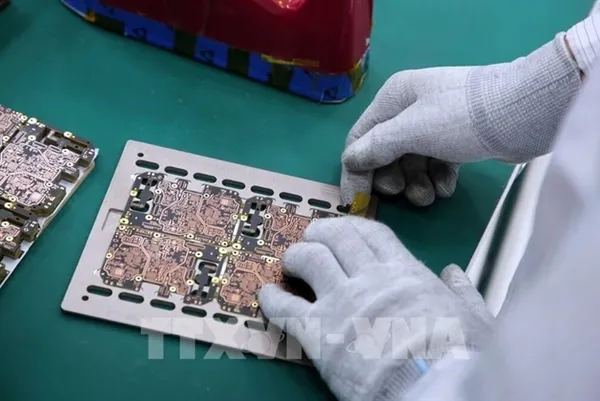
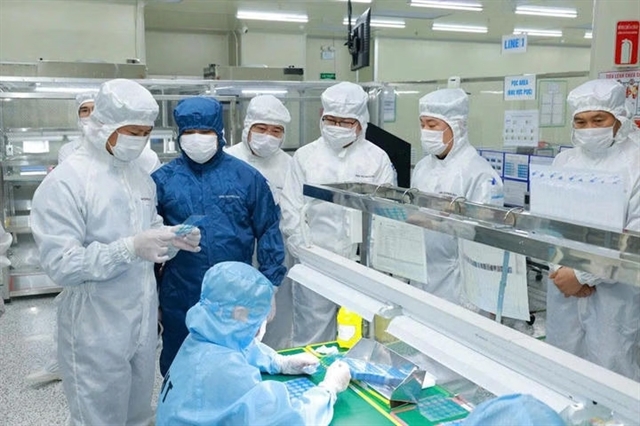
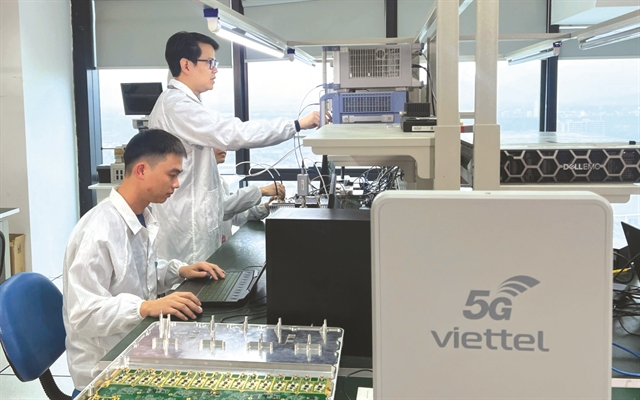
| Engineers of Viettel High Tech at a product research laboratory. Photo courtesy of Viettel |
Mai Hương
HÀ NỘI — As the global race for AI, semiconductors and other strategic technologies intensifies, countries are competing not only for investment, but also for the scientists and engineers who will shape the industries of the future. Việt Nam is now seeking to strengthen its position by building an innovation ecosystem where top talent can develop, create and stay.
The shift reflects the spirit of Resolution 57, issued by the Communist Party in December 2024, which identifies developing, attracting and retaining high-quality science and technology talent as a key factor in accelerating breakthroughs in science, technology, innovation and national digital transformation.
Rather than focusing only on expanding the workforce, the resolution calls for a new approach to creating an environment where researchers and innovators have the conditions, resources and mechanisms needed to develop breakthrough technologies.
Around the world, countries are racing to secure talent in strategic technologies that are expected to define future economic growth.
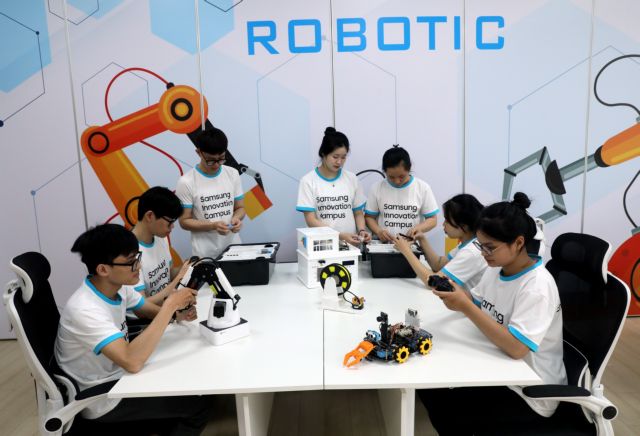 |
| LEARN FROM THE BEST: Students take part in a high-tech session under the Samsung Innovation Campus programme in Bắc Ninh Province. VNA/VNS Photo Danh Lam |
However, experts say the competition is no longer only about who can offer the highest salaries. Leading innovation hubs are increasingly competing through research infrastructure, academic freedom, access to advanced technologies, strong collaboration networks and opportunities for scientists to turn ideas into real products.
For Việt Nam, which aims to become a more important player in global technology value chains, developing such an ecosystem has become as important as attracting individual experts.
As part of efforts to implement Resolution 57, the Ministry of Science and Technology has reviewed existing policies and proposed new mechanisms to make the science and technology sector more attractive to high-quality talent.
Vũ Thị Là, deputy director of the ministry’s Department of Organisation and Personnel, said the review covered 10 laws, 12 decrees and six decisions regulating policies on science and technology human resources.
Beyond salaries
Under current mechanisms, scientists participating in science and technology projects can receive salaries based on contracts without being limited by traditional salary caps.
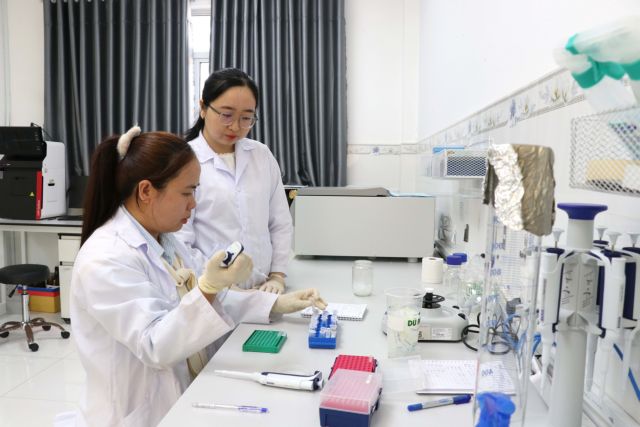 |
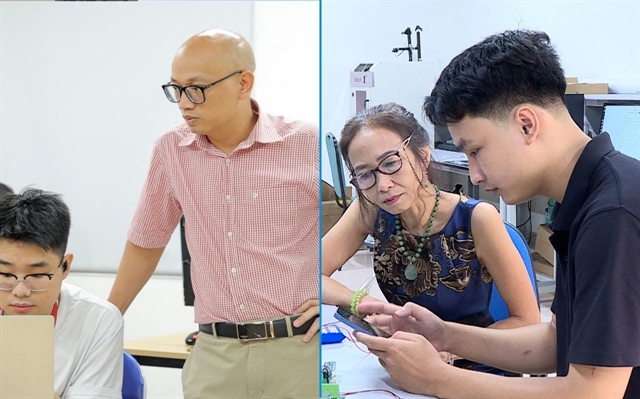
| ONE-ON-ONE: Trịnh Ngọc Ái, deputy director of the Institute of Biotechnology at Trà Vinh University, guides a student during a laboratory session. VNA/VNS Photo Thanh Hòa |
Young scientists and outstanding graduates recruited into the public sector can receive additional allowances of up to 150 per cent, while leading experts and scientists are eligible for allowances of up to 300 per cent.
Outstanding talents and chief engineers responsible for major technology projects may also receive special rewards equivalent to several times their contracted salaries.
The policy also introduces higher remuneration mechanisms for officials and civil servants directly involved in science, technology and innovation-related tasks.
“This is an unprecedented incentive mechanism designed to attract and retain high-quality human resources,” Là said.
However, she said the policies went beyond income, with scientists being granted greater academic autonomy, access to State-invested laboratories and opportunities to join strong research groups and training programmes at home and abroad.
But experts believe these policies will only create long-term impact if they are accompanied by a fundamental change in how talent is developed and used.
Đỗ Trần Đức, deputy director of the Hong Linh Education Investment and Development Joint Stock Company, said that in today’s technology race, attracting talented people would require much more than financial incentives.
Hong Linh is participating in the Vietnam Artificial Intelligence Academy programme in collaboration with the Hanoi University of Science and Technology and the National Innovation Centre (NIC), focusing on developing AI talent through practical training linked with industry needs.
“Talented scientists do not only consider salaries. They also consider whether they can work with excellent colleagues, whether they have access to modern research infrastructure and whether they have the freedom to pursue their research questions,” Đức told Việt Nam News.
He said Việt Nam was competing not only with countries in the region but also with leading global technology centres where researchers already have access to strong ecosystems.
For top scientists and engineers, the decision to work in a country depends heavily on whether they can participate in meaningful projects, collaborate with other talented people and see their research create practical impact.
This means Việt Nam needs to move from a talent attraction policy towards building a talent development ecosystem.
Innovation ecosystem
According to Đức, strong research groups are not formed by spreading resources across many places, but by concentrating investment in centres that already have strong foundations and the ability to connect with global innovation networks.
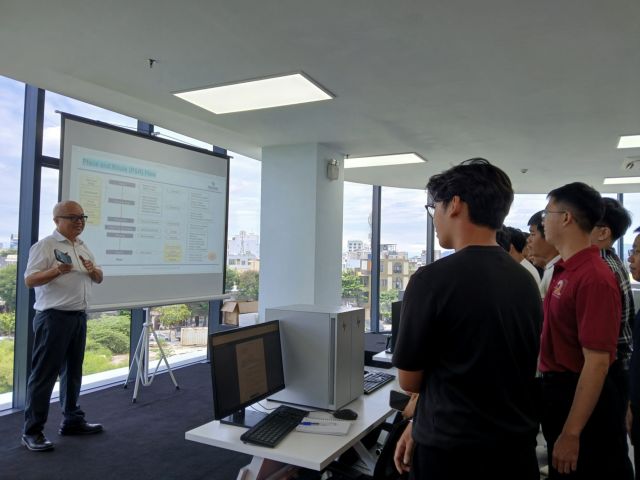 |
| MASTER: Phil Hoàng, an expert from US-based company TreSemi, teaches integrated circuit design in Đà Nẵng. VNA/VNS Photo Mỹ Hà |
This approach is particularly important in fields such as AI and semiconductors, where knowledge, equipment and human resources must develop together.
Unlike traditional industries, strategic technologies require continuous research, experimentation and international collaboration. Even talented individuals may struggle to create breakthroughs if they do not have access to advanced laboratories, data, funding and industry partners.
Experts say this is why countries that have been successful in building technology sectors usually focus on creating complete ecosystems rather than relying only on individual talent programmes.
Universities produce skilled workers and research ideas. Businesses bring market demand and commercialisation capacity. Governments provide infrastructure, regulations and long-term investment. The interaction among these players determines whether scientific knowledge can become economic value.
Việt Nam has started moving in this direction through efforts to develop innovation centres, shared research facilities and stronger cooperation with international technology partners.
Resolution 57 also introduces a new mindset towards scientific activities, including accepting risks in research and encouraging investment in technologies that may require years before producing results.
Đức said this change was essential because innovation could not develop under a system that would expect every research project to guarantee immediate success. He said one of the biggest weaknesses in the current innovation process was that many research results stopped at academic publications instead of being commercialised.
“A good research project that stops at a scientific paper is like a good seed that has never been planted. It may look impressive on paper and receive recognition, but it does not create value for the economy,” Đức said. “For that seed to grow into products, businesses and real technologies, an entire ecosystem is needed, not only excellent scientists.”
He said universities and research institutes needed stronger connections with enterprises from the earliest stages of innovation.
Instead of companies only providing scholarships or sponsoring facilities, businesses should participate in identifying technology problems, designing research directions and bringing successful solutions into commercial application.
Laboratories inside universities should also operate closer to industrial standards, allowing students and researchers to work with technologies that companies are actually using.
This would reduce the gap between academic research and market demand while creating a more attractive environment for high-level researchers.
Global links
Another important factor in the talent race is international connectivity. While stronger incentives create an important foundation, experts say Việt Nam’s ability to compete for top technology talent will ultimately depend on whether it can build an innovation environment that meets international standards.
This means developing advanced laboratories, strong research teams and flexible mechanisms that allow scientists to pursue ambitious projects and transform research results into practical solutions.
Đức said attracting leading technology companies to participate in research and training activities would also help bring global standards closer to Việt Nam’s science and technology ecosystem.
Việt Nam has been expanding cooperation with global technology corporations to give engineers, researchers and students greater access to advanced technologies and international expertise.
The NIC has partnered with NVIDIA to develop AI talent and promote the application of artificial intelligence, while also working with Google through initiatives such as Google Career Certificates to provide training in areas including data analytics, cybersecurity and digital skills.
NIC has also cooperated with Meta on the Vietnam Innovation Challenge, a programme aimed at promoting innovation solutions and connecting startups, technology businesses and experts.
Experts say these partnerships show that attracting talent is no longer only about bringing individuals into the country, but also about creating an ecosystem where Vietnamese talent could work with global technologies and international partners.
The value of a leading scientist is not only measured by individual achievements, but also by their ability to create research teams, train younger generations and connect Việt Nam with international knowledge networks.
Long-term vision
As the country enters a new phase of technology development, implementation will determine whether the ambitions of Resolution 57 can translate into real results.
Building laboratories, offering financial incentives and introducing new policies are important first steps, but the larger challenge is creating a system where talented people want to stay, collaborate and innovate.
For Việt Nam, the next stage of the talent strategy will not only be measured by how many experts it can attract, but by whether it can build an environment where those experts can create technologies, companies and innovations that strengthen the country’s position in the global economy.
“In the future, the image Việt Nam should aim for is not one of individual universities trying to attract a few excellent scientists by themselves, but of several research clusters that are large enough and concentrated enough that when a leading global expert thinks about working in Southeast Asia, Việt Nam becomes a serious option alongside Singapore or South Korea,” Đức said. — VNS
This story is part of a three-part series "The human factor behind Việt Nam's technology ambitions", examining how talent policies, education and global collaboration are shaping the country's innovation future.
More in this series:
Beyond the textbook: Training the talent for Việt Nam's technology future
Connecting the dots behind Việt Nam's technology ambitions
 Economy