 Sci-Tech

Vietnamese creators vie for honours at TikTok’s first Southeast Asia Awards
1.
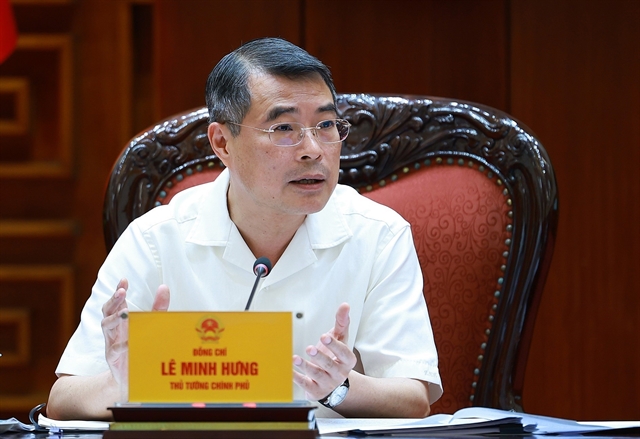 |
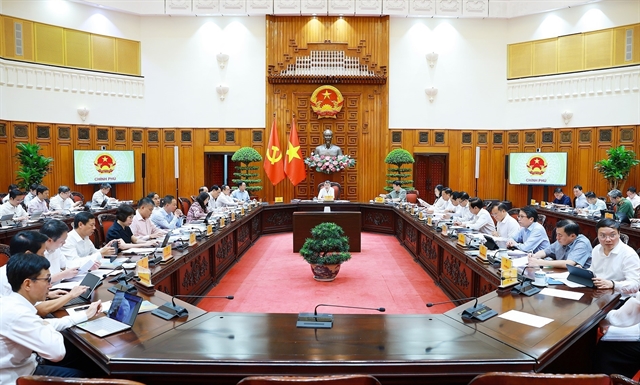
| Prime Minister Lê Minh Hưng chairs a working session on the building of a national digital architectural framework on Friday. — VNA/VNS Photo |
HÀ NỘI — Prime Minister Lê Minh Hưng on Friday called on ministries and agencies to accelerate the development of national and sectoral databases, strategic technologies, and research and testing infrastructure.
He made the request while chairing a meeting of the Government Steering Committee for Science–Technology Development, Innovation, Digital Transformation and Project 06 to review progress in building national and sectoral databases, developing strategic technologies and technological products, and expanding research centres, testing facilities and national key laboratories.
According to reports presented at the meeting, eight of the country's 12 key national databases have established platforms and are now connected to the National Data Centre, allowing real-time data sharing and synchronisation.
Meanwhile, 67 out of 104 databases identified under the Government's Resolution No. 11/NQ-CP have adopted shared digital platforms and concentrated data systems connected to the National Data Centre. Among the 73 synchronised databases, 28 are intended to simplify documentation requirements for 1,277 administrative procedures managed by 18 ministries and sectors.
The Ministry of Science and Technology also reported on the operation of 16 national key laboratories and 113 research and testing centres nationwide.
Despite the progress, PM Hưng said implementation remains uneven and has yet to produce substantive results in several areas.
Some key databases managed by ministries and agencies have not yet been connected to the National Data Centre while several ministries have yet to issue their data architecture frameworks. Many databases also lack clear regulations on data fields, responsibilities for data collection and updating. In addition, a number of databases intended to streamline administrative procedures have not been effectively utilised in practice.
The PM stressed that ministers must take direct responsibility for the implementation of assigned tasks and ensure the quality and progress of database development.
He instructed ministries and ministry-level agencies to promptly review and improve institutional frameworks, digital infrastructure and database systems under their management, while ensuring that all data are accurate, complete, up-to-date, standardised, interoperable and fully connected with the National Data Centre.
He set a target of completing the integration of the remaining key databases and those under Resolution No. 11 into the National Data Centre by the end of 2026. More complex databases must expected to be completed in 2027.
The Ministry of Agriculture and Environment was tasked with accelerating the verification and standardisation of the national land database against the national residents database. It was also instructed to speed up cadastral surveys, mapping and land registration to complete the national land database in 2027, while issuing complete catalogues of core, master and shared data for the sector.
The Ministry of Industry and Trade, the Ministry of Finance and the Ministry of Justice were asked to work closely with the Ministry of Public Security, which operates the National Data Centre, to complete the integration of the national commodity database, the national financial database and the electronic civil status database by September 30 this year.
Other ministries and agencies were ordered to issue data architecture and governance frameworks consistent with the national data architecture frameworks by July 31, and finalise the legal documents governing database management, data updating, sharing and legal validity by September 30.
The Ministry of Public Security was assigned to regularly monitor implementation progress and study proposals on authority for data sharing and use to serve governance and public administration.
Regarding strategic technologies and technological products, PM Hưng acknowledged that ministries and agencies have largely completed the legal corridor and proposed a number of major research tasks funded by the state budget and other sources.
However, he noted that implementation remains slow and lacks effective coordination.
He instructed the Ministry of Science and Technology, ministries, sectors and localities to regard the development of strategic technologies and strategic technological products as a focal task that must be performed in line with the direction of Party General Secretary and President Tô Lâm.
The PM stressed that investment in research centres, testing facilities and key laboratories is an urgent requirement, alongside the development of a highly skilled workforce capable of operating advanced research infrastructure. — VNA/VNS
Sci-Tech
 Sci-Tech
 Sci-Tech
 Sci-Tech
 Sci-Tech
 Sci-Tech
 Sci-Tech
 Sci-Tech
 Sci-Tech
 Sci-Tech
 Sci-Tech
 Sci-Tech
 Sci-Tech
 Sci-Tech
 Sci-Tech